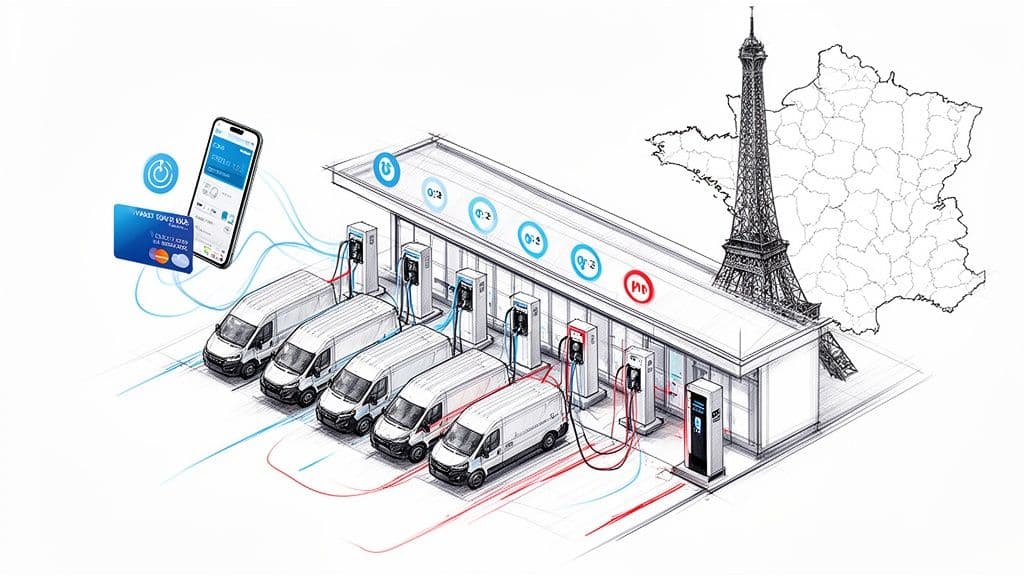
Electric car charging cards are the EV equivalent of a fuel card. They’re physical or digital cards that give your drivers a simple way to tap, charge, and go at public charging stations, all while billing the company directly. For any commercial fleet operating in Europe, they are a must-have for wrangling payments, tracking expenses, and getting a handle on energy costs across a growing number of vehicles and drivers.
The Hidden Costs of Managing EV Fleet Charging
Switching your fleet to electric is a smart move, but it can create a surprising amount of operational chaos if you're not prepared. Without a single, unified system, fleet managers across Europe find themselves wrestling with a messy patchwork of charging costs, payment methods, and a mountain of admin. This fragmented approach quietly chips away at the financial upside of going electric.
Just picture one of your drivers juggling a dozen different charging network apps on their phone. Each one needs its own account, password, and payment details. What should be a simple recharge turns into a major headache, especially when crossing borders where networks change. The alternative—drivers using their personal credit cards—is even worse.
The Problem with Manual Reimbursements
Relying on drivers to pay out-of-pocket and then claim it back is a recipe for inefficiency. Your finance team gets bogged down in paperwork, manually checking and processing a flood of small-value receipts from various countries. This administrative mess creates a few serious problems:
- Lost Productivity: Fleet and finance staff can easily waste over 10 hours a month just chasing, checking, and reconciling driver expenses. All those invoices need to be gathered and processed.
- Zero Oversight: When drivers use personal cards, you have no real-time view of what’s being spent. Good luck trying to forecast your budget.
- Payment Fragmentation: Your drivers face a confusing mix of networks, currencies, and pricing models, leading to confusion and delays.
- Delayed Reimbursements: Drivers are left paying for business costs from their own pocket while waiting for approvals, which is a sure-fire way to hurt morale.
Trying to manage charging this way is like trying to make international phone calls before roaming agreements existed—a tangle of different providers, unpredictable costs, and an endless stream of invoices. It doesn’t take long to realise that this piecemeal approach just isn’t sustainable for a professional operation.
A unified charging solution isn't a luxury anymore; it's a necessity. It’s the only way for a fleet to get a grip on costs, access clear data, and take back control of its operational budget. Otherwise, the promised savings of an electric fleet get swallowed up by admin waste.
This is exactly where a dedicated, universal electric car charging card comes in. It pulls all these scattered pieces into one streamlined, controllable, and cost-effective system.
How Electric Car Charging Cards Simplify Fleet Operations
Trying to navigate Europe’s fragmented charging network can feel like juggling a thousand different keys for a thousand different locks. An electric car charging card cuts through that mess, acting like a master key that turns a frustrating process into one simple tap for your drivers.
But not all cards are built the same, and understanding the difference is vital for any fleet manager looking to make the switch.
The most basic version is the network-specific card. Think of it like a loyalty card for a single supermarket chain; it works flawlessly in their stores but is completely useless anywhere else. A driver on a long European route might end up with a pocketful of these, which brings you right back to the administrative chaos of multiple accounts and invoices.
This is where universal, fleet-focused cards really change the game. Instead of being tied to one network, they operate more like a VISA-backed debit card. They give drivers access to thousands of charge points across countless networks and countries, all with one simple tap. This is the first step toward transforming both the driver's experience on the road and your operations back in the office.
The Technology Behind the Tap
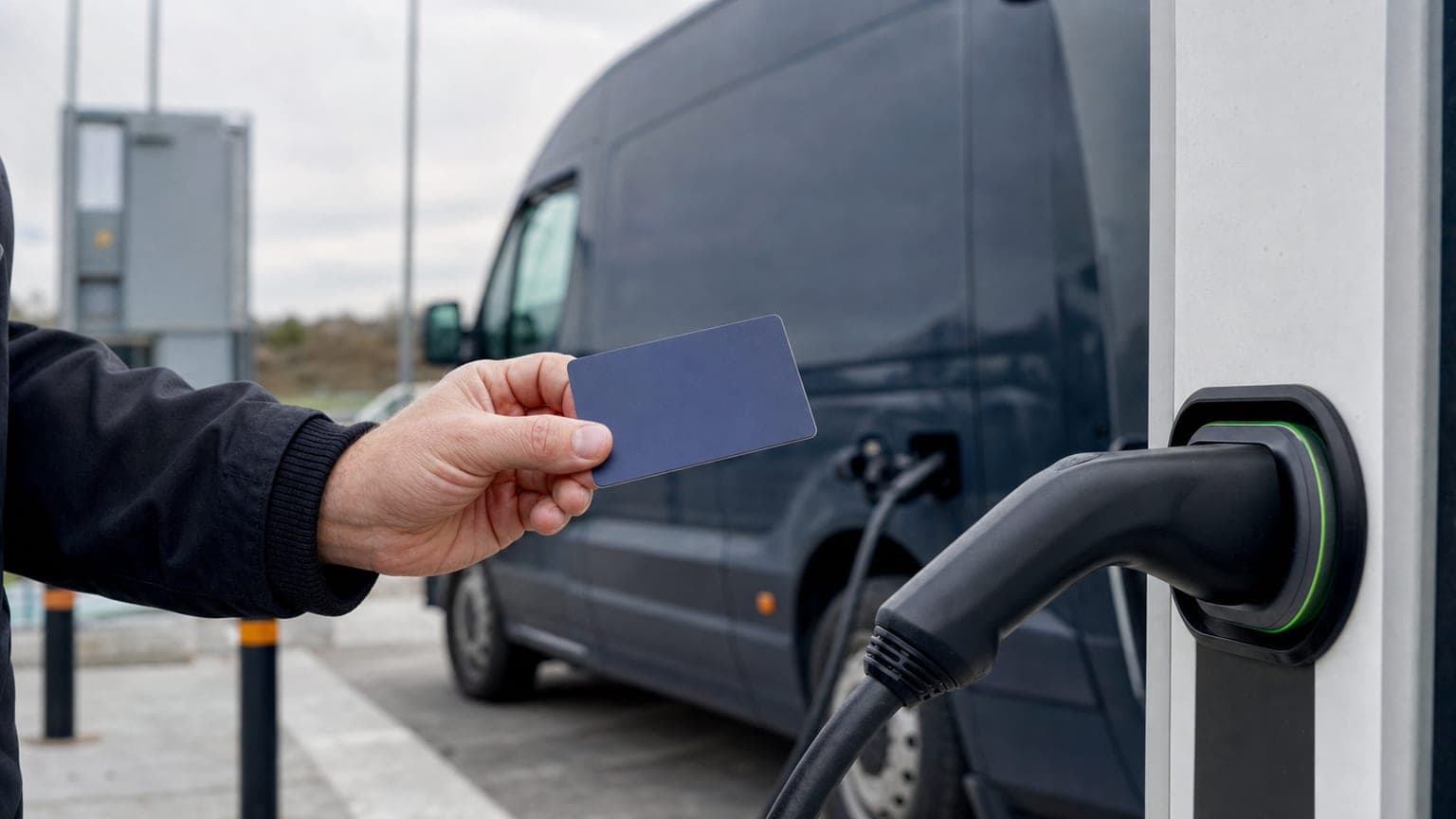
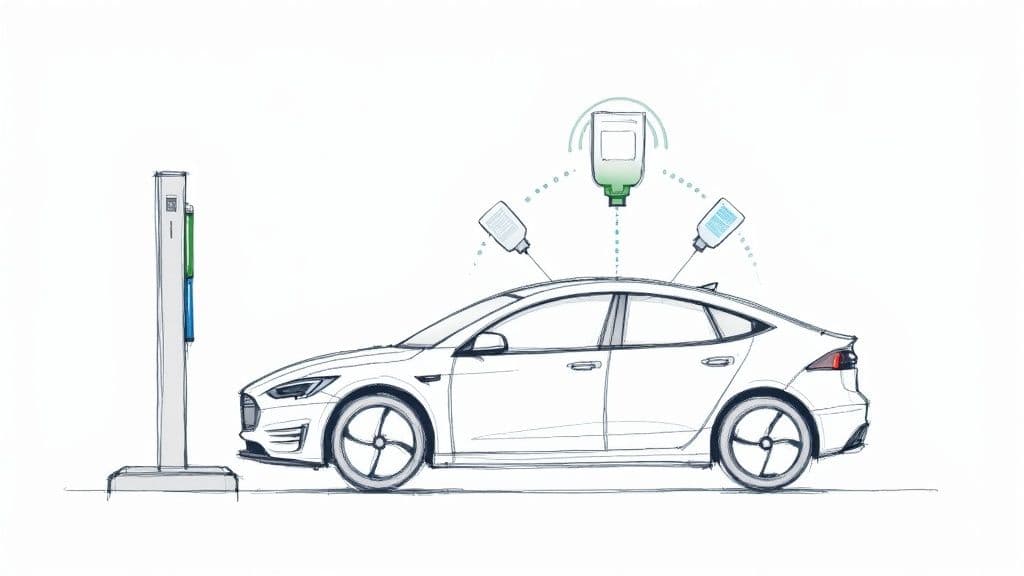
The magic behind this simplicity is usually Radio-Frequency Identification (RFID) technology. Each card has a small chip that communicates with the charging station’s reader. When a driver taps their card, the reader identifies the unique account linked to it, authorises the session, and gets the electricity flowing.
For the driver, the whole process is seamless:
- Locate: They find a compatible charger using a map or an app.
- Connect: Plug the vehicle into the station.
- Tap: Tap the charging card on the reader.
- Charge: The session kicks off automatically.
- Go: Once they're done, they just unplug. The payment is handled centrally, with no faff.
This straightforward journey gets rid of payment friction, means drivers never have to use their own money, and gets them back on the road faster.
From Roadside Chaos to Office Clarity
While drivers enjoy a much simpler experience, the real transformation happens back at the office. Every single transaction—every tap, every charge, every kilowatt-hour—is captured and fed into one centralised system. What was once a scattered mess of receipts and app notifications becomes a powerful, unified stream of data.
The diagram below shows exactly the kind of chaos a unified card system is designed to eliminate.
As you can see, juggling multiple apps and payment methods inevitably leads to an expense nightmare and a complete loss of financial control. By replacing this broken workflow, you turn that chaos into clarity.
Managers get a single source of truth for all charging activities. This data is the foundation for everything that follows: optimising routes, reining in costs, and making smart, strategic decisions about your entire fleet's energy use.
Solving Europe's Cross-Border Fleet Challenges
Let’s be honest: navigating Europe’s EV charging landscape can be a real headache for commercial fleets. What should be simple—keeping your vehicles charged and moving—turns into a logistical nightmare the moment a driver crosses a border. They’re hit with a baffling mix of charging networks, unpredictable prices, and different currencies.
This isn't just a minor inconvenience. It’s a huge drain on your efficiency and your budget.
Back in the finance department, the problem gets even worse. Without a single system, your team is buried under a mountain of receipts and invoices from countless vendors across Europe. It’s an administrative black hole, forcing staff to spend hours manually piecing it all together. Studies show this can eat up over 10 hours of manual work every single month. It’s tedious, costly, and a recipe for human error that throws off your financial reporting.
Worse still, this scattered approach to payments leaves a massive blind spot in your data. With charging info spread across dozens of apps and payment methods, you have no real way to see your total cost of ownership. You can't properly analyse charging costs, find cheaper routes, or spot chances to save money. You're leaving cash on the table.
The Old Way Versus The Smart Way
The difference between sticking with outdated manual processes and adopting a modern, automated solution is night and day. A unified electric car charging card doesn't just make payments easier; it completely overhauls your expense management, turning an administrative burden into a real strategic advantage. It pulls all those chaotic pieces into one clear, manageable system.
For any fleet running across Europe, a single card with 99% acceptance and seamless cross-border support is a game-changer. Your drivers no longer have to second-guess whether their card will work in another country, which helps kill range anxiety and prevents costly delays. That kind of reliability is essential for hitting tight delivery schedules and keeping the business moving, no matter where the job takes them. You can discover more about enhancing fleet operations with our guide on smarter fuel card management for European fleets.
Unifying Data for Better Decisions
One of the biggest failures of the old model is its complete inability to give you cohesive data. Modern fleet cards fix this by capturing every single transaction in real-time. This creates one source of truth, letting managers see exactly where, when, and how money is being spent.
With this unified data, you can finally:
- Analyse Total Costs: Get a complete, bird's-eye view of charging expenses across your entire fleet.
- Optimise Routes: Pinpoint the most cost-effective charging locations along your most common routes.
- Identify Savings: Uncover inefficiencies and find clear opportunities to cut down on energy consumption.
- Track Expenses: Automatically categorise all spending on charging, tolls, and even parking.
This level of insight is simply out of reach when you're stuck with manual expense reports and a patchwork of payment systems. The table below really drives home just how different the two approaches are.
Manual Expense Management vs Unified Fleet Card Solution
The time and money lost to manual processes add up quickly. Here’s a clear breakdown of how a traditional approach stacks up against a modern, integrated system.
| Task | Traditional Manual Process (Per Driver Per Month) | Unified Fleet Card Solution | Key Benefit |
|---|---|---|---|
| Payment Process | Driver juggles personal cards or multiple network-specific cards. | One VISA-backed card with 99% acceptance across Europe. | Simplicity & Reliability |
| Admin Work | Over 10 hours per month spent manually chasing and reconciling receipts. | Automated receipt capture and direct accounting integration. | Massive Time Savings |
| Cost Control | No real-time visibility; budget overruns are common and found too late. | Real-time spending data and customisable controls for each driver. | Complete Financial Oversight |
| Data Analysis | Scattered data makes any meaningful analysis practically impossible. | Consolidated reports provide a clear view of all fleet expenses. | Data-Driven Optimisation |
As you can see, the benefits go far beyond just convenience. An integrated platform delivers tangible savings in both time and money, while providing the data needed for smarter strategic decisions.
Ultimately, solving Europe's cross-border challenges means ditching the patchwork solutions for good. A single, powerful electric car charging card simplifies operations, delivers the critical data insights you've been missing, and gives your business the control it needs to manage fleets efficiently and cost-effectively, in any country.
Unifying All Business Expenses with One Smart Card
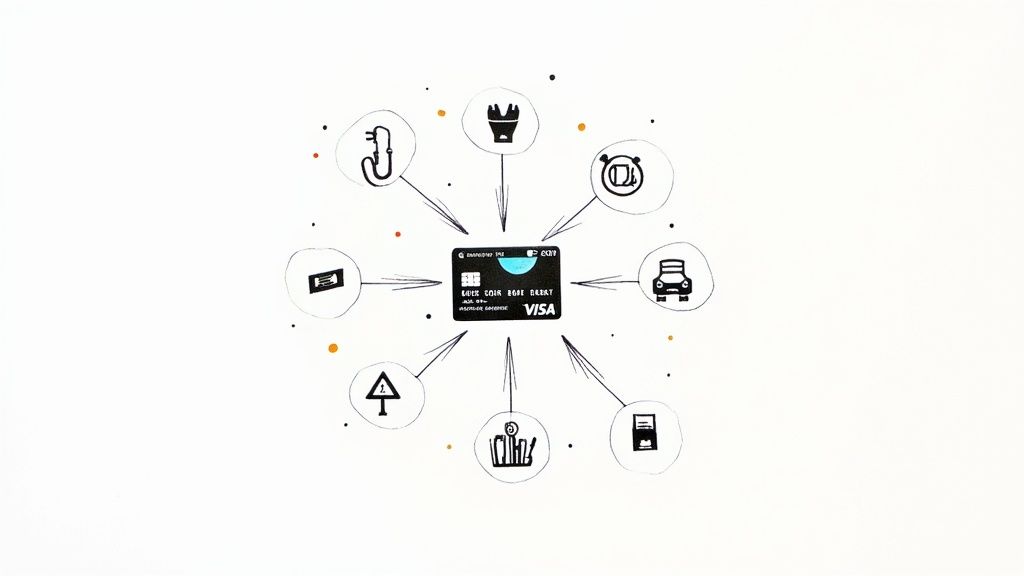
Managing a modern European fleet is about more than just keeping vehicles charged. It's about the crushing weight of administrative tasks, the black hole of scattered expenses, and the constant juggling of different payment systems for tolls, parking, and even fuel for your hybrid vehicles. The best solution isn’t just a better electric car charging card; it's a single, powerful tool that pulls every business expense into one seamless platform.
Imagine one VISA-backed card that just works for everything. This isn't another charging card. It's a complete business spending platform that empowers your entire organisation—from directors buying office supplies to drivers paying for a car wash on the road. This approach fundamentally changes how a business handles its money, turning a tangled web of payments into one streamlined process.
This consolidation is the key to getting back lost time. Businesses report that a unified approach like this can cut over 10 hours of manual administrative work every single month. The days of chasing drivers for invoices or manually reconciling dozens of small receipts from different suppliers are over. Everything is captured in one place, automatically.
Beyond Charging: A True All-in-One Solution
A truly modern fleet card is built to handle every predictable—and unpredictable—cost that comes with running a business. Its universal acceptance, backed by VISA, means it works virtually everywhere, offering unparalleled flexibility.
This single card can cover a huge range of expenses:
- EV Charging: Access thousands of charge points at the lowest prices across Europe.
- Fuel: Seamlessly manage costs for any petrol or diesel vehicles, with access to low-cost fuel stations.
- Tolls and Parking: Do away with petty cash and complex reimbursements for on-the-road necessities.
- Day-to-Day Business Costs: Pay for office expenses, client lunches, or travel expenses without needing a separate corporate card.
By combining all these functions, you no longer need a separate expense management tool. The card and its platform handle everything from payment to reconciliation, creating huge cost and time savings. You can find out more in our guide to why modern fleet cards beat traditional fuel cards.
Simplicity Through Familiar Technology
One of the biggest hurdles to adopting new systems is the learning curve for staff. A modern solution smashes this barrier by integrating with tools your team already uses every day. There is no need for drivers to download yet another complicated app.
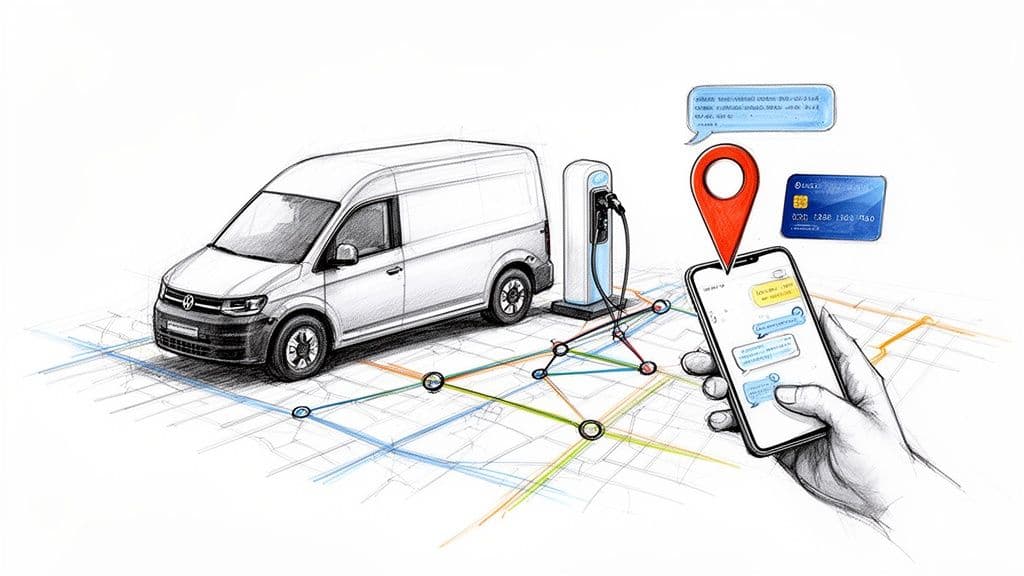
Instead of forcing drivers to learn new software, all communication and receipt management can be done directly through WhatsApp. A driver simply snaps a photo of a receipt, sends it, and the system automatically processes and categorises the expense.
This approach ensures your team can start using it immediately and eliminates the friction that often comes with new technology. It's simple, intuitive, and works for everyone in the company, from the tech-savvy to the tech-averse.
Powering Operations with Widespread Access
The effectiveness of any fleet card comes down to its acceptance network. A card with 99% acceptance ensures that your drivers can access charging points, fuel stations, service centres, and merchants across Europe, without a second thought.
This reliability is backed by features designed for financial peace of mind. Rally's prepaid option requires no refundable security deposit or personal credit check, which protects cash flow; business and representative verification still applies. Fees are clearly disclosed, cross-border support keeps operations moving, and direct accounting integration sends consolidated data into your financial software.
The Financial and Operational Benefits for Your Fleet
Moving to a unified fleet card isn't just a minor tweak to your operations; it’s a strategic move that delivers a serious return on investment. By bringing all your business spending under one smart platform, you unlock savings and efficiencies that were previously impossible, turning your fleet's cost centre into a lean, data-driven machine.
The first place you’ll see the impact is your bottom line. Through key partnerships, a unified card helps your fleet find lower-cost charging and fuel options across Europe. Those savings can add up across vehicles while consolidating multiple tools into one.
On top of that, you get financial clarity through transparent fees. Rally's prepaid option requires no refundable security deposit or personal credit check, freeing cash that might otherwise be tied up; business and representative verification still applies.
Maximising Uptime and Slashing Admin Waste
Operationally, a unified electric car charging card is where the magic really happens. With a near-universal 99% acceptance rate and seamless support across any country, driver downtime practically vanishes. Range anxiety fades away when drivers know their payment method works pretty much everywhere, keeping them on schedule and your operations running like clockwork.
This rock-solid reliability is matched by a massive drop in administrative work. A unified system can easily cut over 10 hours of manual work per month for your finance and fleet teams. No more chasing drivers for receipts or spending hours reconciling dozens of tiny invoices.
Think about it: every expense—from EV charging and fuel to tolls, parking, and even office supplies—is on a single VISA-backed card. This gets rid of the need for a separate expense management tool. All invoices are in one place, creating a single source of truth for your business spending.
Seamless Integration and Financial Control
The real power here is how the system plugs directly into your existing financial processes. Thanks to direct accounting integration, every transaction is automatically categorised and synced with your bookkeeping software. This automates a huge chunk of your financial reporting, slashes the risk of human error, and gives your finance team accurate, real-time data to work with.
As charging infrastructure across Europe continues to expand, this kind of integration becomes even more vital. A unified card ensures your fleet can tap into this growing network without drowning in extra admin.
At the end of the day, the goal is to provide a tool that works for everyone, from directors to drivers. Many businesses are discovering that modern fleet cards are a huge leap forward from older systems; you can learn more about why modern fleet cards beat traditional fuel cards every time.
Integrating Charging Cards into Your Fleet Policy
Successfully rolling out electric car charging cards is about more than just handing them out. It demands a clear, well-communicated policy. A solid framework ensures everyone knows the rules of the road, protects the company from misuse, and turns the card into a genuine tool for optimisation, not just another payment method.
The first step is to establish fair and practical usage guidelines. You need to be crystal clear from the start.
- Define acceptable use: Are the cards strictly for EV charging, or can they cover other business expenses like fuel for hybrid vehicles, tolls, or parking?
- Set spending limits: Assign precise limits for each driver or vehicle. This gives you budget certainty and prevents any nasty surprises at the end of the month.
- Create a simple process for lost or stolen cards: Make it straightforward for drivers to report a missing card to minimise any security risks.

Driving Smooth Adoption
For any new policy to stick, your drivers have to be on board. The key is framing the change around how it benefits them directly.
Emphasise that they will no longer have to use their personal funds for business expenses and then wait around to be reimbursed. This is a huge quality-of-life improvement that removes a common point of friction and financial stress for your team out on the road.
Keep the communication simple and accessible. Instead of sitting them down for complex training sessions, explain how they can submit receipts using familiar tools like WhatsApp. This avoids the headache of learning yet another complicated app and focuses on convenience, ensuring drivers adopt the new system quickly and without fuss.
Leveraging Data for Continuous Optimisation
A unified platform does more than just simplify payments; it hands you the data needed to make smarter decisions. Use the built-in reporting features to monitor policy compliance in real-time, making sure spending stays within your established limits.
This stream of data is also vital for hitting your sustainability targets, allowing you to accurately track CO2 savings and report on your fleet's environmental performance.
This level of insight is becoming more essential by the day as Europe's public charging infrastructure continues its rapid expansion. By analysing usage patterns, you can make data-driven decisions that continuously optimise routes, charging behaviour, and your overall budget. For the latest official figures on UK infrastructure growth, you can learn more about UK electric vehicle charging infrastructure statistics.
Got Questions About Fleet Charging Cards?
Fleet managers always have questions when they start looking at unified payment systems. That's a good thing. Getting these answers is the best way to see the real value that a modern electric car charging card can bring to your business.
Are Universal Charging Cards Just More Expensive Than Using Network Apps?
It’s a common assumption, but a unified solution can cost less by helping fleets find lower-cost options across Europe and reducing hidden admin costs. Think about the hours your team spends processing expenses—often over 10 hours a month. A unified platform also consolidates multiple tools, which can cost less than paying for separate systems. Add in a transparent fee structure and the total cost becomes easier to compare.
How Does a Single Card Handle Different VAT Rates Across Europe?
This is where a sophisticated fleet card system really shines. The platform automatically processes and itemises every transaction, correctly applying the local VAT rate for each country your drivers charge in. All this data gets rolled into a single, downloadable invoice that’s ready for your accounting system. It completely removes the headache of manually calculating and reclaiming VAT from different jurisdictions.
The real power of an integrated card is turning cross-border complexity into back-office simplicity. It’s built to handle the tricky details of European tax rules so your finance team doesn’t have to.
Can My Drivers Use the Card for More Than Just Charging?
Absolutely. A truly integrated solution, especially one that is VISA-backed, is designed to cover all business-related expenses. Unlike old, restrictive charge-only cards, a modern fleet card works for any type of expense needed to run the business day-to-day:
- Parking, Tolls, Fuel, and Charging
- Vehicle maintenance and cleaning
- Office expenses and anything else to keep business running
And you’re still in full control. Fleet managers can set specific spending rules and categories to make sure the cards are used properly, giving everyone from directors to drivers the flexibility they need while the business keeps a tight grip on the budget.
Do Our Drivers Need to Learn Another Complicated App?
Not at all. Modern systems are designed to be as simple as possible. In fact, everything is done via WhatsApp, a tool your team already uses every day. There is no need to download any new apps. This approach gets everyone on board quickly and avoids the need for lengthy training sessions on clunky new software, so your team can hit the ground running.
Ready to bring all your fleet expenses under one roof and win back hours of admin time? With Rally, you get one VISA-backed card for everything—fuel, charging, tolls, and more—with transparent pricing and direct accounting integration. Learn more and get started today.