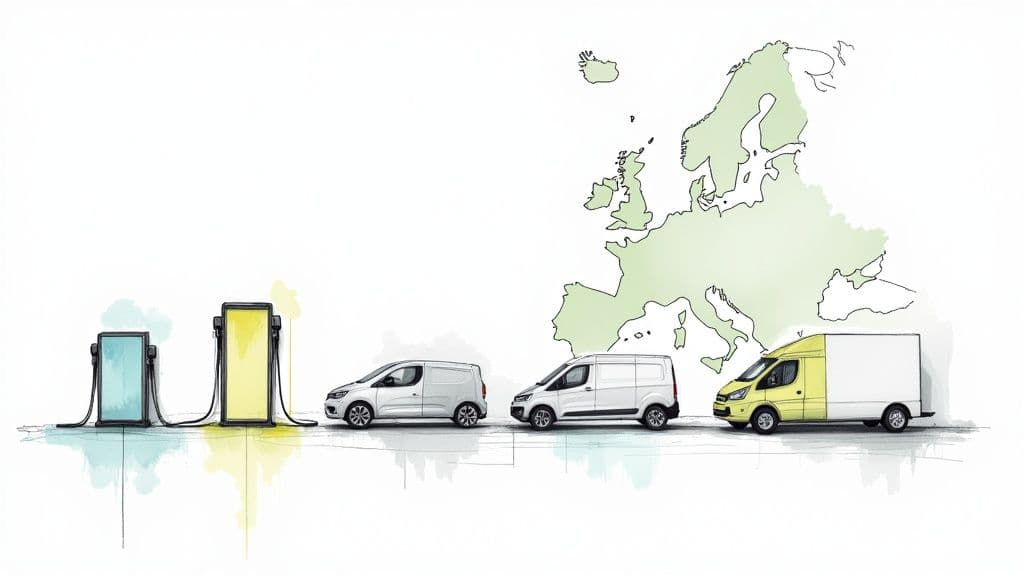
Choosing the best fuel card company in the UK involves more than comparing pence-per-litre savings. The right provider should match your routes, control fees, support EV charging where needed, reduce receipt admin, and give finance a clean view of total fleet spend.
Quick Answer
For UK fleets comparing fuel card providers in 2026, Allstar, Shell, BP, Esso, UK Fuels, and Right Fuel Card are the names most buyers shortlist first. For teams that want one Visa-backed card for fuel, EV charging, tolls, parking, and automated expense workflows across the UK and Europe, Rally is the modern alternative to benchmark against those traditional options.
If your fleet is UK-only and route coverage is the main priority, shortlist providers based on accepted stations near your drivers. If your fleet crosses borders, has mixed petrol, diesel, and EV usage, or spends too much time chasing receipts, prioritise acceptance, automation, and total cost of ownership over nominal fuel discounts.
Between volatile fuel prices, messy cross-border payments, and the administrative headache of managing expenses, the cracks in the old fuel-only card model are showing fast — especially for businesses operating across the continent.
The UK fuel card market is set to hit £840 million by 2035, a surge driven by the urgent need for smarter ways to manage costs. Fleet vehicles account for a staggering 81.2% of the 3.6 million active fuel cards in the UK, showing just how critical these tools are to business profitability.
This guide cuts through the noise with a clear UK fuel card providers comparison table and a practical review of seven leading UK fuel card and expense-card providers — covering network coverage, pricing structures, EV charging, automated accounting integrations, and cross-border support.
Traditional Fuel Cards vs Modern Fleet Solutions
Before diving into individual providers, it helps to understand the two camps the market is split into: legacy brand-specific cards and modern all-in-one platforms.
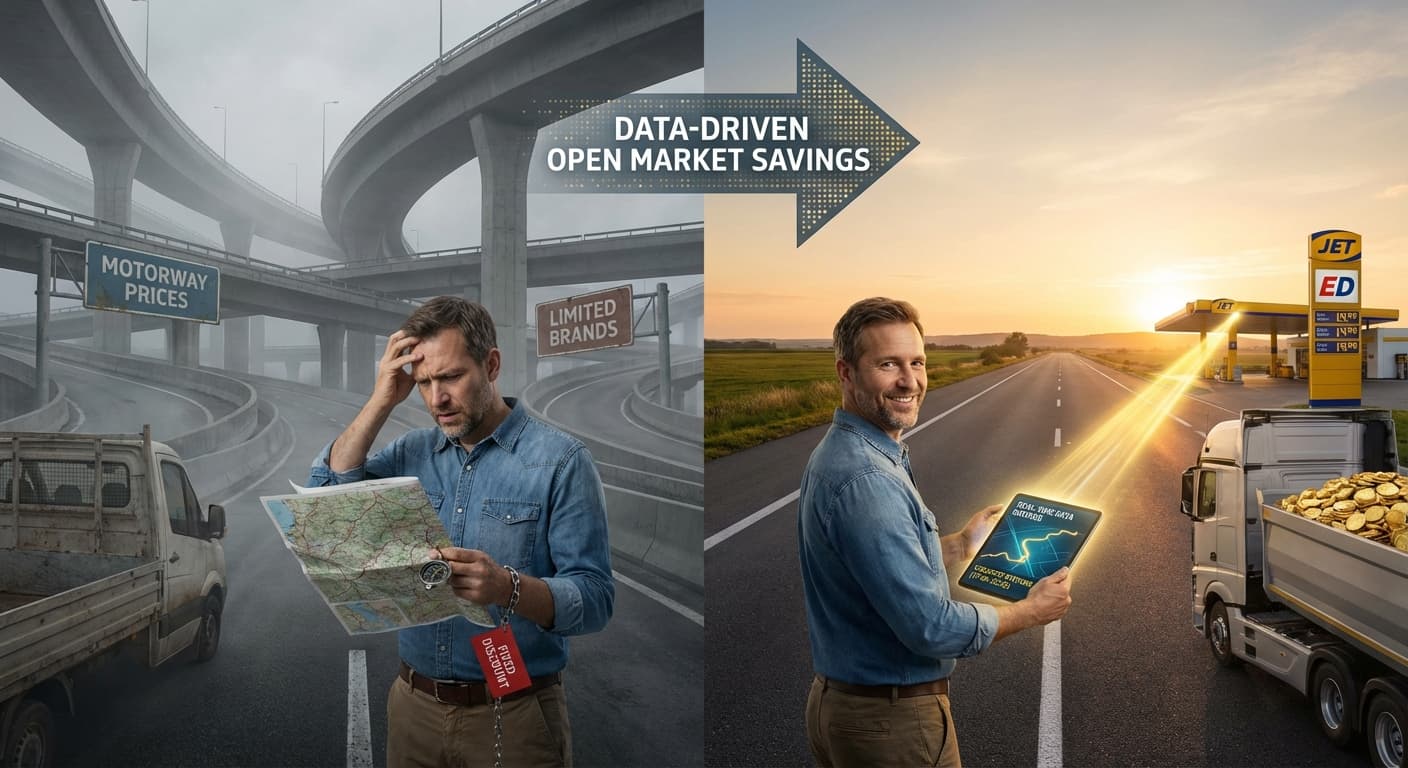
Legacy providers lock you into a restricted fuel network. Your drivers are tied to that brand's forecourts, which forces inefficient detours and often higher prices. Modern VISA-backed platforms flip this model by offering near-universal acceptance, covering every expense type, and automating the back-office work that drains your team's time.
| Feature | Traditional Fuel Cards | Modern Fleet Solutions |
|---|---|---|
| Acceptance Network | Limited to specific brands or networks, often UK-only. | Near-universal acceptance (99%) across the UK, EU, and beyond. |
| Expense Coverage | Typically restricted to fuel only. | Covers all business expenses: fuel, EV charging, tolls, parking, and more. |
| Driver Experience | Often requires downloading and managing multiple apps. | App-free experience via WhatsApp. |
| EV Charging | Separate system or no support, leading to multiple cards. | Fully integrated EV charging with access to one of Europe's largest networks. |
| Pricing & Fees | Can have hidden surcharges and complex fee structures. | Transparent pricing with no deposits or credit checks. |
| Admin & Reporting | Manual receipt collection and data entry. | Automated receipt capture and direct integration with accounting systems. |
The real change is from a simple payment tool to a full financial platform. Modern solutions consolidate many tools into one, which is cheaper, and save over 10 hours of manual work every month by automating expense reports and plugging directly into your accounting software.
1. Rally
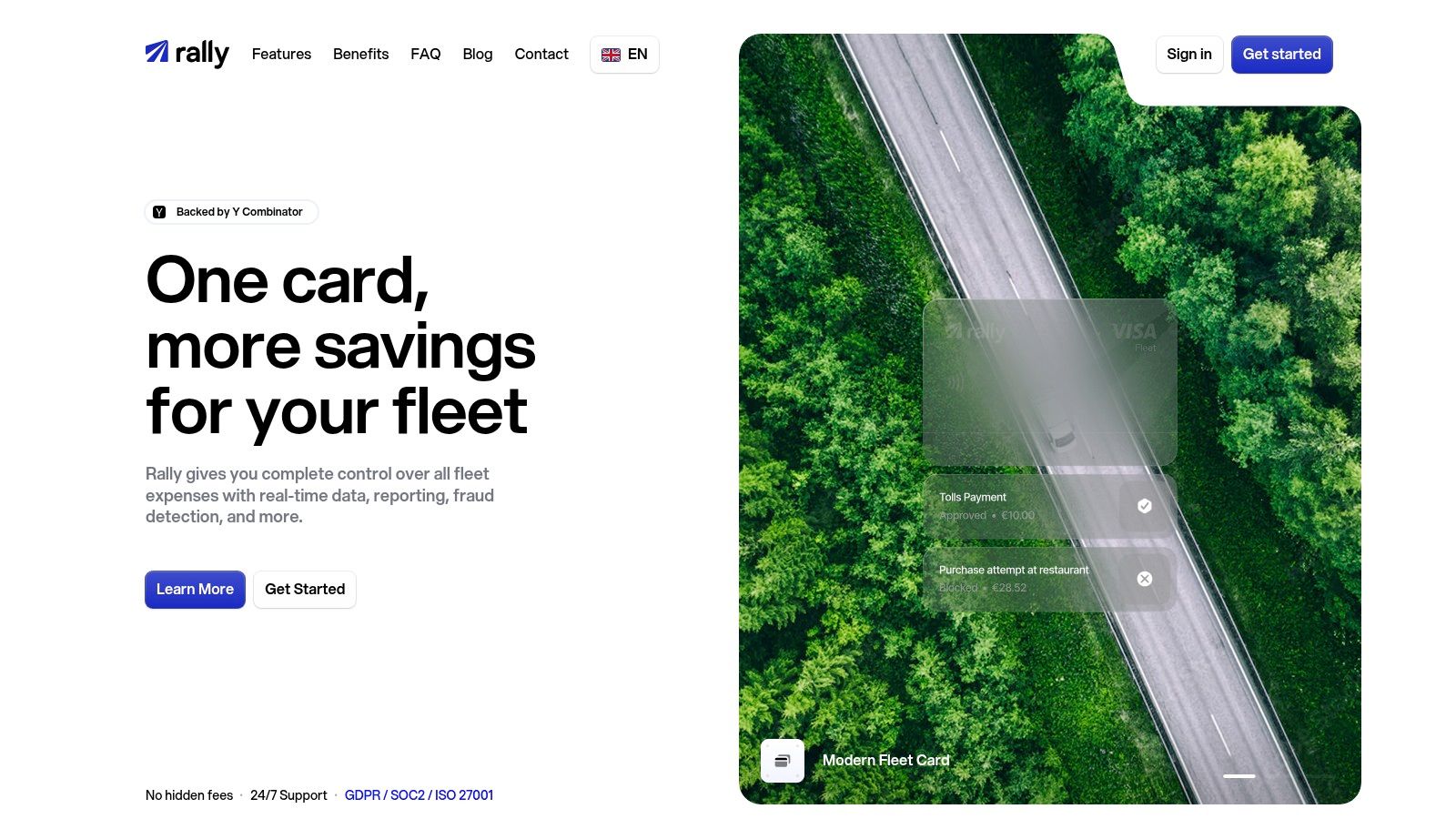
Rally is a powerful, all-in-one solution designed to modernise fleet expense management. It moves beyond traditional, single-purpose fuel cards by offering a unified, VISA-backed platform for all vehicle and driver-related expenses. By consolidating fuel, EV charging, tolls, parking, and even office expenses into one card, Rally eliminates the need for a separate expense management tool — saving over 10 hours in manual work per month.
Key Strengths
- Universal Acceptance: As a VISA partner, Rally cards boast a 99% acceptance rate at millions of locations across Europe, including low-cost, unbranded fuel stations that network-locked cards miss.
- Automated Reconciliation via WhatsApp: Drivers snap a photo of a receipt and send it via WhatsApp — no app download required. Rally's AI reads the data, matches it to the transaction, and syncs it directly with your accounting software.
- Comprehensive Expense Coverage: Fuel, EV charging, parking, tolls, office supplies, and more. One card, one invoice, one dashboard.
- Transparent Pricing: No deposits, no credit checks, no hidden fees. A predictable model that lets you budget with confidence.
- EV Charging: Access to one of Europe's largest charging networks spanning over 20 countries, with drivers able to start a charge via fob or WhatsApp.
What Works and What to Consider
| Area | Strength | Trade-off |
|---|---|---|
| Acceptance | 99% VISA-backed acceptance at any fuel station, charger, or merchant across the UK and EU | No branded fuel-station loyalty rewards programme |
| Expense Coverage | One card for fuel, EV charging, tolls, parking, maintenance, and office supplies | Europe-first positioning is less relevant for businesses that only operate locally |
| Pricing | Transparent fees with no deposits, no credit checks, and no hidden charges | Pricing is quote-based; requires contacting sales rather than self-serve sign-up |
| Admin & Automation | Saves over 10 hours a month with AI-powered WhatsApp receipt capture and direct accounting integration | Does not include the specific locked-in pump price discounts some legacy fuel networks offer |
| Spend Controls | Real-time controls prevent unauthorised spend by driver, vehicle, or category | Best value comes from using the full platform; teams only comparing pence-per-litre may need a broader evaluation |
Best for: Logistics, delivery, and transportation companies, as well as any fleet that needs robust control and simplified cross-border operations. Ideal for finance teams looking to consolidate tools, automate reconciliation, and gain deeper insights into total fleet spending.
Website: Rally
2. Allstar Business Solutions
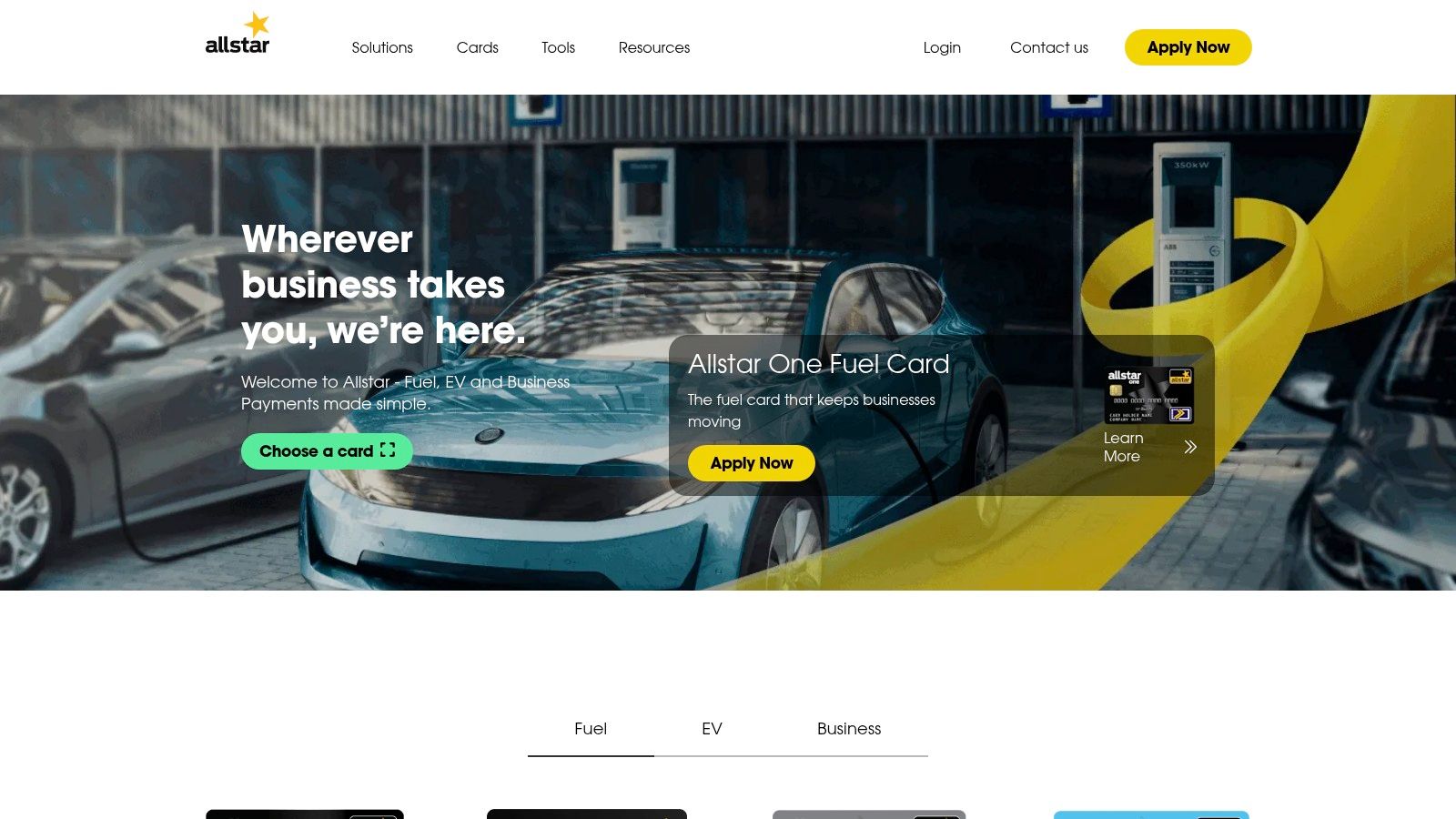
Allstar is one of the UK's largest and most established fuel card providers, covering approximately 90% of UK fuel sites — including supermarkets like Tesco, Sainsbury's, and Morrisons. The Allstar One Electric card combines access to their vast fuel network with the growing Allstar Chargepass EV network, making it a strong contender for mixed fleets transitioning to EVs.
Key Features
- Extensive Network: Unparalleled UK coverage, including low-cost supermarket pumps.
- Combined Fuel & EV: The Allstar One Electric card supports traditional fuel and public EV charging.
- Centralised Management: The Allstar Online portal provides tools for spend control, transaction monitoring, and HMRC-compliant invoicing.
- Pricing: Card fees and fuel pricing are bespoke, depending on fleet size and credit profile.
While its network is a major pro, some customer reviews mention concerns about account fees and communication. For fleets prioritising maximum site acceptance in the UK, Allstar remains a top-tier choice.
Website: Allstar Business Solutions
3. Shell Fleet Solutions UK
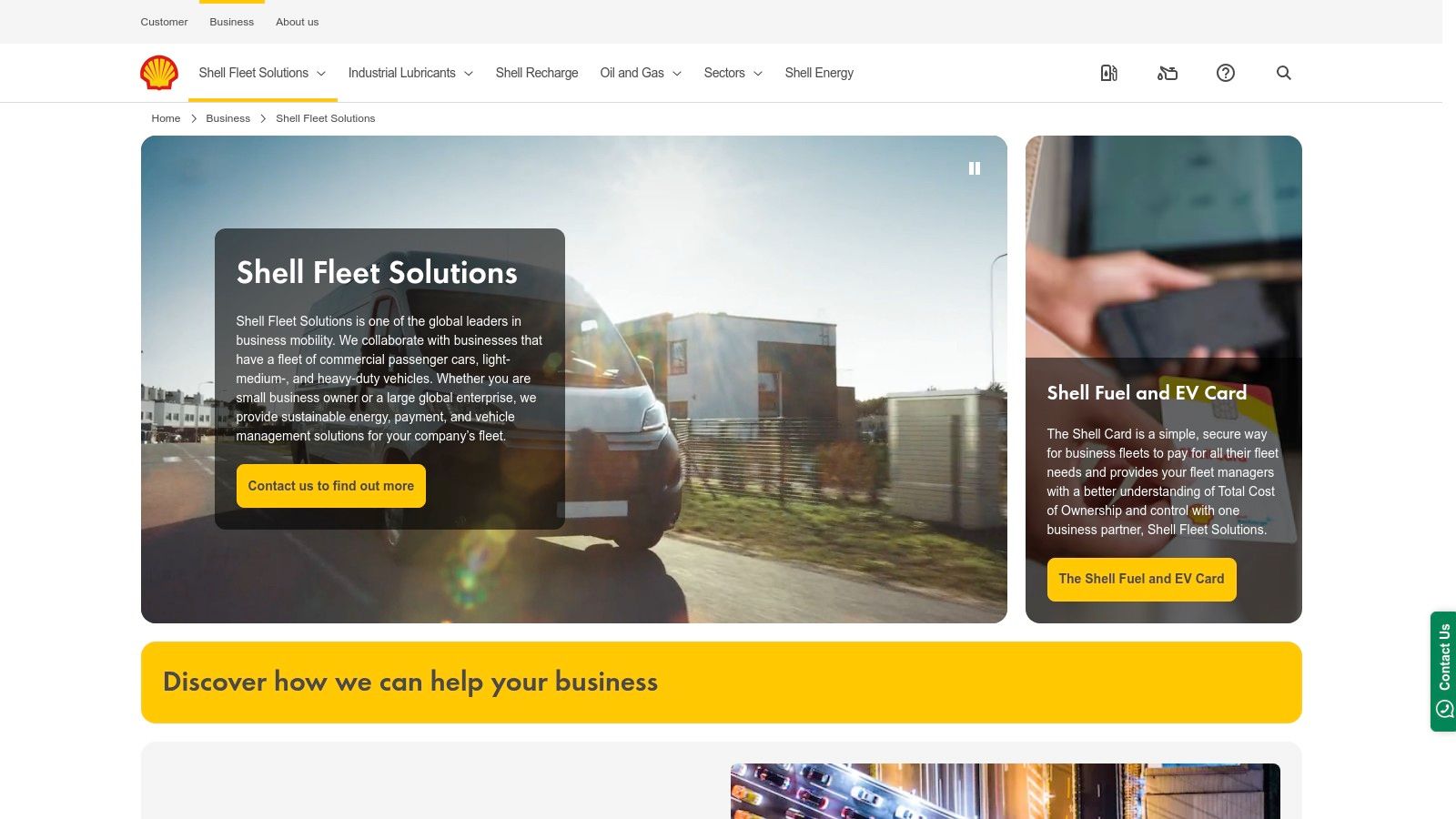
Shell Fleet Solutions brings a globally recognised brand with access to over 3,600 UK stations, including Shell, Esso, Texaco, and Gulf. The Shell Fleet App is designed for SMEs with up to 30 vehicles, offering same-day setup and discounts on Shell-branded fuel. For larger or mixed fleets, the standard Shell Fuel & EV Card covers fuel and access to over 40,000 UK EV charge points.
Key Features
- Integrated ICE & EV: One card and account for both traditional fuel and electric vehicle charging.
- SME-Focused App: Rapid onboarding and exclusive discounts for smaller fleets.
- Strong Network: Good UK coverage via Shell and key partner stations.
- Access Requirements: The SME app requires the company to be registered for over a year, with the account holder being a director.
The best savings are found within the Shell network. For businesses running mixed vehicle types that align with Shell's coverage, it's a strong candidate.
Website: Shell Fleet Solutions
4. bp Plus
For businesses that rely heavily on motorway travel, bp Plus offers a compelling solution with a network of over 3,400 UK sites — all bp locations plus partners like Esso, Texaco, and Gulf. The card provides centralised, HMRC-compliant invoicing, purchasing controls, and real-time fuel consumption monitoring.
Key Features
- Strong Motorway Network: Excellent coverage on major A-roads and motorways.
- Centralised Fleet Control: Online portal for card management, transaction monitoring, and detailed reports.
- Simplified Invoicing: Single, consolidated invoices compliant with HMRC.
- Bespoke Pricing: Fuel pricing and card fees are tailored to your business profile.
Integrating EV charging may require a separate bp pulse arrangement. For motorway-focused fleets, bp Plus is a highly effective choice for controlling fuel spend.
Website: bp Plus
5. Esso Card (by WEX Europe)
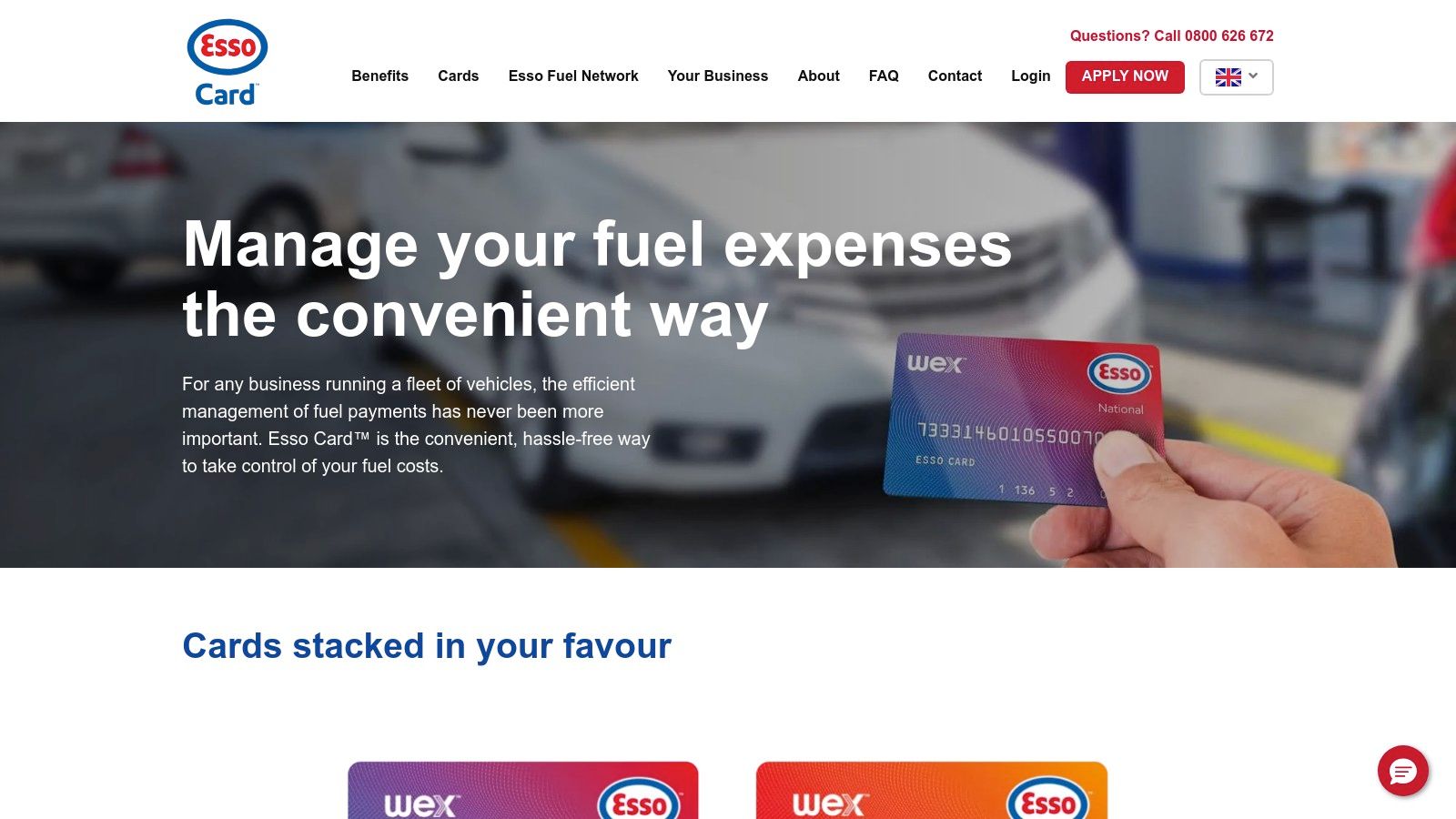
The Esso Card offers extensive UK coverage at all Esso stations, with additional acceptance at BP and Shell sites. Its online portal provides real-time transaction tracking, spending limits, card blocking, and HMRC-compliant invoices. Introductory offers such as waived account fees make it attractive for companies trialling a fuel card service.
Key Features
- Strong Network: All UK Esso stations plus access to BP and Shell sites.
- Simplified Management: Intuitive portal for reporting and spend control.
- Introductory Offers: Periodic promotions like fee holidays for new clients.
- European Coverage: The card can be used across a broad European network for cross-border haulage.
Best value is found primarily within the Esso network. Businesses should confirm EV charging capabilities, as these may vary by plan.
Website: Esso Card
6. UK Fuels (Radius)
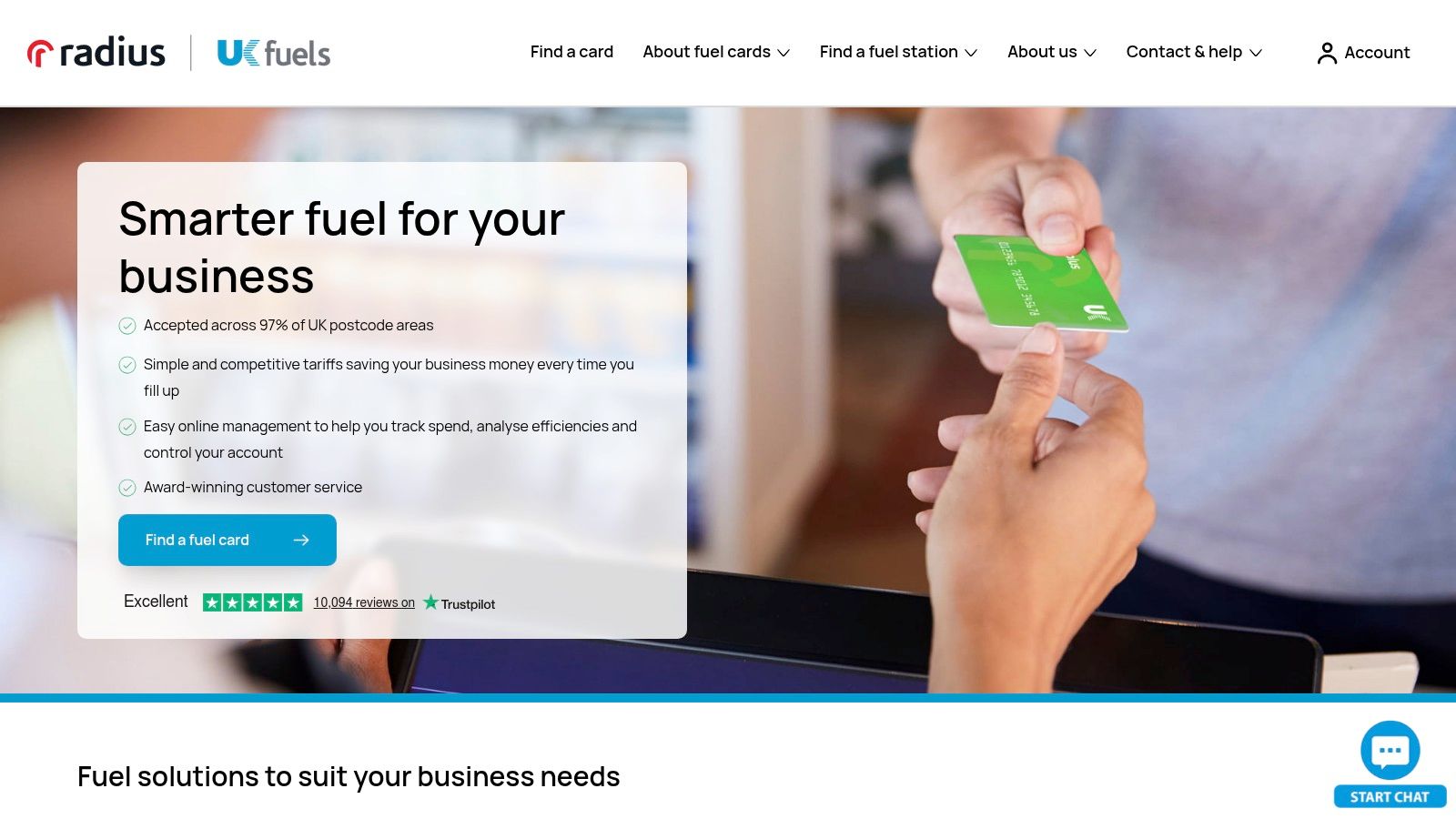
UK Fuels offers a versatile range of fuel cards — Fuelplus, Fleetone, and Truckone — with access to thousands of stations including key supermarket and independent sites. The Radius Velocity online platform gives fleet managers granular control, and their e-route station finder helps drivers plan efficient refuelling stops. Certain cards like Fuelplus offer a fixed weekly diesel pricing model for budget predictability.
Key Features
- Varied Network Access: Strong coverage across supermarket and independent stations, tailored by card type.
- Fixed Weekly Pricing: Select cards offer a fixed diesel price for budget predictability.
- Powerful Management Tools: Radius Velocity and e-route provide comprehensive control and planning.
- Card-Specific Terms: Surcharges and network access can vary significantly between cards.
Managers must carefully analyse routes before committing, as each card type has different coverage. The blend of low-cost fuel access and robust digital tools offers strong value for cost-conscious fleets.
Website: UK Fuels
7. iCompario (fuel card comparison marketplace)
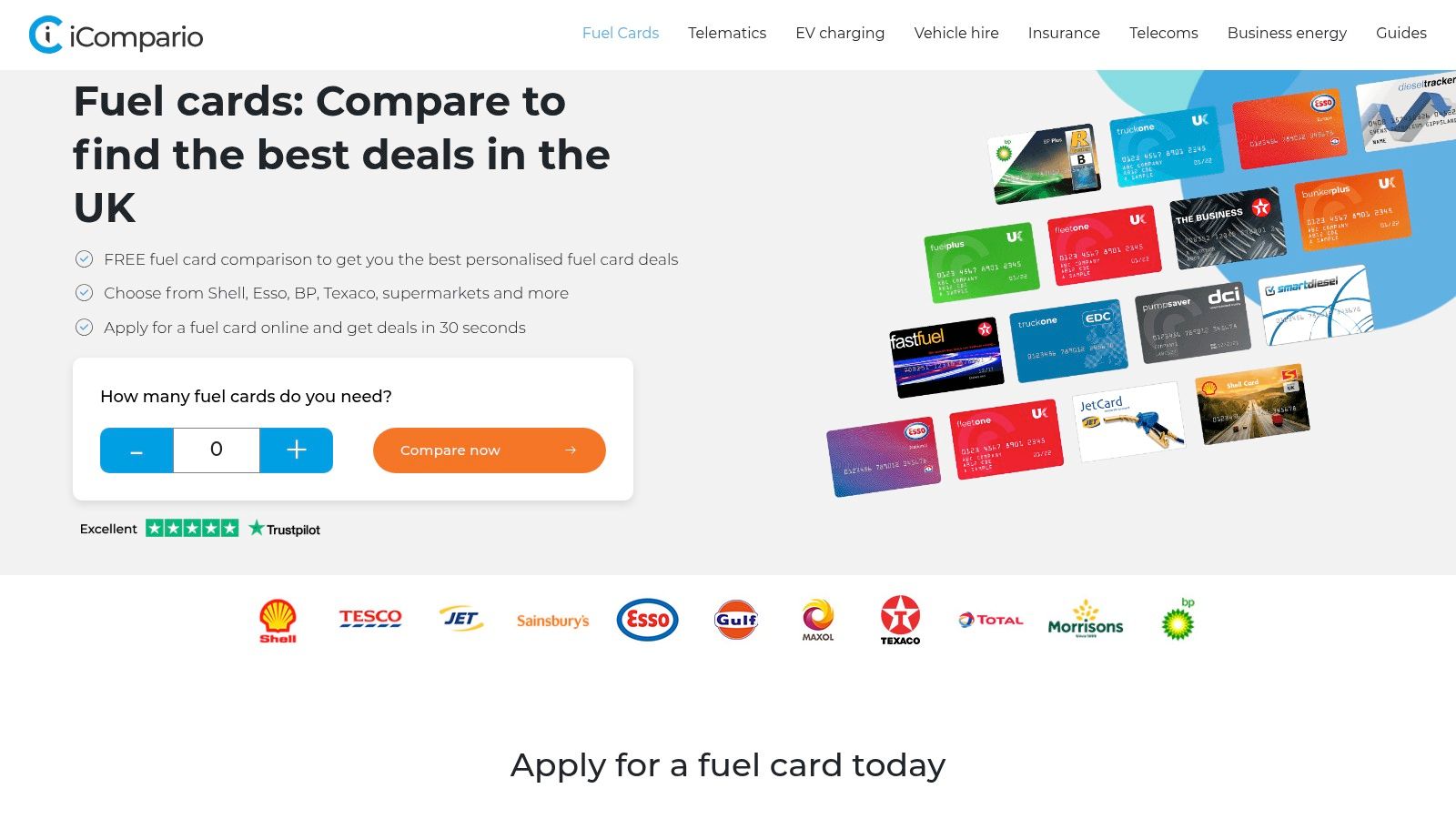
iCompario is a comparison platform that lets businesses shortlist fuel cards from a wide range of providers — Shell, bp, Esso, UK Fuels, and more — in one place. Fleet managers input their needs and receive tailored recommendations with side-by-side details on networks, pricing, and use cases.
Key Features
- Multi-Provider Comparison: Compare cards from numerous major providers in one place.
- Guided Process: From initial search to application hand-off.
- Extensive Database: Uses postcode data to match your routes with the most convenient networks.
- Ownership and Pricing: Free to use, but owned by Radius. Some reviews suggest recommendations may favour in-house products. Specific fees are revealed only upon applying with the provider.
A useful starting point for any business unsure of where to begin, but the final contract and pricing come directly from the card provider.
Website: iCompario
Provider-by-Provider Feature Comparison
To make the differences concrete, here is a feature-by-feature comparison across all seven providers:
| Feature | Rally | Shell | BP Plus | Esso | Allstar | UK Fuels | iCompario |
|---|---|---|---|---|---|---|---|
| Coverage | UK, EU, and beyond | UK & EU Shell network | UK & EU BP network | UK & EU Esso network | UK multi-brand network | UK multi-brand network | Aggregator (varies) |
| Acceptance Rate | 99% (VISA-backed) | Network partners only | Network partners only | Network partners only | ~90% UK sites | Varies by card type | Varies by provider |
| Expense Types | All business costs | Fuel and vehicle costs | Fuel and vehicle costs | Fuel and vehicle costs | Fuel and some vehicle costs | Fuel only | Varies by provider |
| EV Charging | Integrated, app-free (fob or WhatsApp) | Separate card/system | Separate bp pulse arrangement | Varies by plan | Chargepass partner network | Limited | Varies by provider |
| Driver Interface | WhatsApp-based, no app | Dedicated app | Dedicated app | Dedicated app | Dedicated app | App + e-route | N/A |
| Pricing Model | Transparent, no deposits | Variable fees, potential surcharges | Bespoke, variable fees | Variable, introductory offers | Bespoke, card and network fees | Fixed weekly (some cards), variable | N/A |
| Accounting Integration | Direct integration | Basic reporting | Basic reporting | Basic reporting | Basic reporting | Reporting via Velocity | N/A |
The Real-World Headaches Modern Cards Solve
Running a fleet across the UK and into Europe has become a seriously complex job. Fleet managers deal with three persistent operational drains that traditional fuel cards were never built to handle.
Administrative Overload
Chasing drivers for crumpled paper receipts, painstakingly reconciling every expense, and fixing data entry mistakes eats up over 10 hours of staff time every single month. Modern platforms automate this entire workflow: drivers submit receipts via WhatsApp, AI matches them to transactions, and data flows directly into your accounting software.
Cross-Border Complexity
The moment your fleet crosses the Channel, the problems multiply. Different currencies, unpredictable exchange rates, confusing VAT regulations, and a jumble of toll and parking systems create blind spots that lead to budget blowouts. A single VISA-backed card with 99% acceptance and built-in cross-border support pulls all European spending into one clear, manageable view.
Fragmented Systems
A typical fleet might have one card for fuel, a separate app for EV charging, another system for tolls, and manual expense claims for parking and maintenance. This disjointed setup is expensive — you're paying for multiple subscriptions and dealing with data stuck in silos. Modern platforms consolidate everything into one card, one invoice, and one dashboard.
With a single VISA-backed card, drivers can pay for fuel, top up their EV, cover tolls, and handle any other business expense. This consolidation gives finance teams a single source of truth for all spending.
Navigating the EV Transition
The move to electric vehicles is adding a new layer of operational complexity. Drivers are forced to juggle a mess of apps, cards, and payment systems just to find a compatible charger. Instead of treating EV charging as a bolt-on, modern platforms integrate it into a single system with access to one of Europe's biggest charging networks — spanning over 20 countries.
The goal is to make charging an EV as straightforward as filling up with petrol:
- Fob: A quick tap starts and stops a session. Billing is automatically routed through the central fleet account.
- WhatsApp: Drivers can manage the entire charging process through WhatsApp — no downloads, no new logins.
This simplicity ensures high driver adoption and accurate data across the entire fleet, whether it's a diesel HGV or a fully electric van. These platforms also provide access to the cheapest EV charging in Europe and give you detailed insights into both fuel and energy consumption. For a deeper look at building an efficient charging strategy, see our guide on electric car charging cards in Europe.
How to Choose the Right Card for Your Business
Picking the right fuel card hinges on your fleet's unique profile. Use this checklist to cut through the marketing and focus on what matters:
- Geographical Operations: UK-only or pan-European? For any cross-border fleet, a VISA-backed card with 99% acceptance is non-negotiable.
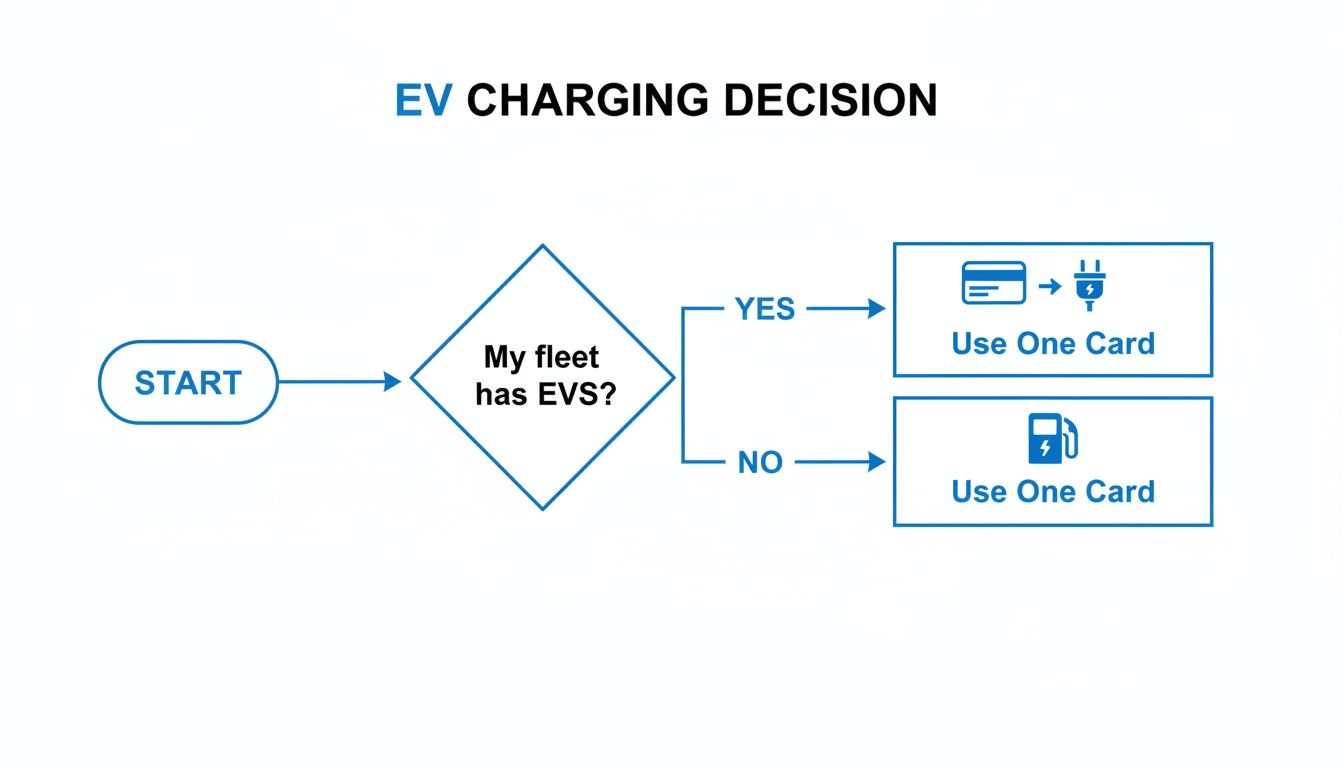
- Fleet Composition: Running petrol, diesel, and electric vehicles? You need a single platform that handles both fuel and EV charging without juggling separate systems.
- Administrative Resources: How many hours does your team sink into manual reconciliation? A system that saves over 10 hours per month through accounting integrations offers serious ROI.
- Driver Usability: A solution that works entirely through WhatsApp, with no apps to download, guarantees high adoption and accurate data from day one.
- Total Cost of Ownership: Look past the headline pump discount. Are all fees clearly stated? Are there hidden charges for network access, card issuance, or transactions? Does the card require a deposit?
Matching the Solution to Your Scale
A small, local business will prioritise simplicity and low barriers to entry — no deposits or credit checks and straightforward admin. A large enterprise with a mixed fleet operating across Europe will need deep analytics, granular spending controls, and seamless accounting integrations.
The right choice solves your immediate headaches — chasing invoices, managing scattered payments — while giving you a scalable foundation. For more on how a free-market approach to fuel purchasing slashes costs, see our data analysis guide.
Discover Rally
Rally replaces fragmented fuel cards, expense tools, and charging apps with a single platform built for European fleets. Explore what it can do:
- Fleet Cards & Expense Management — One VISA-backed card for fuel, tolls, parking, maintenance, and every other business expense.
- EV Charging — Access one of Europe's largest and cheapest charging networks. Start a charge via fob or WhatsApp.
- Accounting Integration — Automated receipt capture, real-time categorisation, and direct sync with Xero, QuickBooks, Sage, and more.
- Book a Demo — See how Rally can cut your fleet's admin time and fuel costs in a live walkthrough.
Ready to consolidate your fleet's expenses and unlock significant savings? Rally offers a single, powerful card for fuel, EV charging, tolls, and all other business spending across Europe. With transparent fees, no deposits, and a simple WhatsApp interface for drivers, you can cut costs and reclaim hours of admin time.