Collecting paper receipts and reconciling petty cash drains time and cash. For any company with employees on the move across Europe, an expense card for employees replaces slow manual reimbursement with a controlled, real-time system — recovering admin time, protecting cash flow, and sparing staff from fronting company costs.
The True Cost of Old-School Expense Management
Manual expense management is familiar to many European businesses. A driver in France pays for fuel from their own pocket; a sales rep in Germany covers parking; a director pays cross-border tolls. Each one starts a chain of manual work: collecting receipts, filing expense reports, and waiting weeks — sometimes months — for reimbursement.
This clunky process creates a lot of friction. It’s a system supposedly built on trust but plagued by inefficiency. For finance teams, it means hours spent chasing invoices and punching numbers into spreadsheets. It's a recipe for human error that can easily burn over 10 hours of manual work every single month. That's time that could be spent on actual financial strategy, not boring admin.
The Financial Strain on Your Team
The hidden cost here is the financial burden this puts squarely on your employees. When drivers have to use their personal funds as a line of credit for the company, it creates unnecessary stress and can quickly lead to resentment. And this isn't a small problem; it's widespread across Europe.
In the UK, a staggering 81% of employees have been left out of pocket for work-related expenses for over a month. For fleet drivers who are constantly paying for fuel, tolls, and maintenance, that kind of delay can seriously mess with their personal finances.
Research shows this isn't just a minor inconvenience. Two-thirds of employees report that waiting for reimbursements has a negative impact on their personal financial health. That financial strain is a huge barrier to keeping morale high and holding onto good people. You can discover more insights about the impact of slow reimbursements and see why this old model just isn't working anymore.
Operational Bottlenecks for Fleets
For businesses running vehicle fleets in Europe, these problems are magnified tenfold. A lack of real-time visibility means you have no idea what's being spent until a report lands on your desk weeks later. This makes accurate budgeting almost impossible and opens the door wide for spending that goes way outside of company policy.
Then you have the complexity of cross-border operations, a key problem for European fleets. Different currencies, varied VAT rates, and a dozen different vendors for fuel, tolls, and parking create an administrative nightmare. Trying to consolidate all of these varied expenses is a massive challenge, turning what should be simple into a major operational bottleneck that holds back growth and efficiency.
How a Modern Expense Card for Employees Works
A modern expense card for employees is the front end of a system that ties every transaction to a central dashboard, giving finance real-time visibility and control instead of a month-end report.
When a driver pays a toll in Italy, the transaction appears on your dashboard in London, already logged and categorised. That is how current platforms work: they replace separate fuel cards, toll tags, and expense software with one system, which removes parallel subscriptions and lowers cost.
The diagram below shows how traditional expense methods drain three resources: time, employee morale, and cash flow.
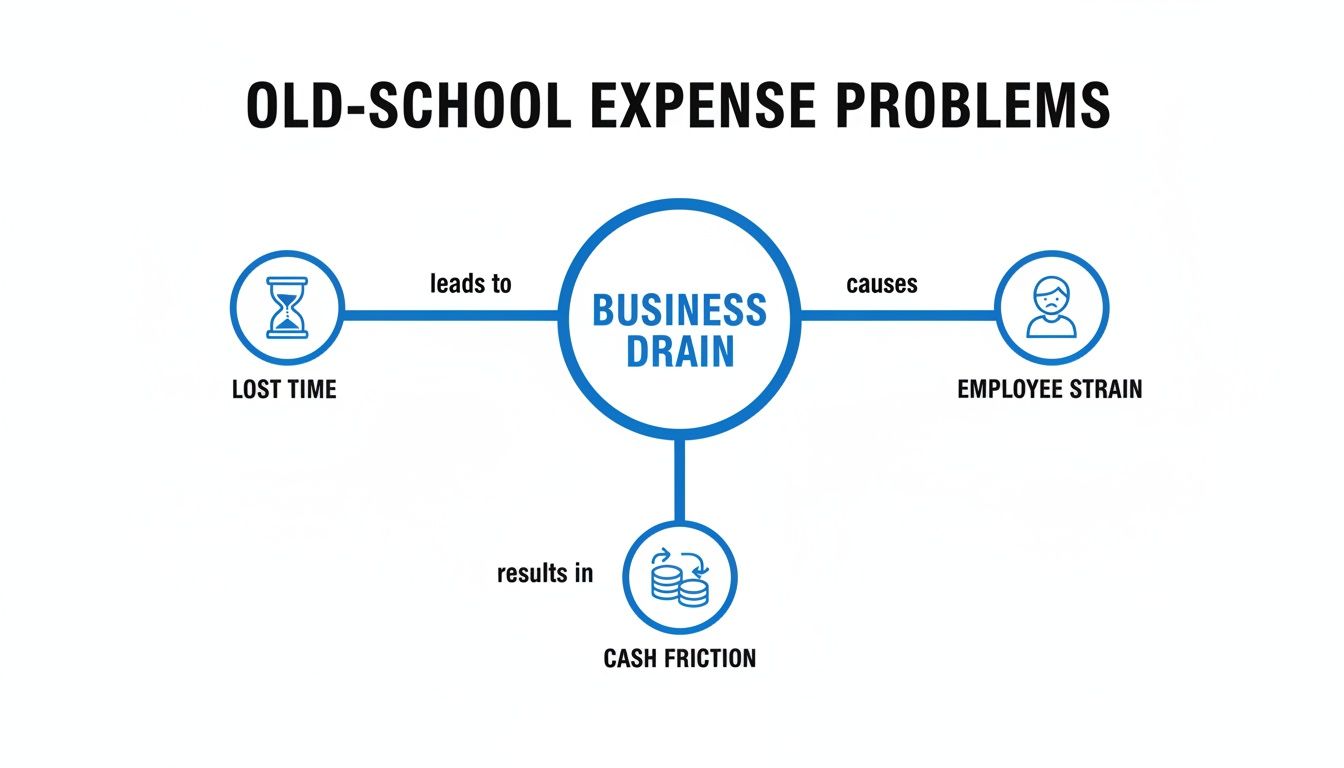
These processes create friction at every step, from payment to reconciliation.
How a Transaction Flows
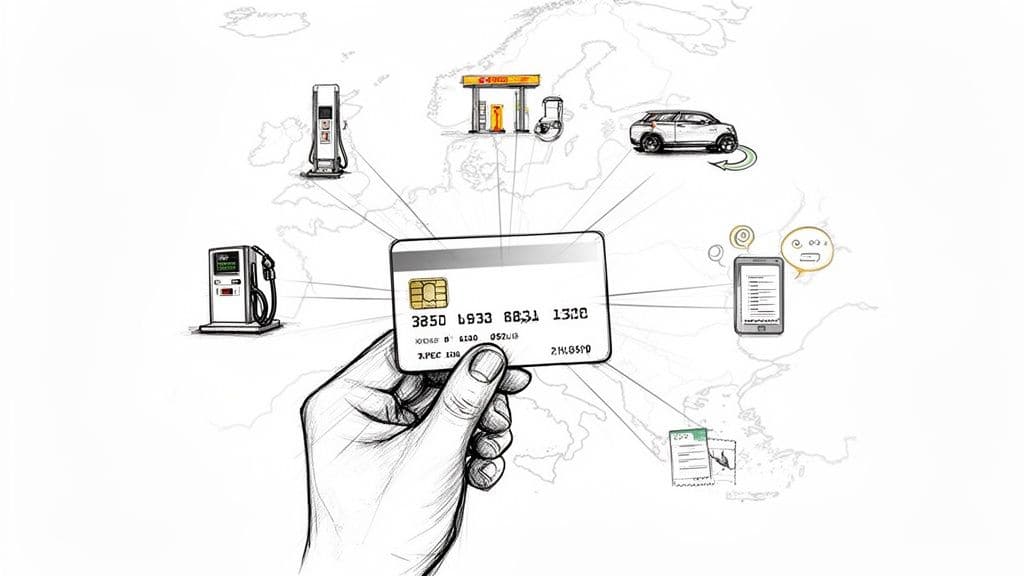
The value of an expense card for employees is the automated workflow behind it. As a VISA-backed card, it reaches 99% acceptance at millions of locations across Europe, so your team can pay for fuel, EV charging, parking, tolls, or office supplies wherever they are.
Here’s a look at how a single transaction transforms your entire process:
- Payment is Made: A driver fills up at a low-cost fuel station in Spain using their card.
- Instant Notification: You, as the manager, get an immediate alert on your central dashboard. No surprises.
- Receipt Capture: The driver simply snaps a photo of the receipt and sends it via WhatsApp. There's no new app to download or learn.
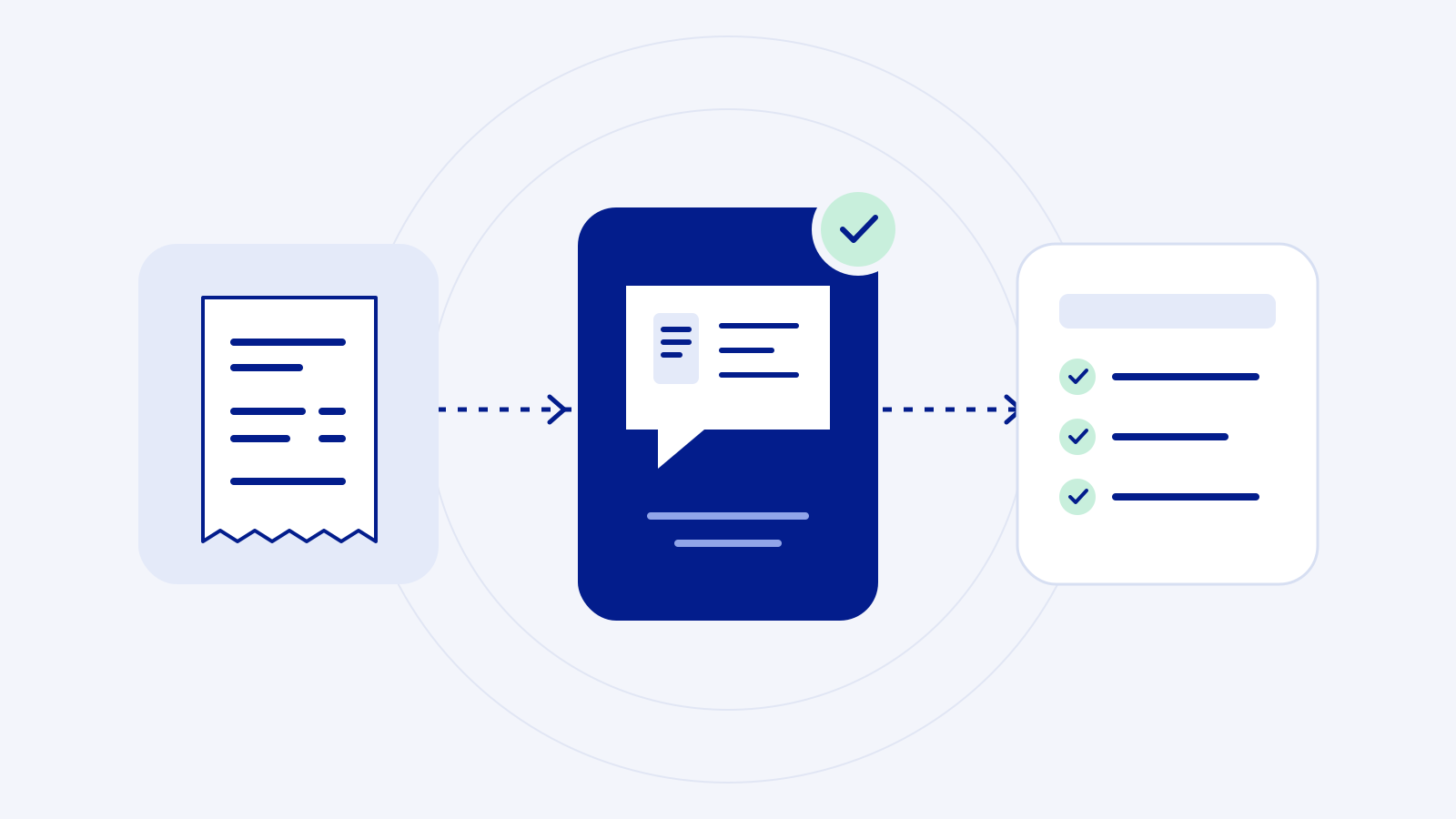
- Automated Processing: The system instantly reads the receipt, matches it to the right transaction, and categorises it correctly.
- Direct Accounting Integration: That categorised data then flows straight into your accounting software.
This seamless journey means no more chasing invoices and helps companies cut over 10 hours in manual work per month. The entire cycle, from the card swipe to the final settlement, is completely automated.
Control and Consolidation in One Platform
A modern expense card system finally puts the financial controls back where they belong—in your hands. You no longer need a patchwork of different tools to manage different types of spending. Instead, a single platform handles everything, from fuel and tolls to office expenses and anything needed to run the business day-to-day. This makes it a far cheaper and more efficient alternative. You don't even need a separate expense management tool.
This consolidation brings clarity to your entire organisation, from the finance director right down to the drivers on the road. You can set pre-approved spending rules, like limiting a card to only be used for fuel or setting firm daily spending caps. This approach stops out-of-policy spending before it even has a chance to happen. A major advantage of a unified system is how much it simplifies expense management. For more on this, you can find great information on smarter approaches to tracking business expenses.
A unified system can reduce the financial barriers that slow businesses down. Rally uses transparent fees, and its prepaid option requires no refundable security deposit or personal credit check, but business and representative verification still applies. Postpaid terms require separate approval and may involve credit or security requirements.
Ultimately, this single tool replaces a jumble of different solutions, giving you better control while helping you compare lower-cost options across Europe. You can get into the finer details by checking out our deep dive into company expense cards and how they can be set up for your specific business needs.
The difference between the old way and the new way is stark. Let's break it down.
Table: Traditional vs Modern Employee Expense Management
The table below paints a clear picture of how much things have changed, moving from slow, manual reimbursement processes to the instant, controlled environment of a modern expense card platform.
| Feature | Traditional Reimbursement | Modern Expense Card Platform |
|---|---|---|
| Payment Method | Employees use personal cards; company may use limited fuel cards. | Company-issued smart cards with universal acceptance (VISA). |
| Spending Control | Post-transaction review; relies on trust and policy documents. | Pre-set, real-time controls (limits, categories, time of day). |
| Visibility | Delayed; managers see expenses weeks or months after they happen. | Instant notifications and live dashboard of all transactions. |
| Receipts & Admin | Manual collection, paper receipts, spreadsheet data entry. | Automated receipt capture via WhatsApp; no manual entry. |
| Reconciliation | Labour-intensive; finance team spends hours matching receipts. | Fully automated; transactions matched and categorised instantly. |
| Employee Experience | Out-of-pocket costs, long waits for reimbursement, frustrating. | No personal funds used, seamless process, higher satisfaction. |
| Fraud Prevention | Reactive; fraud is often discovered long after the fact. | Proactive; suspicious activity is flagged and blocked instantly. |
Modern platforms change the whole workflow, not one step — improving efficiency, control, and employee satisfaction while cutting administrative waste.
What a Centralised Expense Card System Changes
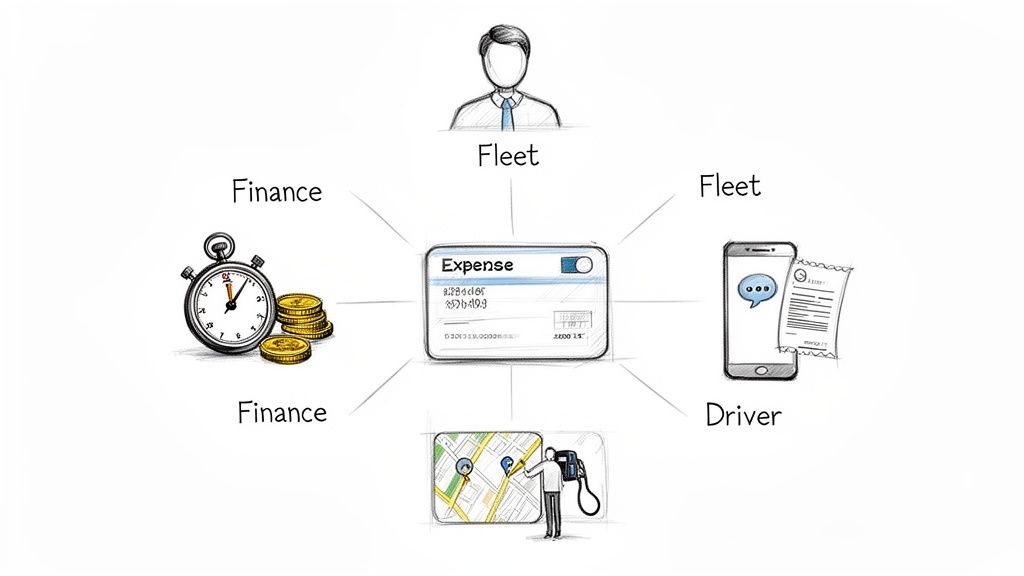
A modern expense card for employees replaces fragmented manual processes with one system that works for finance teams and drivers alike, which makes the operation more efficient, more transparent, and easier to trust.
The wins are concrete for each part of the business. For finance teams, chasing drivers for receipts and keying in data disappears: with direct accounting integration, you cut over 10 hours of manual work per month and free the team for financial planning.
For employees, the difference is just as large. Outdated expense systems are a real source of stress for UK staff: 43% of employees report financial difficulty while waiting for reimbursements, rising to 66% for those who incur costs every month. It is not only a lower-earner problem — it affects 50% of employees earning over £100,000 a year — which shows how systemic it is. A detailed report covers how current expense systems are failing UK employees.
Absolute Control for Fleet Managers
For anyone managing vehicles, a centralised expense card system provides a level of control and visibility that was previously unthinkable. The days of discovering out-of-policy spending weeks after it happened are well and truly over. You finally get to manage expenses proactively, not reactively.
This is especially critical for fleets operating across Europe. The key benefits are clear:
- Broad Acceptance: Rally reports 99% Visa acceptance across eligible merchants, giving drivers more options for fuel and toll payments across Europe.
- Cost-Saving Opportunities: The system can guide drivers towards low-cost fuel stations, helping them compare practical prices along each route.
- Frictionless Cross-Border Support: All transactions are tracked in real-time, in any country. This smooths out the complexities of managing different currencies and VAT—a common headache in European fleet expense management.
Empowering Your Drivers on the Road
The most immediate benefit, however, is felt by the drivers themselves. A modern expense card for employees finally frees them from having to use their own personal money for company business. This simple change removes a huge financial burden and builds a much stronger sense of trust and appreciation.
For drivers, the win is simplicity: no hoarding paper receipts and no new app to learn. Submitting everything via WhatsApp fits the workflow they already use.
This straightforward approach means no more lost receipts and no more delayed reimbursements. Drivers can focus on their jobs without the background anxiety of being out of pocket. From directors to drivers, everyone can use it, whether for a business lunch or paying for parking; the system just works seamlessly for everyone.
Better Cash Flow and Efficiency
Ultimately, a centralised system can strengthen your company's financial health. Rally uses transparent fees, and its prepaid option requires no refundable security deposit or personal credit check, so cash is not tied up as security; business and representative verification still applies. Postpaid terms require separate approval and may involve credit or security requirements.
By consolidating many tools into one—fuel cards, toll tags, and separate expense software—you not only simplify how you work but also drive down costs. This single, more affordable solution ensures every expense, from fuel and EV charging to office supplies, is managed in one place. It’s simply a smarter, cheaper, and more efficient way to run your business day-to-day.
Choosing the Right Expense Card Platform for Your Business
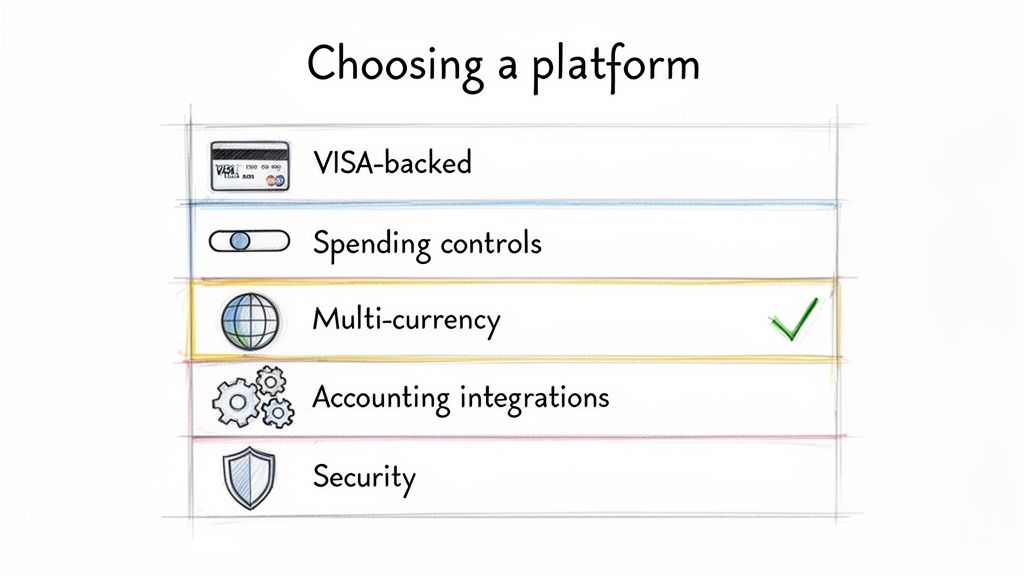
Choosing an expense card is a strategic decision about controlling cost, not just a payment method. For businesses with vehicles crossing European borders, the wrong platform adds friction; the right one becomes the control point for all company spending.
The old ways of doing things are on their way out. In the UK, for instance, we’re seeing a massive shift, with a 17% rise in employees handling their own expenses—the fastest growth of any market surveyed. At the same time, adoption of expense apps is up 4%, while clunky spreadsheets have thankfully dropped by 4%.
But there’s a catch. Many traditional systems still aren't accessible to the whole team. A staggering 85% of UK business travellers say they struggle with their company's expense systems. If you want to dig into the details, the 2025 State of Expense Management report lays it all out. This isn't just an inconvenience; it's a clear signal that businesses urgently need a solution that’s both powerful and genuinely easy for people to use.
Universal Acceptance and Powerful Controls
First things first: for any European fleet, the card has to work everywhere. This is non-negotiable. Your drivers need a card that’s accepted every single time, whether they're at a fuel station in Poland or a toll booth in Portugal. A VISA-backed card is the gold standard here, with 99% acceptance at millions of locations. It completely removes the risk of a driver getting stranded.
But wide acceptance is only half the story. You also need total control. The right platform should let you:
- Set specific spending limits for each driver, vehicle, or team.
- Restrict purchase categories, so a card meant for fuel can only buy fuel.
- Get real-time transaction alerts to see spending the moment it happens.
This kind of granular control stops rogue spending before it even starts, instead of just flagging it weeks later when someone finally gets around to the paperwork.
Seamless Integrations and User-Friendly Tools
A good expense card platform should make your life easier, not harder. One of the biggest differentiators is how well it plays with the software you already use. Look for direct accounting integration with major platforms like Xero, QuickBooks, or Sage. This means all the transaction data—complete with categories and receipts—flows straight into your books, saving your finance team from hours of manual entry.
The best systems are designed for the people using them, not just accountants. If a driver has to download and learn a new app, they won't use it. A platform that lets them submit receipts and check their balance through WhatsApp removes that friction, so adoption happens from day one.
Differentiators for Cross-Border Fleets
If your business operates across European borders, a few features become absolutely essential. You need a platform that offers cross-border support in any country and can handle multi-currency transactions without slapping you with hidden fees. That transparency is vital for accurate budgeting and avoiding nasty surprises on your monthly statement.
Beyond that, find a platform that brings everything under one roof. It should be able to manage every single type of expense—Parking, Tolls, Fuel, Charging but also office expenses and anything to run the business day-to-day. This single-tool approach is far more efficient and much cheaper than trying to juggle separate subscriptions for fuel cards, expense software, and toll tags.
By choosing a solution built for the real-world complexities of European travel, with access to low-cost fuel stations, you can improve operational control. Rally's prepaid option requires no refundable security deposit or personal credit check, but business and representative verification still applies; postpaid terms require separate approval and may involve credit or security requirements.
A Step-by-Step Guide to Implementing Your New Expense Programme
Making the switch to a modern expense card for employees can feel like a massive undertaking, but it doesn't have to be a headache. With a bit of planning, the rollout can be a smooth, strategic upgrade that delivers results fast.
Breaking the whole process down into clear, manageable steps takes the mystery out of it and ensures your team gets on board without a fuss. The goal here is to ditch the chaotic, manual processes and move to a smarter, automated workflow as quickly as possible, giving you better control and efficiency from day one.
Map Your Current Process and Identify Pain Points
Before you can fix anything, you need a crystal-clear picture of what's broken. Start by mapping out your current expense management workflow, from the moment a driver needs to buy fuel to the point where your finance team signs off on the report.
Where are the delays? Are your drivers constantly dipping into their own pockets? How many hours is your finance team losing to chasing down invoices and punching numbers into a spreadsheet?
By pinpointing these specific time-wasters, you can find a provider that solves the exact problems holding your business back. For many European fleets, that often means dealing with cross-border payment failures, not having access to low-cost fuel, or just the sheer administrative weight of reconciling different expense types.
Select a Provider That Aligns with Your Needs
Once you know your pain points, you can choose a platform that offers the right cures. Look for features that really matter for your operations, especially if you travel across Europe.
A few key things to prioritise:
- Universal Acceptance: A VISA-backed card with 99% acceptance is a must. It just works everywhere.
- Transparent Pricing: Compare disclosed prices across your routes. Rally's prepaid option requires no refundable security deposit or personal credit check, which can protect cash flow, but business and representative verification still applies. Postpaid terms require separate approval and may involve credit or security requirements.
- Consolidated Tools: A single platform that handles fuel, tolls, parking, and other business expenses is way cheaper and more efficient than juggling multiple systems. You won't need a separate expense management tool.
- User-Friendly Tech: A system that works through WhatsApp is a huge win. It means your team doesn't have to download and learn yet another app.
Onboard Your Team and Configure Controls
With the right provider chosen, the setup is usually straightforward. The first job is to get your drivers and vehicles onto the platform. This is typically a quick process that doesn't demand any deep technical know-how.
As soon as that's done, set up your initial spending rules. You can define limits for each driver or vehicle, block certain purchase categories (like fuel only), and even set geographic boundaries. This proactive approach puts you firmly in control of spending before a single penny is spent.
A clean rollout comes down to clear communication and simple tools. Train drivers on card use and receipt submission and you get high adoption and immediate compliance.
Finally, connect the platform to your accounting software. Most modern systems offer direct accounting integration that makes this simple. Keep an eye on the initial transaction data as it flows in. This lets you tweak your controls and spending rules based on real-world usage, perfecting your new, smarter workflow and ensuring you cut over 10 hours in manual work per month.
Calculating the Real ROI of an Automated Expense System
When you're looking at a new system for employee expenses, it's easy to get caught up in features and controls. But the real test? The impact on your bottom line. Calculating the return on investment (ROI) goes way beyond comparing subscription fees. It’s about adding up the direct cost cuts and, just as importantly, the massive value of time you get back.
The first and fastest win is cutting out the administrative grind. Think about it: if your finance team can claw back over 10 hours of manual work every month, that’s a direct saving on payroll. Instead of chasing drivers for receipts or untangling spreadsheet errors, they can focus on actual financial strategy. That reclaimed time is a genuine asset that makes the whole business run smarter.
Identifying Direct and Indirect Savings
The direct savings are the easy ones to spot on a balance sheet. Giving your drivers access to low-cost fuel stations across Europe can reduce a major running cost. At the same time, pre-set spending limits and real-time alerts can stop out-of-policy spending before it happens. Rally uses transparent fees, and its prepaid option requires no refundable security deposit or personal credit check, but business and representative verification still applies. Postpaid terms require separate approval and may involve credit or security requirements.
But don't overlook the indirect savings—they often pack a bigger punch. What’s the cost of high employee turnover? A system that takes away the stress of paying out-of-pocket and makes paperwork disappear does wonders for morale. Happy, trusted drivers are much more likely to stick around, saving you the steep costs of recruitment and training new people.
An automated expense system also means you can ditch several other tools, which saves even more money. It consolidates many tools into one, replacing separate fuel cards, clunky expense management software, and different toll solutions, bringing everything under one roof. That means one platform and one bill for every single business expense, from parking and charging to office supplies, which is also cheaper.
A Clear Path to Positive Returns
For fleets operating across Europe, the benefits are clear and easy to measure. A logistics firm can stack up huge annual savings just by optimising what they pay for fuel and slashing administrative overhead. If you want to see a real-world example of how a modern fleet spend platform delivers these kinds of savings, check out this customer spotlight on Autohero and their journey to becoming more efficient.
A well-designed system is simple for everyone from the managing director to the driver. With 99% acceptance on the VISA network and cross-border support in any country, daily friction drops. Automating receipt capture on WhatsApp and accounting sync makes the ROI clear — in admin hours saved and in a more efficient business.
Employee Expense Card FAQs
The questions fleet and finance managers ask most often, answered directly.
Are These Expense Cards Actually Secure Against Misuse?
Yes — they give you more control than cash or a traditional corporate card. You can set spending limits per employee or vehicle, restrict purchases to approved categories like fuel or tolls, get real-time alerts on unusual activity, and freeze a card instantly from the dashboard if it is lost. That is far more secure than relying on a driver to keep a paper receipt.
This proactive approach stops out-of-policy spending before it even happens, protecting your company’s money and giving you complete oversight.
Will an Expense Card for Employees Work All Over Europe?
Absolutely. This is one of the biggest wins for businesses with teams on the move. As a VISA-backed and partner card, it has 99% acceptance at millions of shops, fuel stations, and service providers across Europe and the rest of the world.
Your drivers will never be stuck without a way to pay, whether they need fuel in Germany, tolls in Spain, or parking in Poland.
This universal acceptance means seamless cross-border support in any country. It covers every business expense—from Parking, Tolls, Fuel, Charging but also office expenses and anything to run the business day-to-day—making it a single, reliable tool for your entire operation.
How Painful Is It to Integrate with Our Accounting Software?
It’s designed to be as painless as possible. The best expense platforms offer direct accounting integration with major software like Xero, QuickBooks, and Sage.
This means all the important stuff—transaction data, receipts, and spending categories—syncs up automatically. No more chasing invoices, it's all in one place. This direct link keeps your books accurate and audit-ready, and we’ve seen it cut over 10 hours of manual work per month for finance teams.
Do My Drivers Need to Learn Yet Another Complicated App?
Not at all. The last thing your drivers need is another app to juggle. The most user-friendly platforms are built to work with the tools your team already uses every single day.
For example, our system lets drivers handle everything—from getting balance notifications to snapping a picture of a receipt—entirely through WhatsApp. This completely removes the learning curve and means your team can adopt the new system from day one with zero friction. It’s a simple change that empowers everyone, from directors to drivers.
Ready to ditch manual expense reports and get better control over your fleet's spending? With Rally, you can issue smart expense cards, automate receipt capture, and reduce administrative hours. Find out how our VISA-powered platform helps fleets compare lower-cost options across Europe.