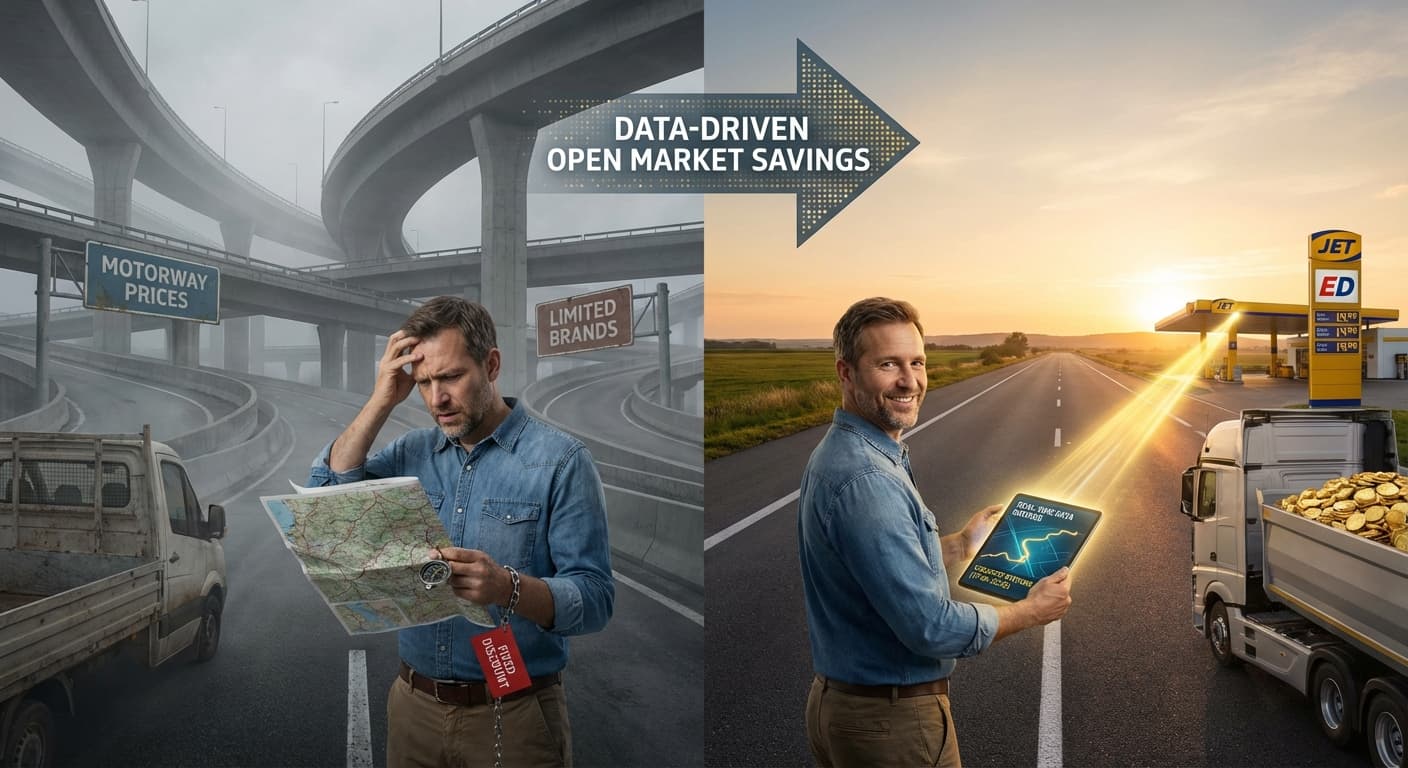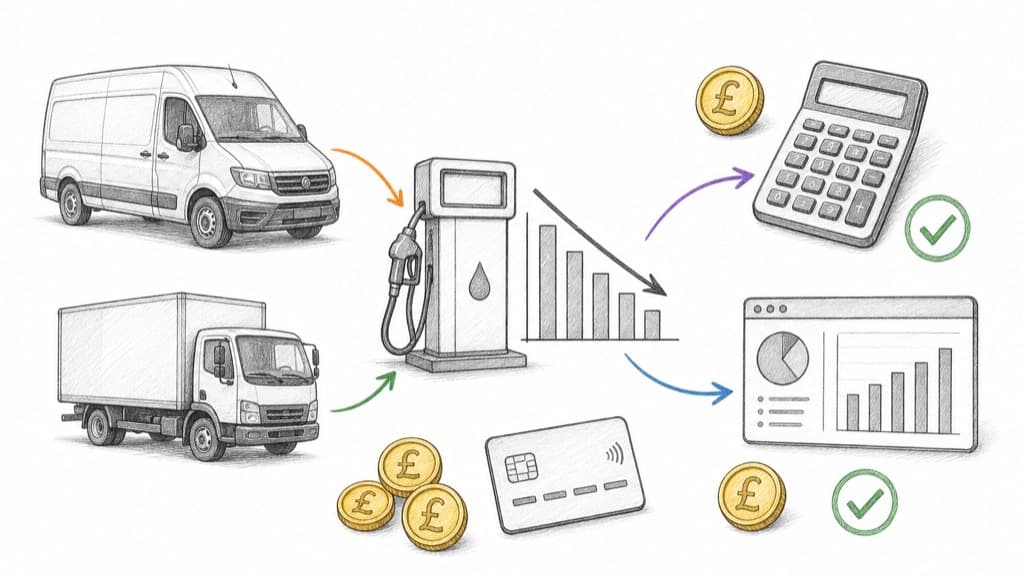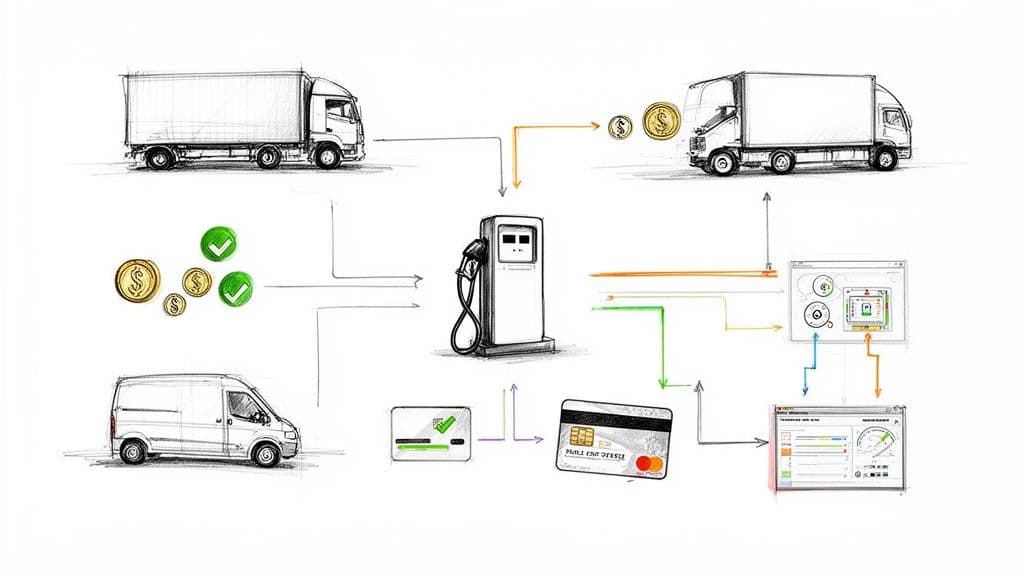
A modern fleet fuel management system is a centralised platform built to control costs, cut out manual work, and give you a live view of all your vehicle-related spending. Think of it as moving beyond a simple payment card to a complete financial toolkit for any business running vehicles in Europe.
The Growing Pressure on European Fleets
Managing a fleet in Europe today can feel less like running a business and more like juggling dozens of unpredictable household budgets at the same time. Each vehicle is its own stream of expenses—from bouncing fuel prices and surprise maintenance bills to cross-border tolls and parking fees. Without a central system to wrangle it all, you're looking at administrative chaos that costs far more than just money.
This lack of control creates a perfect storm for fleet managers. Key problems like volatile fuel costs, which saw diesel prices in Germany spike over €2.30 per litre in 2022, force businesses to operate with extreme uncertainty. On top of that, the administrative burden of chasing paper receipts and manual data entry opens the door to costly human error and even fuel fraud, where unauthorised purchases can go unnoticed for weeks.
The Quicksand of Manual Administration
The admin burden is one of the biggest headaches. Picture a finance team spending their days chasing drivers for missing invoices, painstakingly punching numbers from crumpled fuel slips into spreadsheets, and trying to make sense of dozens of different credit card statements. This isn't just inefficient; it's a massive drain on your team's time and energy.
This administrative quicksand can easily swallow over 10 hours of manual work per month—time that could be spent planning better routes or finding real cost savings. The endless paper trail creates bottlenecks, delays financial reports, and brings a high risk of human error that can throw your entire budget off course.
Navigating a Complex and Costly Market
Operating in Europe adds its own unique layers of complexity. Fleets crossing borders have to deal with a maze of different toll systems, varying fuel taxes, and currency changes. Trying to manage these cross-border expenses with old-school methods is a logistical nightmare, often demanding multiple payment cards and expense tools, each with its own fees and rules. This fragmented setup makes getting a clear, consolidated picture of your total fleet spend nearly impossible.
A truly effective fleet fuel management system must act as a unified command centre, bringing control and clarity to this complex environment. It should consolidate all spending—from fuel and EV charging to tolls and office supplies—onto a single, universally accepted platform.
To get a better sense of how messy traditional methods are compared to modern systems, let's break it down.
Manual vs. Automated Fleet Fuel Management
The difference between managing fuel with spreadsheets and paper versus a dedicated platform is night and day. One traps you in reactive, time-consuming cycles, while the other gives you proactive control.
| Challenge | Traditional manual process | Modern automated system |
|---|---|---|
| Transaction visibility | Data is delayed by weeks; you only know what was spent after reconciling receipts. | Real-time dashboard shows transactions as they happen. |
| Receipt management | Drivers lose receipts; finance team manually chases, collects, and enters data. | Drivers submit receipts via WhatsApp; they're auto-matched. No more chasing invoices. |
| Fraud prevention | Suspicious spending is only caught long after the fact, if at all. | Instant alerts for out-of-policy purchases; cards can be blocked immediately. |
| Cost control | Policies are hard to enforce; drivers might use premium fuel or fill up at expensive stations. | Set spending rules (e.g., no premium fuel) that are enforced automatically at the pump. |
| Reconciliation | Hours spent matching receipts to bank statements and manually entering into spreadsheets. | Receipts are matched to payments, with a VAT summary and exports for your accounting software. |
The table makes it clear: sticking with manual processes means leaving money on the table and wasting valuable time that could be focused on growing the business.
The reliance on these systems is growing for a reason. In the UK, the fuel cards industry—a key part of fleet management—is projected by IBISWorld to generate around £480.6 million in revenue in 2025-26, showing just how many businesses are turning to technology to fight back against volatile costs.
Ultimately, the pressure on European fleets boils down to three core problems: a lack of real-time spending visibility, the constant threat of fuel fraud, and the immense time lost to manual reconciliation. Adopting a modern, integrated solution isn’t a luxury anymore—it’s an essential strategy for survival and growth. To see how data-driven approaches can slash these expenses, check out our guide on how a free-market approach and data reduce fuel costs.
What Exactly Is a Fleet Fuel Management System?
Let's be clear: we're not talking about a simple payment card. A modern fleet fuel management system is the financial command centre for your vehicles. It’s an entire ecosystem designed to give you total control over every single euro your business spends on the road, connecting payments, data, and accounting into one smooth, automated flow.
Think about trying to conduct an orchestra where every musician is playing from a different sheet of music. That’s what it feels like to manage fleet expenses with personal cards, loose cash, and a patchwork of different tools—it’s just chaos. A proper system replaces all that with a single platform where you can see and control every transaction as it happens.
These systems are built to solve the three core pressures that European fleets are constantly battling.
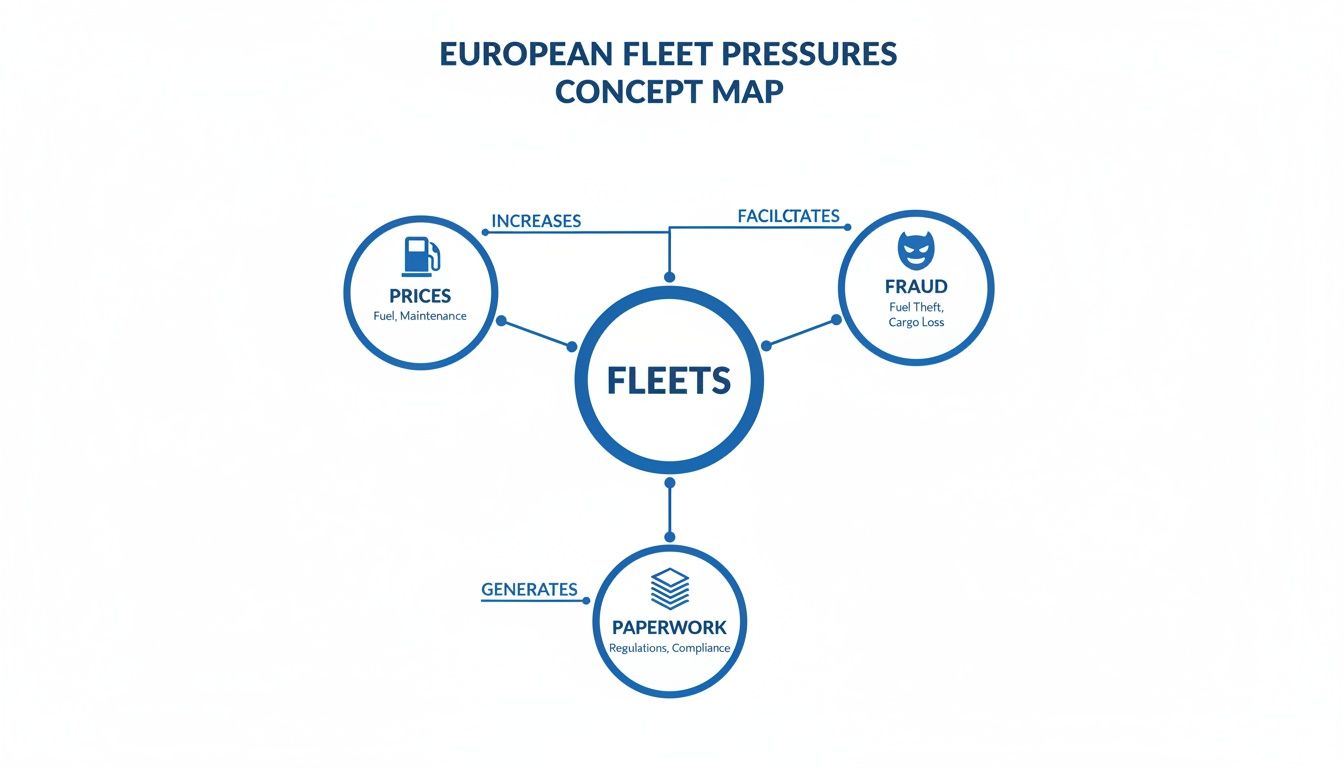
As you can see, rising fuel prices, the ever-present risk of fraud, and the mountain of paperwork create a perfect storm of wasted money and time. A centralised system is your best defence.
The Core Components Working Together
At its heart, a modern system isn’t just one thing; it’s several key pieces working in perfect harmony. This is what elevates it from a basic payment tool into a powerful engine for cost control and efficiency. The whole point is to create a direct data pipeline from the fuel pump to a VAT-ready export, cutting out the manual work entirely.
Here are the essential components:
- Smart Payment Cards: These are your tools on the frontline. Forget traditional fuel cards that only work at certain stations. Modern systems use globally recognised, VISA-backed partners, which gives you 99% acceptance across Europe. Your drivers can pay for anything, anywhere—fuel, tolls, parking, even ad-hoc supplies—without ever worrying about their card being rejected.
- Live Spending Dashboards: This is your mission control. The second a card is swiped, the transaction pops up on a central dashboard. You see exactly who spent what, where they spent it, and when, giving you a real-time, accurate view of your fleet's financial health. No more waiting for end-of-month reports.
- Customisable Spending Controls: This is where you make your company expense policy airtight—and automatic. You can set specific rules for each driver or vehicle, like daily spending limits, approved purchase categories (e.g., fuel only), or even time-of-day restrictions. It stops out-of-policy spending before it can happen.
- Automated Receipt and Invoice Capture: The days of chasing drivers for crumpled receipts stuffed in the glovebox are over. With clever solutions, drivers can just submit a receipt via WhatsApp—no clunky app download needed. The system then automatically digitises the data and matches it to the right transaction, saving teams over 10 hours of manual admin per month.
A Single Platform for All Expenses
One of the biggest shifts with next-generation fleet fuel management is the move away from using multiple tools. You no longer need one provider for fuel cards, another for expense management, and a third for tracking tolls. Everything happens on one platform.
This isn't just about making things more convenient; it's about real cost savings and operational clarity. By swapping multiple software subscriptions for a single, cheaper solution, you slash your software bill and simplify your entire financial workflow.
Rally uses transparent fees and helps fleets find lower-cost fuel stations across Europe. It is prepaid, with no refundable deposit or personal credit check. Cross-border support and one shared workflow can reduce administrative drag from directors to drivers.
What Are the Real-World Benefits for Your Business?
Knowing the features of a fleet fuel management system is one thing, but seeing how it actually transforms your bottom line is where the real value hits home. These platforms are built to attack the biggest financial drains and administrative headaches your business faces every day.
The impact is felt right across the organisation, from the driver at the pump to the finance team closing the books. It’s about delivering real benefits you can measure in both euros and saved hours.
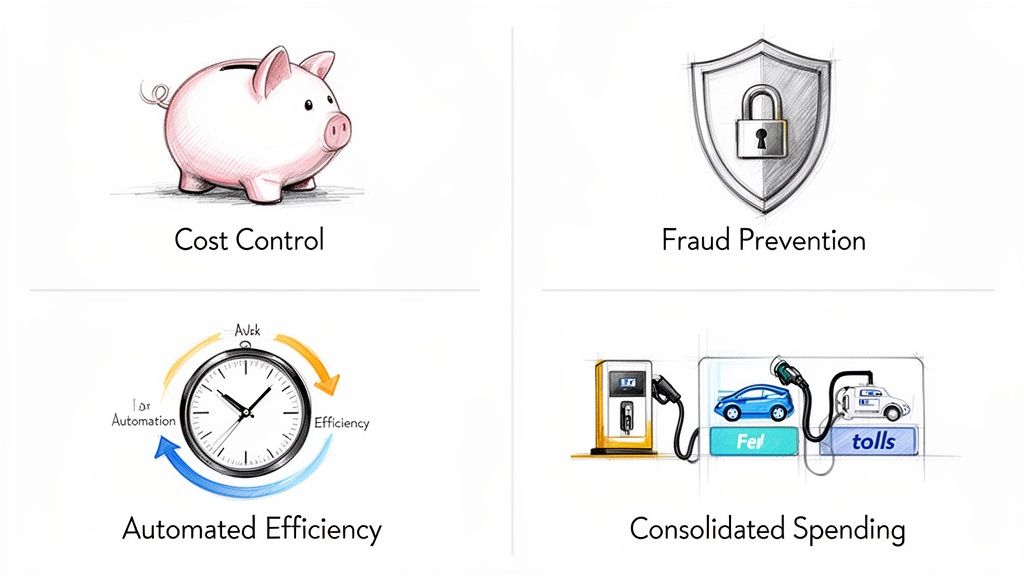
Genuine Cost Control
For any fleet, fuel is a massive, unpredictable expense. Modern systems tackle this head-on by giving you direct access to low-cost fuel stations across Europe, making sure you get the best possible price on every single fill-up.
Unlike traditional providers that often bury costs in complicated contracts, the best solutions disclose fees clearly and help fleets compare lower-cost options across Europe. Rally's prepaid option requires no refundable security deposit or personal credit check, freeing cash that might otherwise be tied up as security, but business and representative verification still applies.
Automation That Frees Up Your Team
The administrative slog of managing expenses is a silent killer of productivity. Chasing down stray invoices, manually punching in receipt data, and trying to reconcile dozens of separate statements isn't just tedious—it's expensive.
A unified platform puts a stop to all that.
By automating invoice collection and preparing downloadable accounting files, businesses can cut over 10 hours in manual work per month. This isn't just a minor tweak; it's giving your team back a full day of productive time to focus on what really matters instead of paperwork.
Imagine a world with no more chasing invoices. With tools that let drivers submit receipts via WhatsApp, the whole process becomes dead simple for everyone. All the financial data flows seamlessly from the pump straight into your records, creating a single source of truth that’s always accurate and up-to-date.
Consolidated Spending for Total Financial Clarity
A modern fleet’s expenses go way beyond just fuel. You've got tolls, parking, maintenance, and EV charging to worry about, not to mention the day-to-day office expenses needed to keep things running. Juggling multiple cards and software for each of these is a recipe for chaos and wasted money.
A true fleet fuel management system consolidates many tools into one, which is also cheaper. It gives you a single, VISA-backed card that works for any type of business expenses—a crucial advantage for European operations.
- 99% Acceptance: Drivers can pay anywhere, from a rural fuel station in Spain to a toll booth in Germany, without ever worrying about their card being rejected.
- Total Expense Coverage: The same card handles fuel, charging, parking, tolls, office expenses, and anything to run the business day-to-day.
- Cross-Border Support: You can seamlessly manage expenses in any country without the headache of multiple currencies or regional providers.
This all-in-one approach dramatically simplifies your operations. UK fleets, for instance, are feeling immense pressure from rising operational costs, where every penny counts. Effective systems turn messy spending data into clear, actionable insights needed to get those expenses under control. German and cross-border truck operators should also account for the recovery workflow behind those charges; our 2026 LKW-Maut refund and toll-management guide explains eligibility, evidence requirements, and reconciliation for fleets.
This consolidation provides the clarity needed to navigate a demanding market. To see a real-world example, check out how Autohero saved significantly with a consolidated fleet spend platform.
How to Choose the Right System for Your European Fleet
Picking the right fleet fuel management system can feel overwhelming, especially when you’re running vehicles across the complex European market. Let's be honest: you're not just buying a fuel card. You're investing in a financial platform that has to work flawlessly across dozens of countries, currencies, and regulations.
To make the right call, you need a clear checklist of non-negotiable features that solve the real-world problems your fleet runs into every single day. Think of this as your buyer's guide—a way to cut through the noise and find a system that actually fits your operation without any nasty surprises down the road.
Your European Fleet System Checklist
When you're looking at different options, measure each provider against these critical points. The right partner will give you straightforward, positive answers to every question, proving they get the unique demands of a modern European fleet.
Does It Offer Universal, Cross-Border Acceptance?
The single biggest headache for any cross-border fleet is a card rejection at the pump. A fuel card that works perfectly fine in Germany but gets declined in Poland isn't just an inconvenience; it’s an operational bottleneck that leaves your drivers stranded and frustrated.
Your first question should be about acceptance. Look for a VISA-backed partner that reports 99% acceptance across millions of locations, while checking the network and merchant coverage for your routes. This can help drivers pay for fuel, tolls, and other essentials across countries, though individual merchant acceptance can vary.
Is the Fee Structure Completely Transparent?
Hidden fees can wipe out your savings in a heartbeat. Many old-school providers bury their real pricing in complicated contracts, hitting you with unexpected charges for everything from international transactions to simple account maintenance.
Demand transparency. The ideal system has a clear fee structure and helps you compare lower-cost options across Europe without burying costs in unclear charges.
Does It Require a Financial Deposit?
Tying up your company’s capital in a security deposit is an outdated practice that kills your cash flow. Many providers still demand a hefty upfront payment, which is money you could be investing in growth, new vehicles, or driver training.
Rally is prepaid, with no refundable deposit or personal credit check.
Does It Consolidate All Fleet Expenses?
Your vehicles rack up a lot more costs than just fuel. You've got tolls, parking, EV charging, and even day-to-day business expenses to track. Juggling separate tools for each is a recipe for inefficiency and higher costs.
The right platform will consolidate many tools into one cheaper solution. It should handle every expense—from a tank of diesel to office supplies—using a single card and a unified dashboard. This means you no longer need a separate expense management tool. You can find out more about simplifying payments in our article introducing DriverLink for smarter fuel card management.
Does It Offer a Simple User Experience?
A system is only as good as its adoption rate. If it's clunky and requires hours of training, your drivers and office team simply won't use it properly.
Look for a system that is genuinely effortless for everyone, from directors to drivers. Solutions that integrate with familiar tools like WhatsApp for capturing receipts remove all the friction. There are no new apps to download, no forgotten passwords. When you can cut over 10 hours in manual work per month just because the system is that easy to use, you know you’ve found the right fit.
The Future Is Integrated Fleet Expense Management
The conversation around fleet fuel management systems has moved far beyond the pump. While keeping fuel costs in check is still a massive piece of the puzzle, the real future is in integrated expense management—platforms that bring every single business payment into one smart system. This isn't just about adding a new feature; it's about turning a single-purpose tool into a strategic asset that prepares your entire operation for what's next.
Fleet managers today are juggling more than ever. The rise of mixed fleets, combining traditional diesel vehicles with electric ones, throws a whole new set of challenges into the mix. You need a system that can handle both a fuel purchase at the pump and an EV charging session on a single platform, giving you one clear picture of your total energy spend.
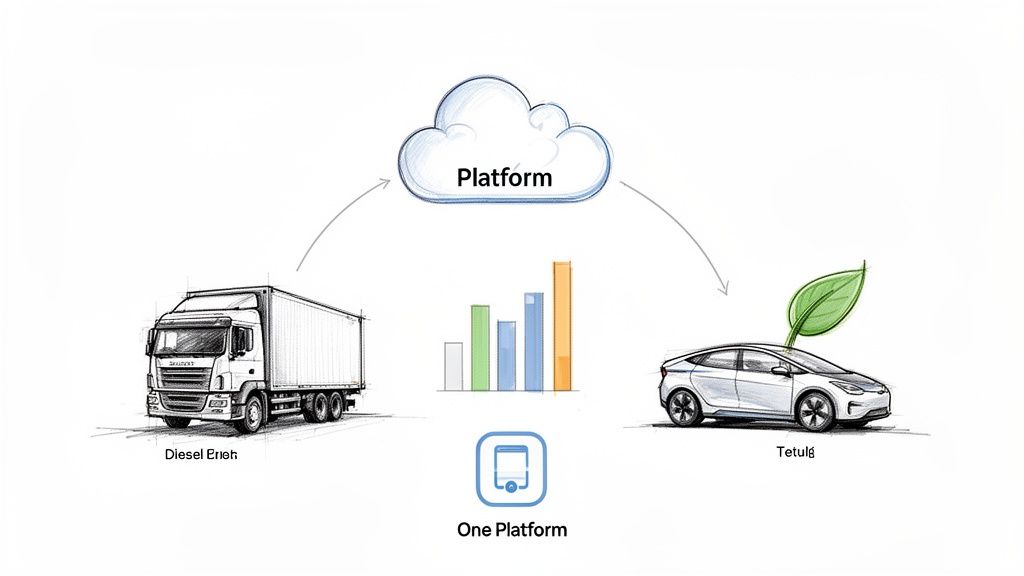
This shift isn't just for convenience. In a market with constantly changing rules and budget pressures, it's about survival.
From Fuel Card to Total Business Card
The most forward-thinking platforms have already made this leap. They offer a single, VISA-backed card that works for any business expense. Think about it: your drivers and employees can pay for fuel, charging, tolls, parking, and also office expenses and anything to run the business day-to-day.
This consolidation creates a powerful ripple effect:
- It can cost less: Consolidating tools can reduce overlapping software subscription fees and help fleets find lower-cost options across Europe.
- It’s simpler: A single platform means less training for your team, cleaner workflows, and one source of truth for all your spending.
- It’s more efficient: With downloadable accounting exports, you can stop chasing invoices and cut over 10 hours in manual work per month.
This kind of system lets everyone, from directors to drivers, manage expenses through familiar tools like WhatsApp. Rally is prepaid, with no refundable deposit or personal credit check.
Preparing for a Sustainable and Regulated Future
Sustainability is no longer a buzzword; it’s a core business requirement. Modern systems tackle this head-on by providing automated carbon emission reporting, helping you meet your ESG compliance goals without the administrative headache. As regulations get tighter, having this data ready to go will become non-negotiable.
The UK market is a perfect example of this shifting landscape. The Autumn Budget 2025's fuel duty freeze offers some temporary relief, but the simultaneous introduction of VED for EVs signals a major policy shift. Add to that the 64,000 new battery-electric vehicles registered in 2024, and it's clear why you need a system that can handle both fossil fuels and electrification without missing a beat.
An integrated system doesn't just save you money today; it prepares you for tomorrow's market. It gives you the flexibility to adapt to new vehicle technologies, changing regulations, and evolving business needs without having to rip out your entire financial setup.
For European fleets looking to go electric, understanding initiatives like the one highlighted by California’s EnergIIZE Fast Track 2025 for Fleet Electrification can offer a great roadmap for structuring large-scale rollouts. In the end, choosing an all-in-one platform with transparent fees, 99% acceptance, and cross-border support is the smartest move any modern fleet can make.
Answering Your Key Questions
When you’re looking at a new fleet fuel management system, you're bound to have questions. You need to know you’re making a smart investment—one that solves real problems without creating a bunch of new ones. Let's dig into some of the most common concerns we hear from fleet operators across Europe.
Are These Systems Difficult to Implement and Use?
This is a perfectly valid worry. Nobody wants to roll out a new system that drivers and office staff just won't use.
The short answer is no. Modern systems are designed to be incredibly easy to adopt. Forget about clunky apps that need downloading and formal training. The best solutions slot right into the tools your team already uses every day.
For example, a driver can submit a receipt simply by sending it via WhatsApp. It’s a user-first approach that ensures everyone, from directors to drivers, can get started on day one. This simplicity is the key to cutting over 10 hours in manual work per month—it just works, straight out of the box.
Is It Affordable for My Small Business?
Absolutely. The old idea that these platforms are only for massive, enterprise-level corporations is completely outdated. Today's systems are built to deliver a powerful return for fleets of any size by directly tackling your biggest expenses and time-sinks.
Look for providers with a clear fee structure and compare their real costs on your routes. The financial benefits can stack up:
- Prepaid without a refundable security deposit or personal credit check, with business and representative verification still required.
- Access to low-cost fuel stations all across the continent.
- The ability to consolidate many tools into one, which is also cheaper, getting rid of multiple software subscriptions.
This model makes advanced fleet management not just accessible but genuinely profitable for small and medium-sized businesses.
How Do These Systems Handle Cross-Border Payments in Europe?
Managing payments across different countries is a massive headache for any European fleet. Juggling multiple currencies, different regional cards, and inconsistent acceptance rates can bring your operations to a grinding halt.
The solution is a system built on a globally recognised payment network. By using a VISA-backed partner, you get 99% acceptance in any country. This immediately removes all the friction from cross-border transactions, ensuring your drivers can pay for fuel, tolls, parking, and any other expense without a single hiccup, wherever their route takes them.
Ready to see how a single platform can simplify every aspect of your fleet's spending? Rally provides the control, savings, and ease of use your European fleet needs to thrive. Discover how Rally can transform your operations today.