The best fuel cards for small businesses in Europe aren't just about shaving a few pence off a litre anymore. They've grown up. Now, they are powerful, all-in-one financial platforms that pull all your expenses together and kill off mind-numbing admin work. The best solutions offer things like universal VISA-backed acceptance, crystal-clear fees, and can genuinely cut over 10 hours of manual work every month by making everything from fuel runs to cross-border VAT reclaim simpler.
Moving Beyond Traditional Fuel Cards in Europe

Running a small business fleet in Europe comes with a unique brand of headache. You're constantly juggling volatile fuel prices, baffling cross-border VAT reclaim rules, and the never-ending hunt for paper receipts. Fleets face constant problems like drivers being stuck because their card is rejected, or the finance team drowning in a sea of invoices from different providers for fuel, tolls, and parking. It's enough to overwhelm any business owner.
This guide isn't about those old, clunky solutions. We're looking at how the best fuel cards for small business have evolved. They’ve gone from simple discount tools to smart financial platforms designed to put you back in complete control. We’ll break down what really matters when choosing a card, focusing on the key differences that actually save you time and money.
What to Look for in a Modern Fuel Card
A genuinely effective fuel card has to solve the real-world problems European fleets wrestle with every single day. The focus should be on features that deliver both savings and efficiency.
Here's what you should be looking for:
- Universal Acceptance: A VISA-backed card gives you 99% acceptance across Europe. This is a game-changer. It stops drivers from having to hunt for specific in-network stations and frees them up to refuel at low-cost fuel stations, saving you money on every single tank and accessing the lowest prices in Europe.
- Transparent Fees: Say goodbye to sneaky, hidden charges. The best platforms are upfront about their transparent fees and often require no need for deposits, which frees up your company’s cash flow.
- All-in-One Expense Management: The new breed of cards consolidates many tools into one, which is also cheaper. They work for any type of expenses: Parking, Tolls, Fuel, Charging but also office expenses and anything to run the business day-to-day. This means no need to have a separate expense management tool.
Over the last ten years, fuel cards have become a standard control tool for UK small fleets, a change driven by soaring fuel costs and tighter financial belts. This matters because the UK and Germany are the two biggest fuel card markets in Europe. The game has moved beyond simple pence-per-litre discounts; fleet managers now demand real-time visibility into transactions and smooth accounting integrations. Modern platforms now offer this for all business spending, not just fuel. You can dig into the industry trends with these insights about the UK fuel cards sector from IBISWorld.
Ultimately, picking the right card is a strategic business decision. If you want to get back to basics first, you might find our guide on what a fuel card is and how it can help your operations a useful read.
Why Old Fuel Card Systems Are Costing You Money
Before we get into a side-by-side comparison, it’s worth taking a moment to understand the real-world problems that older fuel cards create for small businesses across Europe. That advertised pence-per-litre saving is often just the tip of the iceberg. Beneath the surface, a whole host of hidden costs and operational friction are quietly draining your resources and hitting your bottom line.
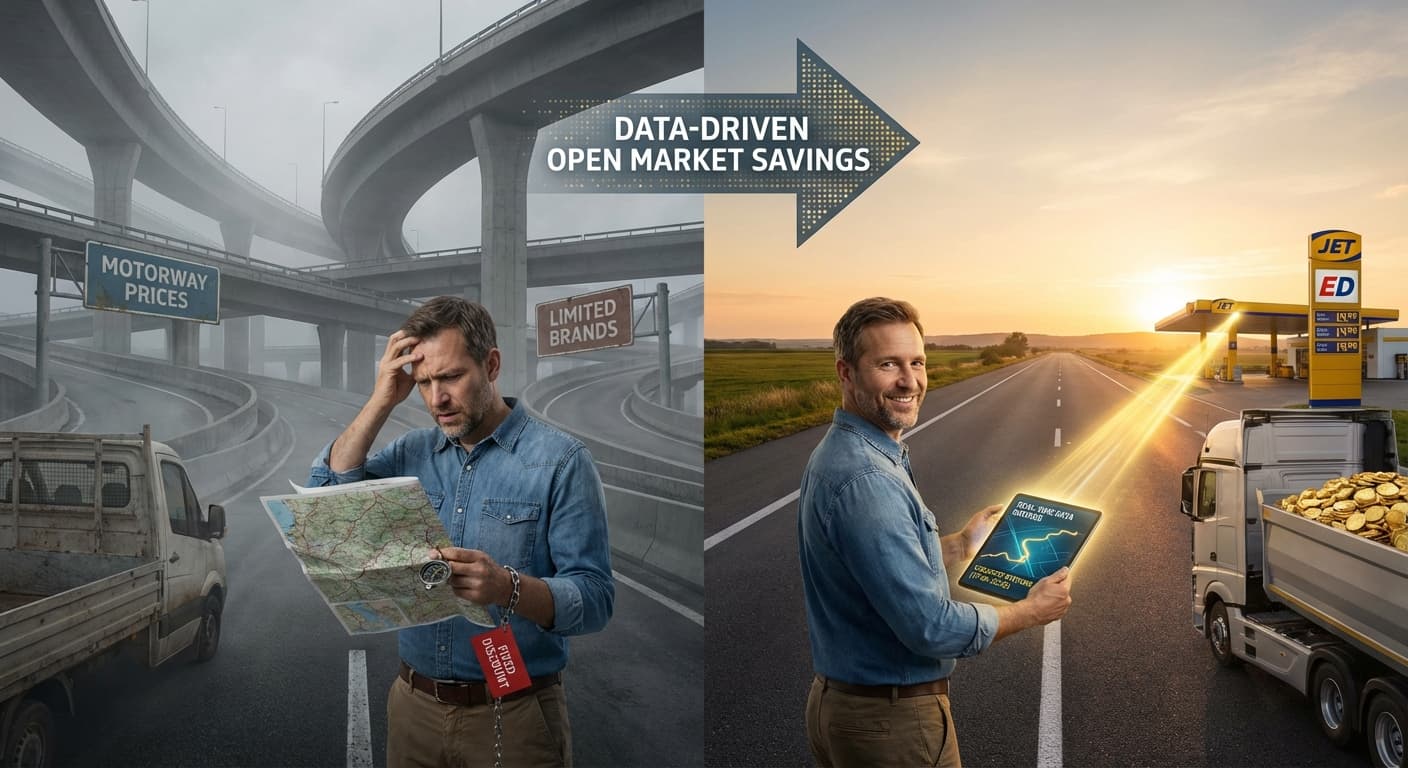
Many traditional cards lock you into a restricted network. This means your drivers waste valuable time and fuel hunting for an “in-network” station, often driving right past cheaper, more convenient independent options just a few metres down the road. This isn’t just frustrating; it directly inflates your fuel bill, cancelling out any supposed discount the card offers.
The True Cost of Inefficiency
The problems really start to multiply once your fleet operates across borders. For many, traditional systems make cross-border travel a complete nightmare. Picture this: a driver in France can't pay for parking because their fuel-only card gets rejected, or a toll payment in Germany fails, leading to delays and potential fines. These aren't just minor inconveniences; they are genuine operational bottlenecks that cost you real money.
Then there’s the mountain of admin. Legacy systems often force you to juggle separate solutions for fuel, tolls, parking, and EV charging. The result is a flood of different invoices from various providers landing on your desk at the end of the month. Your finance team is then left to manually piece together these disparate reports, a painful process that can easily eat up over 10 hours of manual work every single month.
The operational nightmare of delayed cross-border VAT reclaim is one of the biggest hidden costs. A modern, integrated system consolidates all the necessary data, turning a complex, multi-country reclamation process into a simple, streamlined task.
Why a Modern Solution Is Essential
The limitations of old-school fuel cards create a significant financial drag on your business. From surprise transaction fees that chip away at your savings to the tedious process of chasing invoices, the inefficiencies are constant. This is precisely why a modern, integrated platform is no longer a luxury but a necessity for survival and growth in today's competitive European market.
A single, VISA-backed and partner card with 99% acceptance makes these issues disappear. It brings all your fleet and business expenses—from fuel and charging to office supplies—into one system. With direct accounting integration and no need for separate expense management tools, you get back in control. From directors to drivers, everyone can use it effortlessly, often through familiar tools like WhatsApp, no need to download apps.
For a deeper dive into this comparison, explore our article on why modern fleet cards beat traditional fuel cards every time. It highlights how features like transparent fees and the absence of deposit requirements can immediately improve your cash flow and operational agility.
Comparing Fuel Card Models for European Fleets
Trying to navigate the European fuel card market can feel like a minefield for a small business. The options seem endless, and every provider promises the best savings and the simplest controls. To find the right fuel card for your small business, you have to look past the marketing noise and compare the actual models on offer.
When you boil it down, your choice really comes down to three main types: single-brand cards, multi-brand network cards, and modern, all-in-one spend platforms. Each is built for a different purpose, and getting to grips with their core differences is the first step towards a smart, cost-effective decision for your fleet. Let's break them down based on what actually matters day-to-day.
Network Coverage and True Acceptance
The single biggest difference is where your drivers can actually use the card. This has a direct knock-on effect on efficiency and your ability to find the lowest fuel prices—a constant battle for any European fleet.
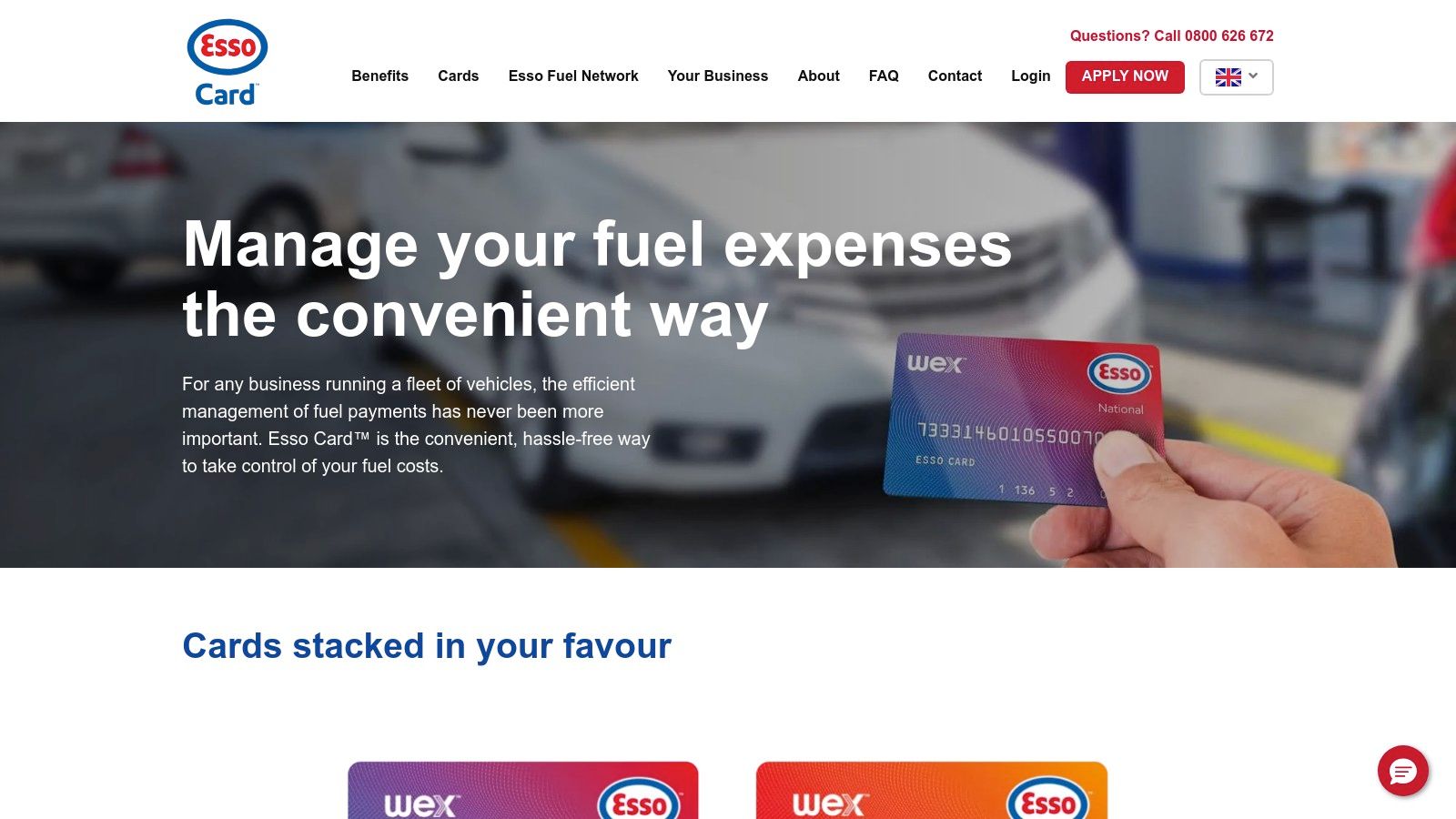
- Single-Brand Cards (e.g., Shell, BP): These lock you into one specific fuel company. While they might dangle tempting per-litre discounts, they seriously limit your drivers' options. This often means they waste time and fuel driving right past cheaper independent stations just to find one that's "in-network."
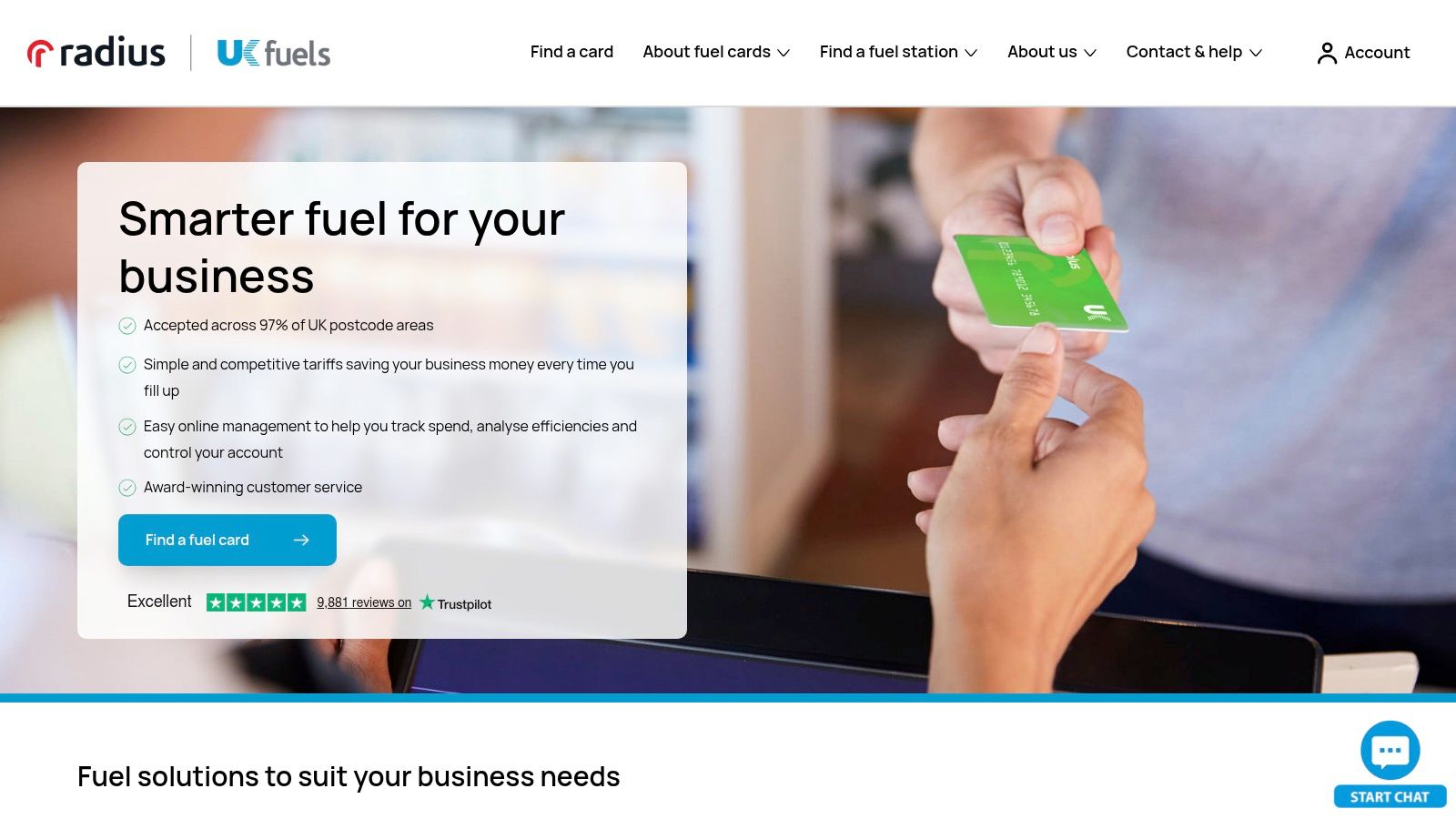
- Multi-Brand Network Cards (e.g., UK Fuels): These are a step up, giving you access to a network of different fuel brands. But they’re still restrictive. A driver crossing from Germany into France could suddenly find their card is useless, forcing them to pay out-of-pocket and creating a huge admin headache back at the office.
- Modern All-in-One Platforms: This is a completely different approach. By using a major payment network like VISA, these platforms offer near-universal acceptance. A VISA-backed card boasts 99% acceptance, meaning it works pretty much everywhere—from major brands and low-cost fuel stations to tiny independent stops in rural Spain. This freedom is the key to accessing the lowest prices in Europe.
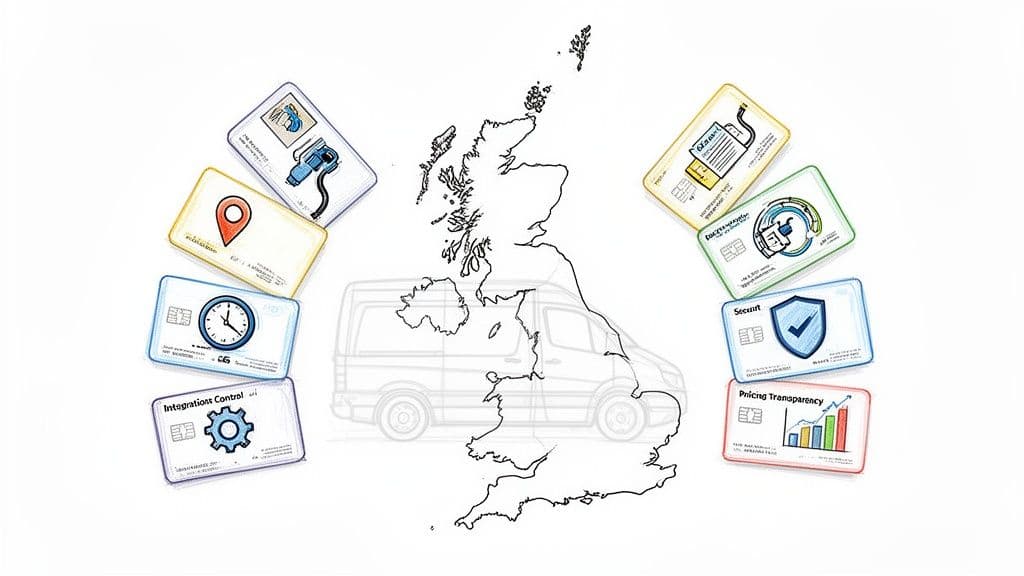
This flowchart shows the common traps fleets fall into when they stick with outdated fuel card systems.

As you can see, traditional cards often lead straight to wasted time, lost money, and massive administrative burdens—precisely the issues a modern platform is designed to solve.
Pricing Transparency and Hidden Fees
The headline discount is only ever part of the story. The true cost of a fuel card is often buried in complex fee structures and unexpected charges that completely wipe out your savings.
Legacy card providers are notorious for opaque pricing. You might get hit with transaction fees, network access fees, or even charges for using a station that isn't a "preferred partner." Worse still, many traditional providers demand substantial deposits just to open an account, tying up valuable cash that a small business needs for growth.
In stark contrast, modern platforms are all about transparent fees. The pricing is simple and clear, with no nasty surprises. Crucially, many require no need for deposits, freeing up your capital and making it much easier for small businesses to get started without a huge financial hurdle.
A fuel card should simplify your finances, not complicate them. The best solutions offer straightforward pricing, eliminating the need to decipher complex invoices filled with surprise charges at the end of the month.
Scope of Expenses Beyond Fuel
A modern fleet’s needs go way beyond just refuelling. Drivers have to pay for tolls, parking, and, increasingly, EV charging. This is where traditional fuel cards really fall short, forcing you to juggle multiple payment systems.
The result is operational chaos. A driver might have a fuel card, a separate toll tag, and then need to use their personal card for parking, leading to a mess of expense claims and lost receipts. This fragmented approach isn't just inefficient; it's costly.
A true all-in-one platform brings all these expenses onto a single card. Because it’s VISA-backed, the same card just works for:
- Fuel (petrol and diesel)
- EV Charging
- Tolls and vignettes across Europe
- Parking fees
- Even day-to-day business expenses like office supplies or maintenance parts
This ability to consolidate many tools into one, which is also cheaper, is a massive advantage. It simplifies life for drivers and your finance team in one fell swoop, meaning there’s no need to have a separate expense management tool.
The whole idea of what the “best fuel cards” for UK small businesses are is changing as Europe’s fuel card market scales up. The market is projected to hit $374.6 billion by 2025, with universal or multi-merchant cards leading the charge. This really matters for UK fleets whose operations are increasingly pan-European, covering diesel, petrol, EV charging, motorway tolls, and city-centre parking. While over 70% of fleets still see cards mainly for refuelling, there's a growing demand for solutions that integrate data analytics and digital workflows, making things like real-time dashboards and accounting integrations just as important as the fuel discount itself. You can read the full research about the growing European fuel card market.
To make the differences clearer, here’s a side-by-side look at how traditional cards stack up against a modern platform like Rally.
Fuel Card Feature Comparison for European Small Businesses
This table highlights the fundamental shift: while old-school cards focus narrowly on fuel discounts within a closed network, modern platforms provide a comprehensive, transparent, and automated solution for all fleet-related spending.
Automation and Accounting Integration
The final, and perhaps most important, comparison point is the admin workload. No more chasing invoices and manually reconciling expenses, which can eat up dozens of hours every single month.
Traditional systems offer very little in the way of automation. You get a monthly statement, but the real work of matching receipts to transactions and punching data into your accounting software is all on you.
Modern platforms are built from the ground up to eliminate this pain. They can cut over 10 hours in manual work per month through smart automation. For instance, drivers can submit receipts and other info directly via WhatsApp, so there's no need to download apps. This simple approach ensures instant compliance from everyone, from directors to drivers.
All transaction data, complete with categorisation and VAT information, is captured in real-time. With direct accounting integration, this data flows straight into your existing software, wiping out manual data entry for good. Everything is done via WhatsApp, it's all in one place, ending the monthly paper chase and giving you a clear, consolidated view of your fleet's spending.
Calculating the Real Financial Impact of Your Choice
Moving past feature lists and headline discounts is where the real work begins. The true value of the best fuel cards for a small business isn't just about what you see on an advert; it’s measured on your bottom line. This comes from a blend of direct savings at the pump and operational efficiencies that give you back both time and money.
To get a real sense of the financial impact, we need to look at three core areas: the direct cost reduction on fuel, the time saved on admin, and the value of ditching multiple tools for one streamlined platform. Each of these adds up to a quantifiable return that proves the right card is a strategic investment, not just another monthly expense.
Quantifying Direct Fuel Savings
The most obvious win comes from cutting down your biggest variable cost: fuel. Traditional cards often dangle the promise of discounts, but they lock you into networks where the base prices might be inflated anyway, effectively wiping out any savings. A modern, VISA-backed card with 99% acceptance completely flips this script.
This universal acceptance gives your drivers the freedom to refuel at the cheapest stations in Europe, including low-cost fuel stations, supermarket pumps and independent retailers. Instead of being forced to find a specific in-network station, they can simply choose the most economical option on their route. That’s how you get real savings on every single fill-up.
For UK small businesses, the numbers tell the story. European fuel cards can deliver discounts of up to 5% at partner stations, but the real power is in choice. On a UK fleet spending £200,000 on fuel a year, a genuine 3–5% improvement translates to £6,000–£10,000 in direct annual savings. Modern platforms take this even further, covering EV charging, tolls, and parking on a single Visa card, so your finance team sees every vehicle-related cost in one place.
The Monetary Value of Administrative Efficiency
Time is money, and legacy fuel card systems are notorious time-wasters. Chasing drivers for paper receipts, manually keying in transactions, and piecing together cross-border VAT claims are low-value tasks that drain hours from your finance team. A modern platform is built to kill this admin burden.
By automating receipt capture through tools your team already uses, like WhatsApp, you can easily cut over 10 hours of manual work every month. Let's put a price on that. For an admin staff member on an average UK salary, those 10 hours represent a significant monthly cost. Over a year, you’re saving over 120 hours—that’s three full work weeks that can be redirected to activities that actually grow the business.
The real return on investment isn't just about saving pence per litre; it's about reclaiming entire workdays previously lost to manual expense management. This newfound efficiency is a powerful driver of productivity and profitability.
The Financial Impact of Consolidation
Small businesses often end up juggling a messy collection of software subscriptions: one for fuel, another for tolls, a separate tool for expenses, and maybe another for parking. Each has its own monthly fee, its own invoice, and its own learning curve. It's a costly and complicated setup.
An all-in-one platform tidies this up by consolidating many tools into one, which is also cheaper. When you choose a card that covers all business expenses—from fuel and EV charging to tolls and office supplies—you can eliminate the need for separate expense management software entirely. This brings several financial perks:
- Reduced Subscription Costs: You're paying for one platform instead of three or four, immediately lowering your monthly software overhead.
- Simplified Accounting: A single, consolidated invoice and direct accounting integration slash the time spent on reconciliation.
- Transparent Fees: Modern platforms offer clear, straightforward pricing with no need for deposits, freeing up essential cash flow that traditional cards would otherwise lock away.
For a complete picture of your financial health that goes beyond just fuel, exploring comprehensive expense management software can offer invaluable insights. Ultimately, the right platform delivers a financial return that extends far beyond the pump, turning a simple payment card into a powerful asset for your business.
How a Unified Platform Transforms Your Operations

Choosing the right fuel card isn't just about saving a few pence per litre. It's about simplifying your entire operation. The real shift happens when you ditch the patchwork of different payment methods and move to a single platform that handles any type of expenses.
Imagine one VISA-backed card that your team can use for everything on the road. This single card could pay for fuel at the cheapest stations, cover tolls without needing a separate tag, handle parking in any European city, and even manage EV charging. This gives you one, reliable source of truth for all your spending.
One Card for Total Control
This unified approach goes well beyond just vehicle costs. The same card can be used for office supplies, software subscriptions, or anything to run the business day-to-day. It completely does away with the need for petty cash or out-of-pocket employee expenses that always create an administrative headache.
The benefits are immediate and incredibly practical:
- One Consolidated Invoice: Instead of wrestling with statements from half a dozen vendors, you get one clear invoice covering all business spending.
- No More Separate Tools: You can finally get rid of your standalone expense management software, saving on subscription fees and tidying up your tech stack.
- Empowerment for Everyone: The system is built to work for the whole team, from directors setting detailed spending rules to drivers submitting receipts on the go.
A truly modern platform can even incorporate features like real-time integrated vehicle health monitoring, giving you a complete view of both financial and operational performance in one place.
Gaining Operational Agility
Friction is the enemy of any growing business. A fragmented expense system creates it constantly, whether it's a driver unable to pay for an unexpected repair or your finance team spending days chasing down missing invoices. A modern platform is designed to tear down these roadblocks.
One of the smartest features is how it simplifies communication. Instead of forcing drivers to download yet another app, everything is done via WhatsApp. A driver just snaps a photo of a receipt, sends it, and the system handles the rest automatically.
By eliminating the need for a separate app and using familiar tools like WhatsApp, you remove the biggest barrier to adoption. This ensures instant compliance and makes life easier for everyone on the team, from the newest driver to the finance director.
This approach means no more chasing invoices. Everything is captured and organised in real time, it's all in one place. For businesses working across Europe, this system provides vital cross-border support, in any country, ensuring payments just work, without the usual headaches of currency conversion or foreign transaction issues.
Ultimately, a unified platform is about more than just tracking spending. It’s about building a scalable financial system that helps your business grow instead of holding it back. By offering transparent fees, requiring no need for deposits, and plugging directly into your accounting software, it gives you the control and agility you need to compete.
If you're looking for ways to boost efficiency, understanding modern fleet fuel management systems can give you valuable context on how these platforms deliver a powerful return on investment.
So, What's the Smart Choice for Your European Fleet?
When it comes down to it, choosing the best fuel card for your business is about solving the real, everyday headaches that cost you time and money. It’s about leaving behind restrictive networks and surprise fees for a system that actually works for everyone, from the director to the driver on the road. A modern platform isn't just another bit of plastic; it's a genuine partner in your growth.
Legacy cards often end up creating more problems than they solve. Drivers waste precious time—and fuel—hunting for an in-network station. Your finance team spends days wrestling with separate invoices for fuel, tolls, and parking. And those hidden fees? They quickly eat away at any savings you thought you were getting. This administrative drag is a massive hidden cost that holds your entire business back.
Why a Modern Platform is the Clear Winner
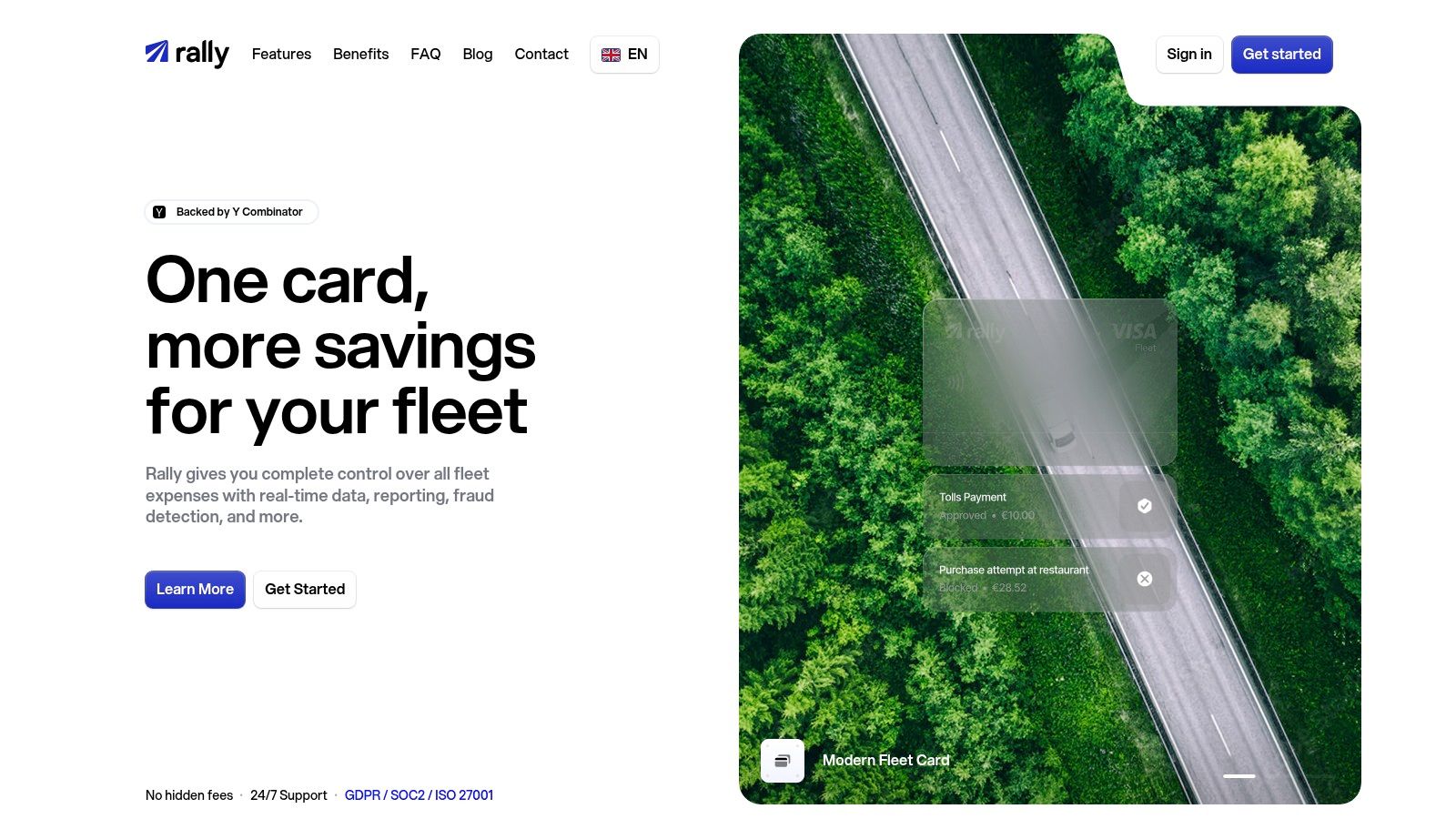
This is where a unified, VISA-backed and partner platform like Rally changes the game. It directly tackles these critical issues. With 99% acceptance, your drivers can fill up absolutely anywhere, including those low-cost fuel stations that unlock the lowest prices in Europe. That freedom alone puts you back in control of your biggest variable cost.
But it goes deeper than that. A modern platform consolidates your entire spending toolkit. The very same card can cover any type of expenses you throw at it:
- Fuel and EV charging
- Cross-border tolls and parking
- Office supplies and vehicle maintenance parts
This means you can finally ditch that separate expense management tool, saving money and simplifying how you work. All your invoices land in one place, and with direct accounting integrations, you can realistically cut over 10 hours of manual admin work every month.
The right financial partner gives your business the control and efficiency it needs to really thrive. By ditching deposit requirements, offering transparent fees, and making cross-border operations seamless, a modern platform frees up your cash flow and smooths out the operational bumps in the road.
Honestly, the choice is clear. A platform that empowers everyone—from drivers submitting receipts via WhatsApp to managers setting spending rules from their dashboard—offers a powerful, practical advantage. By solving the core problems of fleet expense management, it lays the foundation for smarter, more efficient operations across Europe.
Common Questions from Fleet Managers
When you're choosing a fuel card, the details really matter. Here are some of the most common questions we hear from small business owners and fleet managers, with some straight answers on the practical side of things.
My Drivers Travel Across Europe. How Do These Cards Handle Different Currencies and VAT?
This is where a modern, VISA-backed platform really shines. Traditional fuel cards often get tripped up by cross-border transactions, leading to frustrating payment failures at the pump. A solution with cross-border support, in any country like Rally, however, handles payments seamlessly.
The system is built to automatically capture all the important transaction data, including foreign VAT, and then organises it into one simple report. This takes the headache out of reclaiming VAT from multiple EU countries, turning a complex admin chore into a quick task and saving you countless hours.
Do My Drivers Need to Install and Learn a New App?
No, and this is a huge win for getting your team on board quickly. The best modern solutions don't force another app on your drivers. Instead, they cleverly integrate with the tools your staff already use every single day.
For example, with a platform like Rally, drivers can submit receipts and communicate directly through WhatsApp. Everything is done via WhatsApp, no need to download apps. It's a simple, familiar approach that ensures everyone can use it from day one, making life on the road that much easier.
"By removing the need for new software, you ensure drivers can focus on their jobs, not on learning complex tech. This approach guarantees that expense management is effortless from day one for the entire team."
Are There Hidden Fees or Deposit Requirements I Should Know About?
Many old-school fuel cards are notorious for their complicated fee structures and demands for large upfront deposits, which can be a real roadblock for a small business. Modern platforms are built on transparency to avoid these common traps.
Look for solutions that offer transparent fees and clear, straightforward pricing with no hidden charges—it's crucial for predictable budgeting. Critically, many also operate with no need for deposits, freeing up your cash flow for growing your business instead of having it locked away in a security account.
Ready to take control of your fleet's expenses and save over 10 hours a month on admin? Discover how Rally can transform your operations with a single, VISA-backed card that works everywhere. Learn more at https://www.getrally.com.