Blog
/
November 26, 2025
Research & Insights

Or "Hoe Werkt Een Moderne Tankpas In De Praktijk?" in Dutch!

A fuel card, known as a tankpas in the Netherlands, is a specialised payment card that lets your drivers buy fuel and other vehicle necessities on the company's account. Instead of drivers paying out-of-pocket or using a generic credit card, they use the tankpas. The company then gets a single, itemised invoice for everything, which simplifies expense tracking and gives you powerful control over spending.

What a Tankpas Is and How It Solves Fleet Problems

For any fleet manager in Europe, keeping fuel expenses in check can feel like a losing battle, especially with fuel prices fluctuating by as much as 15-20% within a single year. You're constantly chasing down crumpled paper receipts, spending hours manually punching numbers into spreadsheets, and you still don't have a clear picture of where the fuel budget is actually going. This administrative nightmare isn't just inefficient; it's expensive. This is exactly the problem a tankpas was made to solve.

Think of a fuel card less as a payment tool and more as a smart remote control for your vehicles. A standard corporate credit card can be used to buy almost anything, but a tankpas can be locked down to specific purchases like fuel, oil, or a car wash. Right away, this slashes the risk of unauthorised spending.

The Core Function of a Fuel Card

At its heart, a tankpas zeroes in on three huge headaches for European fleets:

  • Lack of Control: Without a dedicated system, it's incredibly difficult to stop drivers from making personal or unapproved purchases on the company's dime. A recent European study found that unauthorized spending can account for up to 5% of a fleet's total fuel bill.
  • Administrative Overload: Manually processing hundreds of individual fuel receipts is a massive time-sink for any finance team, and it's a process plagued by errors and delays.
  • Poor Visibility: A shoebox stuffed with receipts tells you nothing useful. Fleet managers can't easily track fuel consumption per vehicle, spot potential fraud, or find opportunities to save money.

In the Netherlands, this solution is practically universal; it's estimated that over 70% of Dutch commercial vehicle fleets use some form of tankpas to manage their fuel. These cards give them access to thousands of petrol stations, creating one consolidated system for what is often their biggest variable cost. You can learn more about the deep adoption of fuel cards in the Dutch market.

A fuel card transforms a chaotic pile of paper receipts into a streamlined, digital process. It gives you the data and control to turn fuel expenses from an unpredictable drain into a manageable, optimisable part of your operation. It’s the difference between guessing where your money went and knowing exactly.

The Journey of a Fuel Card Transaction

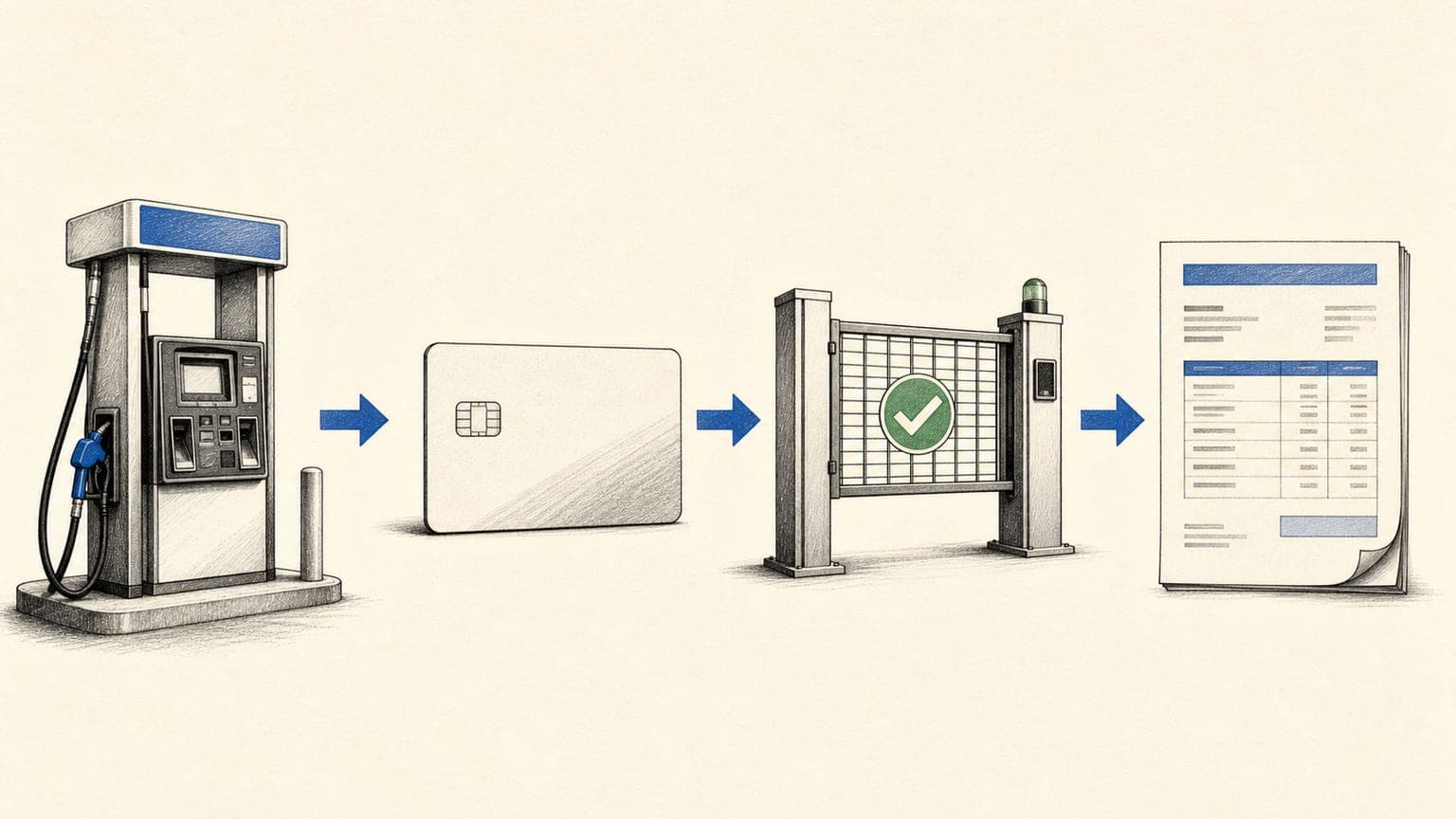
When a driver uses a tankpas at a service station, it kicks off a rapid, automated sequence of events that’s far more sophisticated than a simple credit card payment. This whole process is engineered for control, data capture, and efficiency. It turns a routine fuel stop into a rich data point for your entire fleet operation.

The real magic isn’t just in the payment; it's in the flood of information that flows directly back to you.

The entire journey, from swipe to invoice, gets rid of the chaotic paper trail that plagues traditional expense management. It completely eliminates the need for drivers to hoard and submit stacks of easily lost paper receipts—a headache that costs European businesses countless administrative hours every single year.
This visualisation shows the simple, direct flow from a fuel card transaction to data collection and a consolidated invoice.

Fuel card payment process flowchart showing data collection leading to invoice generation

The key takeaway here is how a physical action—fuelling a vehicle—is transformed into a structured digital record, all without anyone lifting a finger for manual entry.

From Pump to Platform in Four Steps

The best way to understand how a tankpas works is to follow the money, step-by-step. Each stage is designed to verify the purchase and automatically grab critical details, a process that is absolutely vital for fleets navigating the complex European market with its varied regulations.

  1. Card Swipe and Initial Authorisation: The driver swipes, taps, or inserts the fuel card at the pump or payment terminal. At this point, they're usually prompted to enter a unique PIN. Often, they’ll also be asked for the vehicle’s current odometer reading for pinpoint-accurate tracking.
  2. Instantaneous Policy Checks: Before a single drop of fuel is dispensed, the system performs a real-time check. It verifies the purchase against the rules you've set—things like fuel type (diesel only), transaction limits (€100 maximum), and location restrictions (Netherlands only). If a driver tries to buy something outside these rules, the transaction is instantly declined.
  3. Rich Data Capture: As the transaction is approved, the system automatically records what’s known as Level 3 data. This goes miles beyond the simple merchant name and amount that a credit card captures. It includes the specific type of fuel, volume in litres, price per litre, time, date, and the exact service station location.
  4. Consolidated Invoicing and Integration: All of this detailed data streams directly into your central management platform. Instead of dealing with dozens of separate receipts, you get a single, consolidated invoice for your entire fleet. This clean data can then be seamlessly fed into accounting software or fleet management systems like Rally, automating the whole reconciliation process and wiping out manual data entry errors.

This automated workflow is the direct answer to the administrative burden that crushes so many fleets. By digitally capturing every last detail, the fuel card system provides the clarity needed to manage one of the largest and most volatile operational costs in any transport business. The result is less paperwork, fewer errors, and far, far greater control.

Turning Fuel Data Into Serious Cost Savings

A fuel card is so much more than just a way to pay. Think of it as a data goldmine. Every time one of your drivers uses their tankpas, it’s capturing a stream of valuable information that goes well beyond a simple expense receipt. This data is what allows European fleet managers to stop just reacting to costs and start proactively managing them.

This is where you see the real power of a modern tankpas system. By digging into driver behaviour and vehicle performance reports, you can directly influence your bottom line. All that detailed transaction data starts to reveal patterns—the kind of insights that would otherwise be completely lost in a messy pile of paper receipts.

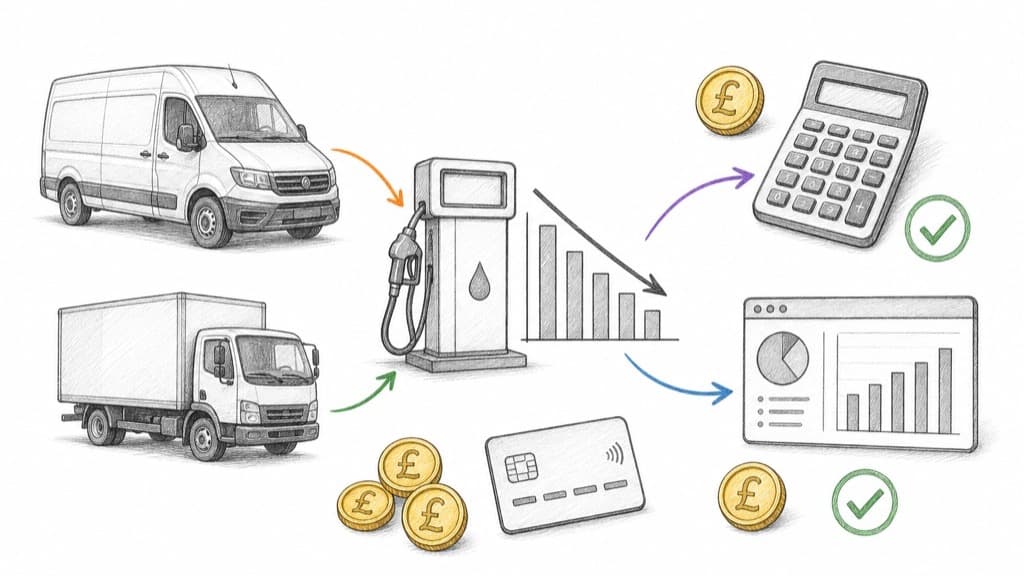
A Fuel Insights Dashboard can uncover savings that you won't get by reading a fuel card bill

From Raw Data to Actionable Insights

The real value pops up when you start asking the right questions. Are some drivers consistently burning more fuel than others on similar routes? Are certain vehicles idling for way too long? Are your drivers always picking the most expensive service station just because it's convenient?

Answering these questions can unlock some serious savings. In fact, by using the fleet monitoring that a tankpas provides, Dutch companies have managed to cut their fuel costs by 5-10% annually just by reducing unnecessary idling and optimising routes. That’s a huge deal, especially when you consider that business vehicles account for roughly 25% of all kilometres driven by passenger cars on Dutch roads.

By transforming transaction records into performance metrics, you gain the ability to identify inefficient routes, find cheaper fueling stations, and coach drivers on more economical driving habits. This level of analysis is simply impossible with standard credit cards.

Simplifying Cross-Border VAT Reclaims

For any fleet that operates across Europe, dealing with Value Added Tax (VAT) is a massive administrative headache. With VAT rates on fuel ranging from 17% in Luxembourg to over 25% in countries like Sweden, the financial impact of successful reclaims is enormous. Every country has its own rates and its own painful reclaim procedures, creating a bureaucratic nightmare for your finance team.

A modern tankpas is designed to solve this exact problem.

Fuel card providers issue detailed, compliant invoices that neatly separate the VAT for every single transaction, in every country. This makes reclaiming foreign VAT ridiculously straightforward. Instead of your team chasing down faded receipts from France, Germany, and Belgium, they get one consolidated, submission-ready report.

This streamlined process doesn't just save hundreds of hours of admin work; it ensures your business gets back every bit of eligible tax, giving your cash flow a direct boost. You can learn more about how to leverage data analysis to slash fuel costs in our detailed guide. It's just another way a smart fuel card turns a complex financial chore into a simple, automated solution.

Preventing Fuel Fraud and Misuse With Smart Controls

Unauthorized purchases and dodgy transactions are a constant headache for anyone managing a fleet. It's estimated that fuel fraud costs European businesses over €150 million annually. When your drivers are spread out across the country, or even crisscrossing Europe, you lose that direct line of sight. That opens up a pretty significant risk to your budget. This is exactly where the security features of a modern tankpas become your first and best line of defence.

Think of it this way: a standard credit card is a free-for-all. A fuel card is built for control. It lets you create a strict set of rules that are enforced automatically right at the pump, stopping a costly mistake before it even happens.

Man at gas station holding card with prevent fuel fraud text message

Setting Granular Purchase Restrictions

The real power of a tankpas is in its customisable controls. You can stop hoping your drivers spend honestly and start defining what honest spending actually looks like. It’s how you build a protective wall around your fuel budget, making sure company money is only ever used for legitimate business costs.

Here are a few common controls you can put in place:

  • Product Type Limits: You can lock purchases down to specific categories, like diesel fuel only. This instantly stops a driver from filling their personal car with premium unleaded or loading up on snacks and energy drinks in the shop on the company's dime.
  • Spending Caps: Set hard limits on how much can be spent per transaction, per day, or per week. For instance, capping fuel-ups at €150 per transaction aligns with a typical vehicle's tank size. This makes it impossible for someone to use the card to fill up multiple vehicles or, worse, a few jerry cans on the side.
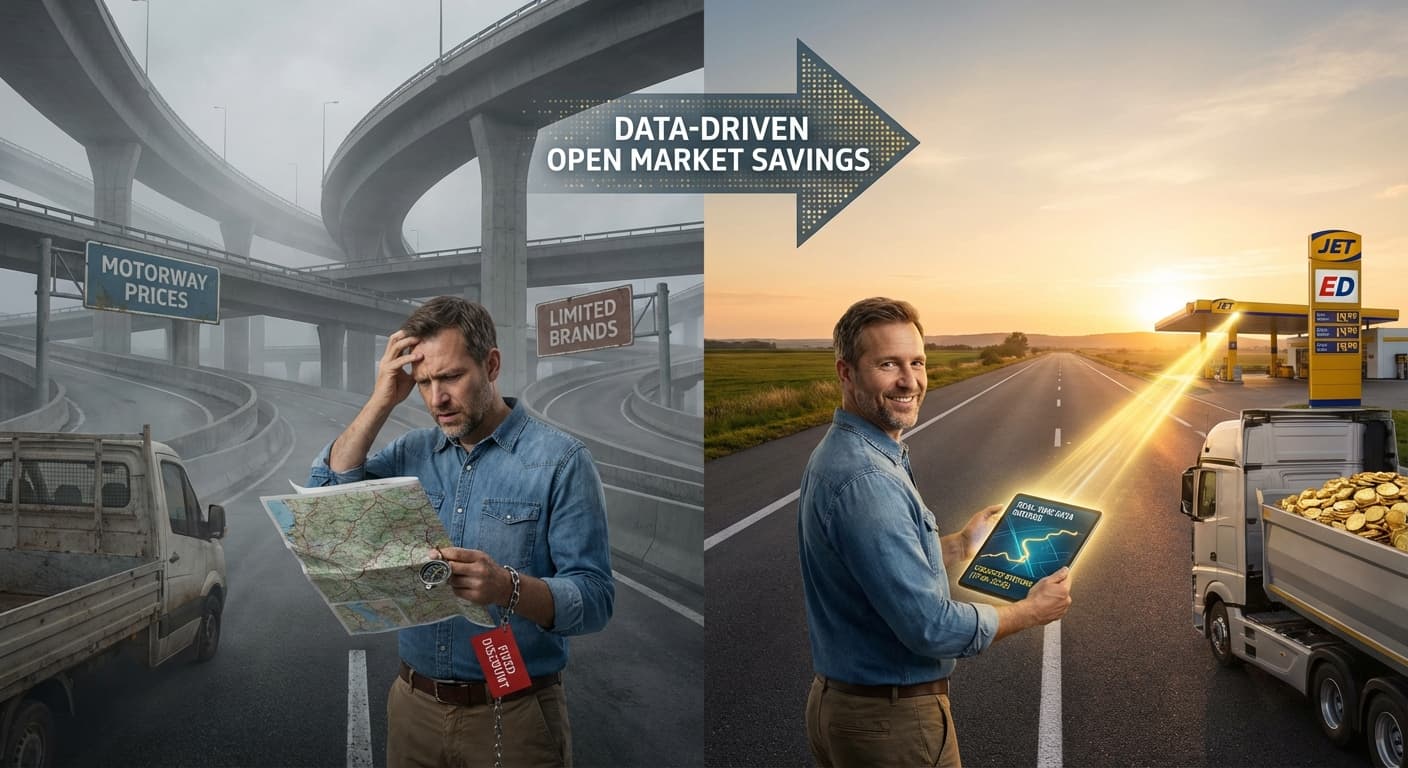
  • Geographic Boundaries: You can restrict card use to specific countries or even a hand-picked list of preferred, low-cost service stations. For fleets operating across Europe, this is a lifesaver. It prevents cards from being used in unauthorised territories or at those notoriously expensive motorway service stations.

These simple rules are incredibly effective at shutting down the most common ways people misuse company funds.

Fuel fraud isn't just about outright theft; it's a massive drain on your operational efficiency and your bottom line. Smart controls transform your fuel card from a simple payment tool into an automated security guard that enforces your spending policy 24/7, no manual oversight needed.

Advanced Security and Real-Time Alerts

Beyond the basic rules, modern fuel cards add extra layers of security to fight off more sophisticated fraud. Unique driver PINs are standard, making sure only the assigned person can use the card. Some systems go a step further, requiring vehicle identification at the pump to link every single litre of fuel to a specific asset in your fleet.

But perhaps the most powerful tool in the arsenal is the real-time alert system. You can get instant notifications sent straight to your phone or dashboard for any weird activity. A transaction attempted outside of working hours? A purchase made hundreds of kilometres from the truck’s last known location? Multiple fill-up attempts in a row? You’ll know about it immediately.

This lets you act fast, blocking a card before any more damage is done. As you can see, there are plenty of reasons why modern fleet cards beat traditional fuel cards every time when it comes to keeping your money safe.

Choosing the Right Fuel Card for Your European Fleet

Not all fuel cards are created equal, especially when your vehicles are crossing borders in the complex European market. Picking the right provider isn’t just about making payments easier; it's a strategic move that hits your budget, admin workload, and overall efficiency.

The wrong choice can cause real headaches. Think of drivers stranded without a valid payment option, or your finance team drowning in a sea of complicated, non-compliant invoices from different countries.

A classic problem for European fleets is patchy network coverage. A provider might boast 98% coverage in the Netherlands but leave you with huge gaps along key transit routes in Germany or France. This forces drivers to detour for fuel, wasting precious time and burning extra diesel—completely defeating the purpose of having a cost-control tool in the first place.

Evaluate Coverage and Pricing Structures

Before you sign any contract, pull up a map of your fleet’s most common routes. Your first job is to lay that map over a provider's network coverage to see if their affiliated stations actually line up with your operational footprint. A card with broad European acceptance, like one that works at over 700,000 charge points and fuel stations, gives you the flexibility you desperately need.

Just as critical is digging into the pricing model. Many providers will lure you in with attractive headline rates, only to bury costs in a maze of fees.

  • Network Fees: Some will charge you extra for using "partner" networks outside their main brand.
  • Transaction Surcharges: You might get hit with a small fee every single time a card is swiped, which adds up fast with a large fleet.
  • Monthly Card Fees: A per-card fee can quickly become a major line item on your expense report if you're running dozens of vehicles.

Always scrutinise the terms and conditions for any hidden charges. A transparent pricing structure with clear, consolidated invoicing is non-negotiable for predictable budgeting. The right tankpas should simplify your financial life, not make it more complicated.

To help you compare your options, here’s a quick checklist to guide your evaluation process. Use it to stack up different providers against your fleet's specific needs.

Fuel Card Provider Evaluation Checklist

Evaluation CriteriaProvider AProvider BYour RequirementsNetwork Coveragee.g., Key routes in DE, FR, NLPricing Transparencye.g., No hidden feesEV Charging Supporte.g., % of fleet is EVSoftware Integratione.g., Telematics, ERPReporting & Analyticse.g., Custom reports neededFraud Controlse.g., Real-time alertsAdmin Automatione.g., Digital receipt captureCustomer Supporte.g., 24/7, local language

After filling this out, you'll have a much clearer picture of which solution truly fits your operations, rather than just which one has the flashiest marketing.

Prioritise Integration and Reporting

In today's world, a fuel card should be more than a piece of plastic. It needs to be a data hub that plugs right into the systems you already use. Before committing, check if the provider's platform can sync with your telematics or fleet management software. This kind of integration automates the flow of information, linking fuel purchases directly to specific vehicles and trips to give you a complete view of what's happening on the road.

Powerful reporting is another must-have. The platform should give you customisable dashboards and detailed analytics that make it easy to track spending, monitor fuel efficiency, and spot anything that looks out of place. Of course, a well-run fleet also involves optimizing fleet document management, which indirectly boosts efficiency and helps clamp down on potential fraud.

For businesses looking to get ahead, solutions that combine physical and virtual cards with intelligent software offer a huge advantage. You can see how Rally is helping fleets with smarter fuel card management for European fleets to gain much deeper control. This becomes especially important as fleets diversify into electric and alternative-fuel vehicles, creating a need for a single, unified solution to handle it all.

The Future of Fleet Payments and Mobility Cards

The world of fleet management is moving fast, and the humble fuel card is evolving right alongside it. The traditional tankpas, once only good for diesel or petrol, is being reborn as an all-in-one mobility card. This isn't just a name change; it's a fundamental shift to handle the growing complexity of modern European fleets.

This evolution is a direct response to huge changes in the market, especially the rise of electric vehicles. As more and more fleets go electric, payment solutions have to keep up, making smart UK Electric Vehicle Fleet Management a hot topic. The mobility card of tomorrow won't just handle fuel; it will seamlessly integrate EV charging, toll roads, parking, and even routine maintenance into a single, simple platform.

Adapting to an Electrified Landscape

The move away from fossil fuels is picking up speed. Projections show that by 2040, the number of traditional fuel stations in the Netherlands could shrink by a third, from 4,100 to roughly 2,750, mostly because of EV adoption. To survive, modern tankpas providers are becoming multi-energy platforms—a crucial adaptation for any fleet looking to stay ahead. You can dig into these projections on the changing fuel infrastructure for more detail.

This unified approach solves a massive headache for managers running mixed fleets with petrol, diesel, and electric vehicles. Instead of juggling a wallet full of different cards and payment systems, a single mobility card gives you one consolidated invoice and a complete picture of all your vehicle-related spending.

The future isn't just about paying for fuel; it's about managing total mobility. Integrating telematics and AI will enable predictive analytics for maintenance schedules and route efficiency, making these cards an essential tool for navigating the connected and electrified European logistics landscape.

Your Fuel Card Questions, Answered

Got a few lingering questions about how a tankpas really works in practice? You're not alone. Here are some of the most common queries we hear from fleet managers, with straightforward answers.

Can a Fuel Card Be Used for Personal Purchases?

In a word, no. This is one of the core strengths of a dedicated fuel card system. Unlike a standard credit card, you can set rock-solid rules that lock purchases down to specific categories like diesel, AdBlue, or a car wash. This control is fundamental to how they work and practically eliminates unauthorised spending—a massive headache for fleets managing drivers across Europe.

What Happens If a Fuel Card Is Lost or Stolen?

If a card goes missing, you can jump into your online portal and instantly freeze it. This immediate action shuts down any chance of fraudulent use before it happens. Plus, the requirement for a unique driver PIN adds a crucial layer of security, making it incredibly difficult for a thief to successfully use the card even if they get their hands on it.

One of the biggest worries for any fleet is the security risk of a lost payment card. A modern tankpas system tackles this head-on with instant deactivation and PIN protection, securing your funds in seconds.

Are Fuel Cards Only for Petrol and Diesel?

They may have started out that way, but modern fuel cards have evolved into true mobility cards. Many providers now include access to a massive network of electric vehicle charging stations across Europe, with some networks covering over 700,000 charge points. This lets you manage both fossil fuel and EV expenses on a single, clean invoice, which is an absolute must-have for any fleet making the switch to electric.

Can Self-Employed Professionals Use a Tankpas?

Absolutely, but it's crucial to get the tax side right. If you use your private vehicle for business and claim the fixed kilometre allowance (like the €0.23 per kilometre in the Netherlands), you can't also deduct the fuel costs from the card. That allowance is designed to cover all your vehicle expenses, fuel included.

Ready to get a complete grip on your fleet's spending and ditch the administrative headaches for good? Rally brings fuel, EV charging, and all other vehicle-related expenses across Europe into a single, powerful solution. Discover how Rally can simplify your fleet management today.

[0X]

You may also like

Other articles

[0X]

CTA

Get started

Ready to modernize your fleet?

Join thousands of businesses that trust Rally

Get started
en
es
de
fr
©2025 Rally Europe B.V. All Rights Reserved.