For European fleet managers, the best Shell fuel card alternative in 2026 is an all-in-one, VISA-backed expense platform. These modern solutions give you 99% acceptance across the UK, the EU and beyond, consolidate all spending (fuel, EV charging, tolls, parking), and bring powerful automation that cuts over 10 hours in manual work per month and unlocks real cost savings.
Why Fleets Are Moving Beyond Shell in 2026
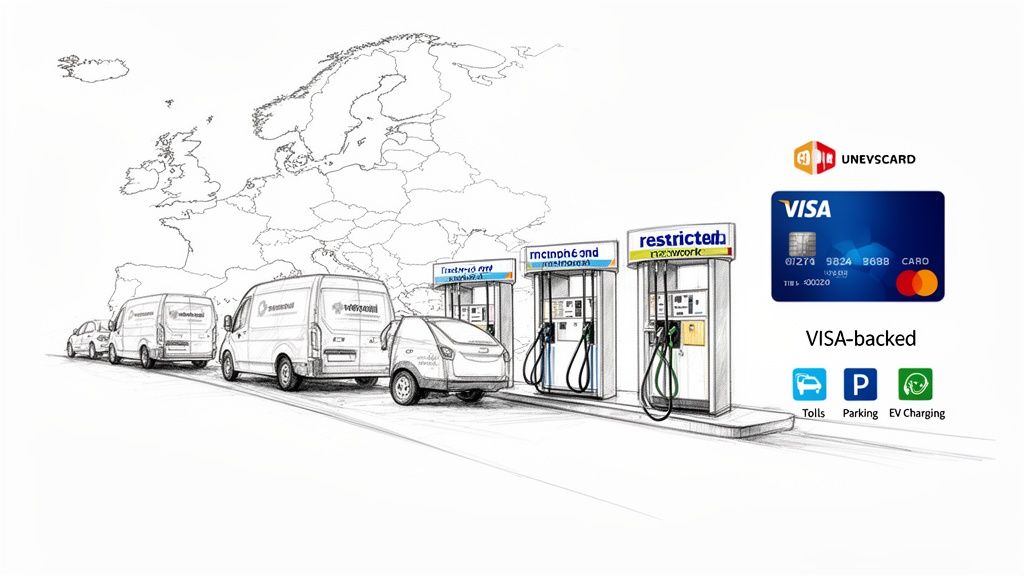
The ground is shifting under fleet management. For years, traditional fuel cards from major brands like Shell were the go-to solution. But for modern European businesses, their limits are becoming more and more obvious. Today’s fleet operators are dealing with new challenges that demand smarter, more flexible tools.
Common pain points for European fleets include network coverage that doesn't always match the cheapest available pump, the cost of managing cross-border payments in a fragmented European market, plan- and market-specific tariff structures that are harder to forecast than pump-price billing, and onboarding paths that can require deposits or credit checks for some products.
The Problem With Traditional Networks
The core issue with branded network cards is acceptance shape. Shell Card runs across Shell-branded sites plus partner stations - Shell publishes 150,000+ fuelling and 1 million+ EV charging locations across more than 75 countries - but it remains a curated network. For fleets running across the UK and EU, that can still leave routes where the closest cheaper independent or supermarket forecourt isn't covered.
Mixed fleets of petrol, diesel, and electric vehicles add another layer of complexity. Shell does support EV charging via Shell Recharge, with Shell Card customers consolidating Shell Recharge sessions onto the same fleet invoice. But fleets often still juggle separate cards and tools for tolls, parking, maintenance, and broader business spend.
The Rise of Integrated Platforms
A new kind of solution has emerged to solve these problems: the all-in-one expense platform. These systems give you a single, VISA-backed card that works for any business expense, anywhere you go.
By bringing fuel, EV charging, tolls, parking, and even office supplies into one system, modern platforms get rid of the need for multiple cards and tools. This unified approach doesn't just simplify operations—it gives you a complete, clear picture of all your fleet spending.
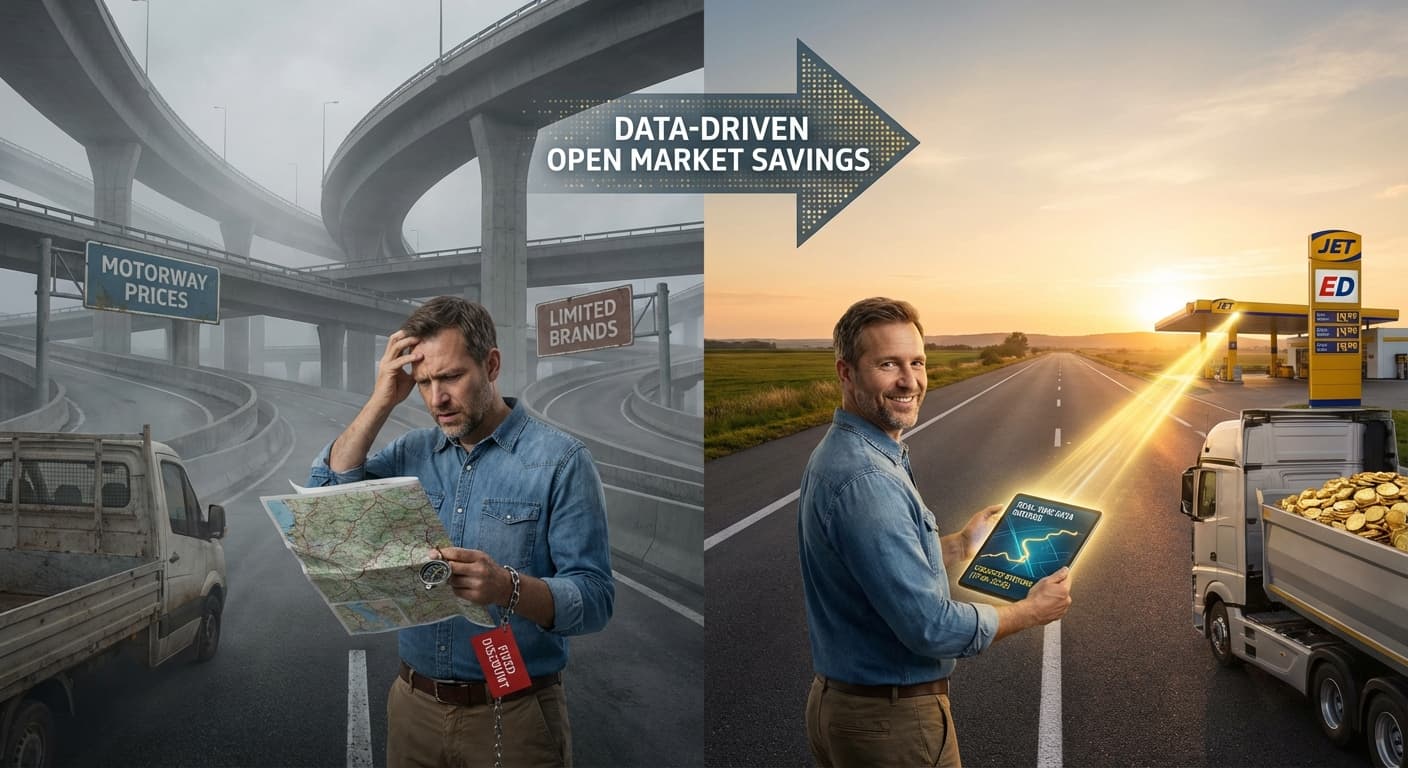
Platforms like Rally are designed specifically for the modern European market, offering 99% acceptance across the UK, the EU, and beyond. This universal access empowers your drivers to refuel at the most cost-effective locations, including low-cost stations, with fleets saving 5-10% on fuel on average when they switch. It's a market shift happening amid rapid growth; the UK fuel card market alone is projected to hit 1,068.39 USD Million by 2035, fuelled by the demand for better fleet management tech.
This move toward integrated systems is more than just a matter of convenience. It’s a strategic decision to cut costs, automate tedious admin tasks, and future-proof operations for an ever-changing energy landscape. Learn more about how a free-market approach to fuel purchasing can slash costs.
Comparing Traditional Cards Against Modern Platforms
When you're looking for the best Shell fuel card alternative for 2026, the first thing to grasp is the huge difference between old-school, network-bound cards and today's integrated platforms. Legacy providers like Shell, BP, and Allstar all play in the same sandpit—a closed ecosystem where their cards only work at their own branded stations. For any fleet running across Europe, this model is fundamentally inefficient.
It puts your drivers in a tough spot. They can either stick to the approved network, which might mean driving miles out of their way, or they can pay out-of-pocket at a cheaper, more convenient station down the road. Neither choice is great. The first burns extra fuel and wastes valuable time, while the second kicks off a frustrating paper trail of receipts and expense claims for your finance team to sort through.
The Fragmented European Market
The fleet payment world in Europe is notoriously disjointed, especially in the UK. As of 2025-26, there are 46 different businesses competing in the fuel card space. While the big oil companies like Shell and BP still hold a lot of ground, the market is so competitive it’s created a real opportunity for new solutions to solve these long-standing frustrations. You can get more detail on the competitive UK fuel card industry on ibisworld.com.
This fragmentation often forces fleets to carry a wallet full of different cards just to get decent coverage. This complicates everything, from training drivers to reconciling a mountain of invoices. Modern platforms flip this broken model on its head by simply working everywhere.
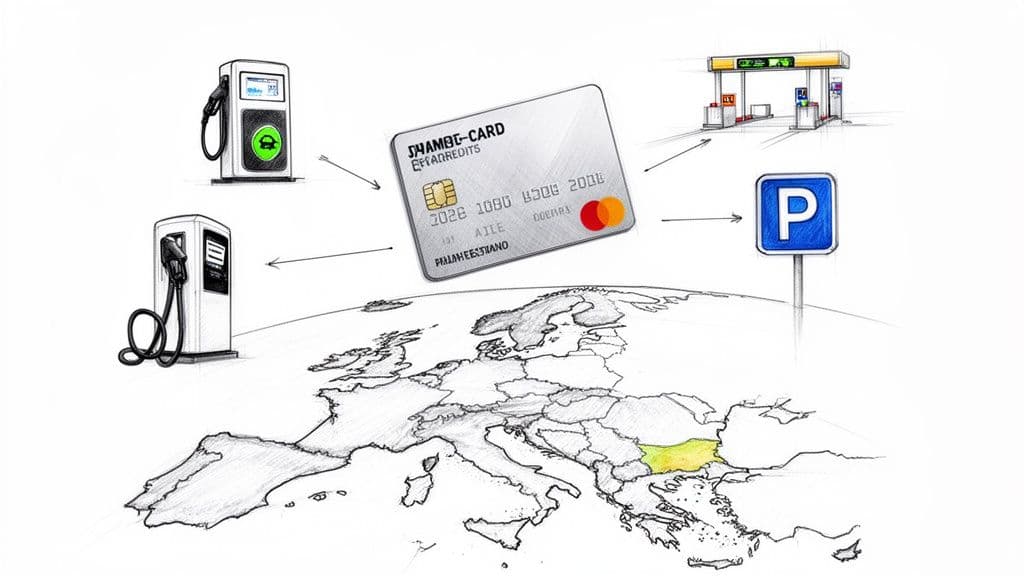
With a VISA-backed card like Rally, your fleet gets access to practically every fuel station, EV charge point, toll booth, and car park in the UK and Europe. This 99% acceptance rate means drivers are free to pick the most cost-effective and convenient option, every single time. That freedom translates directly into an average fuel saving of 5-10%.
Beyond Fuel A Holistic Approach to Expenses
Let's be honest, traditional fuel cards are a one-trick pony. They handle fuel, and that's about it. But running a fleet involves a whole host of other costs—tolls, parking, maintenance, even daily allowances for drivers. A modern platform brings all of that spending under one roof. It works for any type of expense: parking, tolls, fuel, charging, but also office expenses and anything to run the business day-to-day.
This unification is a massive win for your back office. Instead of trying to connect the dots between different cards, apps, and expense tools, you manage everything from a single, powerful dashboard. From directors to drivers, everyone can use it.
Think about a typical driver's journey:
- Pay for fuel with their Shell card.
- Pay for parking with a personal card and try not to lose the receipt.
- Pay a toll with yet another dedicated card or device.
- Cobble together an expense report at the end of the month.
Now, see how a modern platform changes the game:
- The driver uses one VISA-backed card for fuel, tolls, and parking.
- Receipts are captured instantly through WhatsApp—no clunky apps to download or logins for drivers to struggle with.
- The transaction and receipt are automatically matched and categorised in your central dashboard.
This simple, streamlined process cuts over 10 hours of manual admin per month for the average fleet. No more chasing drivers for invoices or manually cross-checking statements. Everything is in one place, ready for a clean integration with most European accounting systems.
As fleets look beyond traditional fuel cards, it makes sense to evaluate broader spend-control workflows as well. By replacing multiple tools with one, businesses don’t just save on subscription fees—they gain a single, reliable source of truth for every pound spent on the road. You can learn more about how modern fleet cards beat traditional fuel cards in our detailed guide.
A Detailed Comparison of Shell Fuel Card Alternatives
Choosing the right alternative to the Shell fuel card in 2026 isn't just about swapping one piece of plastic for another. It's about how the features solve the real-world problems European fleets grapple with every single day. We need to look past the marketing and evaluate providers on what truly matters for a modern operation: pan-European network access, transparent pricing, universal acceptance for all on-road costs, and seamless EV charging.
By putting a traditional card side-by-side with a modern platform, the best path forward for your fleet becomes crystal clear. Let's dig into the differences that directly impact your budget and operational agility.
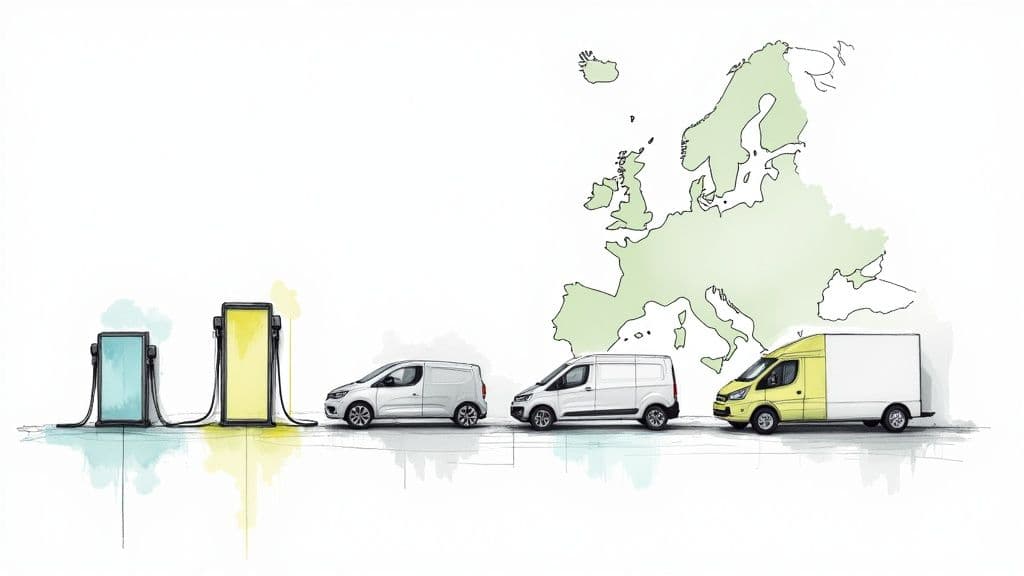
The image below shows the fundamental shift we're seeing—from restrictive, single-purpose cards to flexible, all-in-one payment platforms.
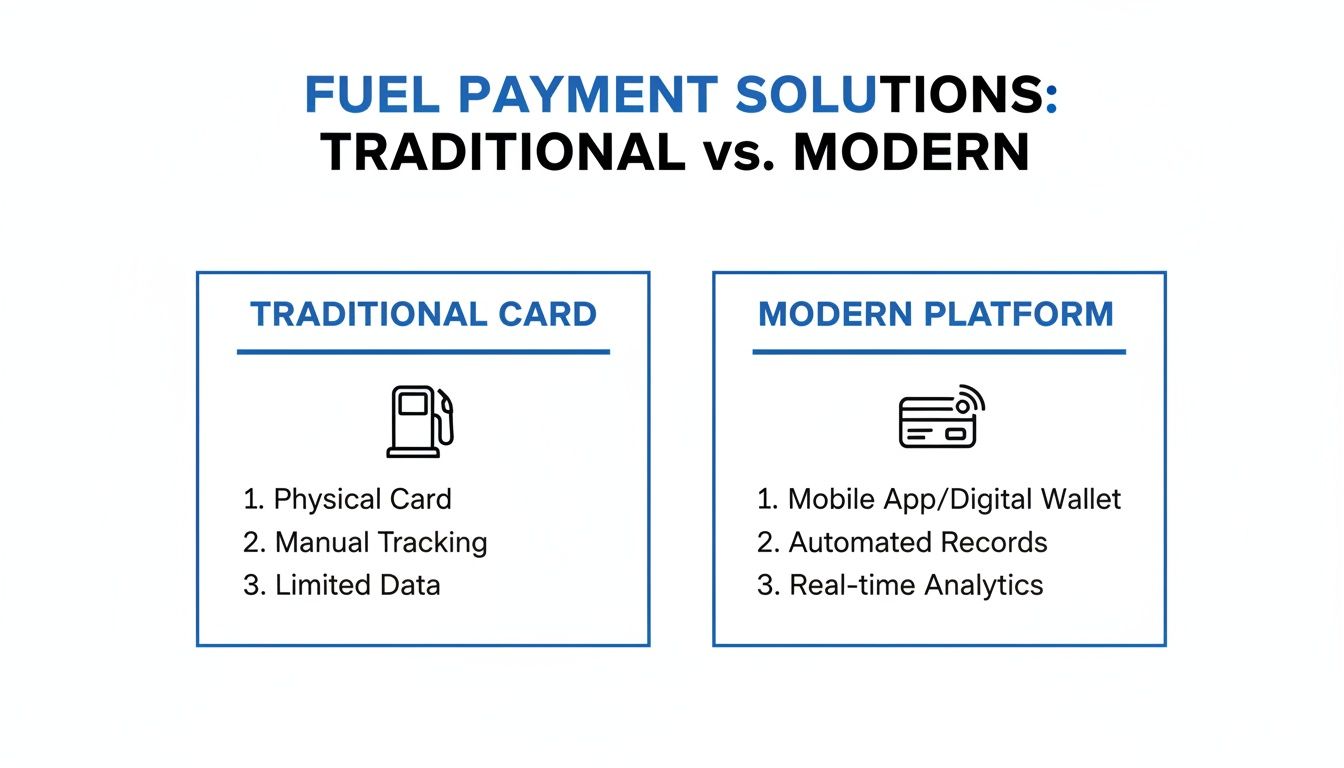
This comparison really drives home how modern solutions deliver universal acceptance and consolidated management, tackling the core weaknesses of older, legacy systems head-on.
To make this practical, let's break down how a traditional Shell Fuel Card compares to a modern alternative like Rally across the key areas that fleet managers care about most.
Shell Fuel Card vs. Modern Alternatives A 2026 Feature Comparison
| Feature | Traditional Shell Fuel Card | Modern Alternative (e.g., Rally) |
|---|---|---|
| Network Coverage | Limited to Shell's branded network of stations across Europe. | 99% acceptance at any location accepting VISA, including all fuel brands and low-cost independent stations. |
| Pricing & Fees | Card and product mix typically combine card fees, network charges, and cross-border surcharges; some products may require deposits or credit checks. | Flat per-driver pricing with no markups on non-fuel purchases. No deposit or credit check on Rally's public offer. |
| Accepted Expenses | Primarily for fuel, sometimes Shell-branded lubricants or car washes. | Works for any business expense: fuel, EV charging, tolls, parking, maintenance, software, and more. |
| Admin & Receipt Capture | Shell offers Shell Fleet Hub and Shell Fleet App for digital management. Receipt-to-ledger automation and direct accounting integrations are not built in to the product itself. | Automated receipt capture via WhatsApp. Direct integration with most accounting systems in Europe, saving 10+ hours per month (Rally customer data, Q1 2026). |
| EV Charging | Shell Recharge spans Shell-operated chargers, on-street ubitricity sites, and a wide roaming network. Shell Card customers consolidate charging onto a single fleet invoice. | Access to one of Europe's largest EV roaming networks across 20+ countries. Drivers can initiate a charge via fob or WhatsApp. |
This table gives a quick snapshot, but the real-world impact of these differences is where the story gets interesting.
Network Coverage and Universal Acceptance
The most significant pain point for any fleet manager is where your cards can actually be used. Traditional fuel cards operate within a closed-loop network, and that's a huge operational constraint.
Shell Card: Accepted across Shell-branded sites and partner stations - Shell publishes 150,000+ fuelling locations across more than 75 countries. Drivers route via the accepted network, which can mean detouring past lower-cost independents and supermarket forecourts that aren't part of the partner footprint.
Modern Alternative (Rally): Built on the Visa network, Rally is accepted at the vast majority of fuel stations across the UK, EU, and beyond - including major brands, supermarket pumps, and local independents. This freedom lets drivers refuel at the cheapest and most convenient practical option.
This isn't just about convenience—it's a powerful cost-saving strategy. We see fleets that switch to Rally save 5-10% on fuel costs on average, simply by unlocking access to the entire market instead of being stuck in one corner of it.
Pricing and Fee Transparency
Different fleet card providers structure pricing differently. Some bundle card fees, network service fees, transaction charges, and cross-border surcharges; some offer rebates against list prices or daily prices that may differ from the price displayed at the pump.
Onboarding paths also vary. Some products require credit checks or deposits before activation.
Shell Card: Shell publishes plan- and market-specific tariffs across the countries it operates in, with separate local pricing pages and product variations to compare. Buyers should review Shell's local pricing materials.
Modern Alternative (Rally): Flat per-driver pricing, with no markups on non-fuel purchases. Rally's public offer is designed for fast online setup with no deposit and no credit check.
Scope of Accepted Expenses
Fleet operations are about so much more than just fuel. Traditional cards are stubbornly single-minded, creating a mountain of administrative work when drivers need to pay for other essentials on the road.
Imagine a driver needing to pay for tolls in France, parking in Berlin, and an oil change in the UK—all in a single trip. With a traditional fuel card, that’s three different payment methods and a pocketful of paper receipts to chase down.
Shell Card: Covers fuel, EV charging at Shell Recharge sites, lubricants, tolls in some markets, and roadside services. Broader business spend (office purchases, software subscriptions, general expenses) typically sits outside Shell Card.
Modern Alternative (Rally): Designed for any type of approved business expense. Fuel, EV charging, tolls, parking, and maintenance all sit on the same card, alongside office purchases or software subscriptions, giving fleets a single point of control for company spending.
Administrative Automation and Ease of Use
The admin burden that comes with old-school fuel cards is a massive drain on resources. Chasing drivers for crumpled paper receipts, manually matching them to invoices, and building expense reports can eat up hours of your team’s time.
This problem gets even worse for fleets operating across borders, where different currencies and VAT rules add more layers of complexity. Modern platforms are built specifically to automate these soul-destroying tasks.
Shell Card: Shell offers Shell Fleet Hub (web portal for larger fleets) and Shell Fleet App (small fleets up to 30 vehicles) for digital management, plus consolidated invoicing. Built-in receipt-to-ledger automation, AI receipt matching, VAT extraction, and direct accounting integrations are not part of the Shell Card product itself.
Modern Alternative (Rally): Drivers can snap and submit receipts via WhatsApp - no new app to download, no password to remember. Transaction data and invoices are captured in one place, with direct integrations into most European accounting systems. Rally's customer data shows around 10+ hours of manual admin saved per month after switching.
EV Charging Integration
As more fleets transition to electric vehicles, the shortcomings of traditional fuel cards become impossible to ignore. They offer no real solution for EV charging, forcing companies to juggle separate, and often clunky, payment systems for their electric fleet.
Shell Card: Shell Recharge integrates with Shell Card so EV charging sessions consolidate onto the fleet invoice. Shell publishes 1 million+ EV charging locations through Shell-operated chargers, on-street ubitricity sites, and roaming partners.
Modern Alternative (Rally): Access to a roaming EV charging network across 20+ countries with competitive market rates. The driver experience requires no Rally-branded app: drivers can start a charge with a fob or via WhatsApp. This unified approach covers fuel, EV, tolls, and parking on the same card.
How a Unified Platform Unlocks Real Savings
So, we've looked at the features, but the real test for any Shell fuel card alternative in 2026 is what it does for your bottom line. A unified platform isn't just about convenience; it’s about delivering real, measurable savings. The secret is moving away from a restricted network and into an open market where you're in control of your spending, not the other way around.
Traditional fuel cards chain your fleet to a single network. This forces your drivers to use specific stations, even when a cheaper option is just down the road. It’s an artificial limit and a massive source of overspending. A modern, VISA-backed platform smashes that barrier, giving your drivers access to every single fuel station across the UK and Europe.
This freedom of choice is where you'll see the first layer of savings. When you empower drivers to refuel at low-cost independent stations or supermarket pumps, you start cutting into your biggest operational expense. On average, businesses that make the switch to Rally see their fuel costs drop by 5-10%.
Reclaiming Time by Automating Admin Tasks
The hidden cost of old-school fuel cards is the mountain of admin they create. Chasing down paper receipts, manually keying in data, and reconciling endless invoices—it all eats up time that could be spent on actually managing the fleet. A unified platform is built from the ground up to kill off this expensive busywork.
For instance, instead of forcing drivers to download and log into yet another app, modern solutions work with the tools they already use every day. Rally uses WhatsApp for instant receipt capture. The driver just snaps a photo of the receipt and sends it. The system takes care of the rest. That simplicity is why it actually gets used consistently.
This single feature, combined with direct integrations into most European accounting systems, allows fleets to cut over 10 hours of manual administrative work every month. No more chasing invoices or cross-referencing statements. It’s all consolidated and automated in one place.
The Power of Consolidation and Data-Driven Insights
"Tool sprawl" is a quiet but significant drain on many fleets—a jumble of separate subscriptions for fuel, EV charging, tolls, parking, and other expenses. A unified platform brings all of these under one roof, immediately cutting your monthly subscription costs as you no longer need a separate expense management tool.
But the real win comes from having all your spending data in one powerful dashboard. This centralised view gives you the clarity you need to analyse fuel efficiency, pinpoint wasteful spending, and find new ways to save.
The UK fuel card market is massive, with 3.6 million active cards and fleet vehicles accounting for 81.2% of their use. These numbers highlight just how vital efficient payment solutions are. As fleets get serious about optimising every pound, platforms that offer a single point of control for fuel, EV charging, tolls, and parking are becoming non-negotiable.
This combination of consolidation and powerful analytics delivers a clear return on investment. By getting rid of redundant tools and using data to make smarter spending decisions, finance and operations leaders can drive significant improvements in fleet efficiency. The same pattern shows up across fuel, charging, tolls, and expense workflows: unified platforms reduce fragmentation, improve visibility, and cut manual reconciliation.
Future-Proofing Your Fleet for the EV Transition
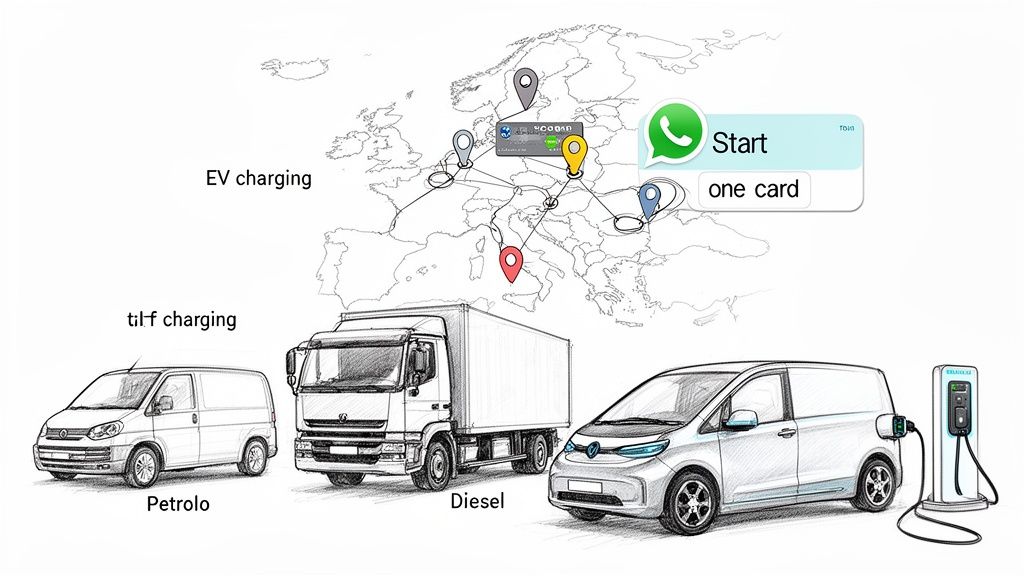
The push towards electric vehicles is one of the biggest shifts facing European fleets today. But as you start mixing EVs into your petrol and diesel operations, you hit a major roadblock: traditional fuel cards weren’t built for a world with charging points. This oversight forces fleet managers into a messy, patched-together system of separate cards, apps, and reimbursement claims just to keep their electric vehicles moving.
This disjointed approach creates a huge administrative headache. Finance teams are left trying to glue together a complete picture of energy spending from a pile of different invoices and reports. It’s inefficient, expensive, and frankly, unsustainable for managing a modern fleet. The best Shell fuel card alternative in 2026 has to solve this problem head-on.
A truly forward-thinking platform doesn’t see fuel and electricity as separate things. It treats all energy as a single, unified expense, bringing it all together under one card and one management system.
A Single Card for Every Energy Type
The ideal solution gives your drivers access to both traditional petrol stations and a vast EV charging network, all with a single payment card. This makes life simpler for everyone, from the driver on the road to the manager back in the office.
Rally’s VISA-backed card, for instance, connects your fleet to one of Europe’s largest EV charging networks, with coverage in more than 20 countries. This means your drivers can charge up with the same ease as they refuel, using one card for every transaction. This unified approach gets rid of the need for multiple payment methods and tidies up your entire energy purchasing process.
Revolutionising the Driver Experience
Let’s be honest, one of the biggest hurdles with any new fleet tech is getting drivers to actually use it. Complicated apps with clunky logins are a common point of failure, leading to frustration and patchy compliance. A truly modern alternative has to remove that friction.
Rally offers an app-free EV charging experience. Drivers don’t have to struggle with downloading apps or remembering passwords. They can start a charge with a simple tap of a fob or directly through WhatsApp.
This simple, intuitive process is a game-changer for driver adoption. When charging is this easy, compliance becomes second nature. It also means you get clean, consistent data flowing straight into your dashboard for every single charging session. You can learn more about optimising your electric vehicle operations in our guide to European fleet EV chargers.
The Strategic Advantage of an Integrated System
Trying to manage a mixed fleet without an integrated system is like running your business with one hand tied behind your back. You're constantly jumping between different platforms, which means you never get a clear, real-time view of your total energy consumption and costs.
A unified platform like Rally gives you a single source of truth. You can see what you're spending on petrol, diesel, and electricity, all in one place. This lets you:
- Access competitive EV charging rates across Europe through one card.
- Accurately compare the running costs of different vehicle types.
- Make data-driven decisions about your fleet’s move to electric.
- Consolidate many tools into one, which is also cheaper.
By choosing a platform built for the future of energy, you aren’t just finding a replacement for your old fuel card. You're bringing on a strategic partner that can guide your fleet through a smooth and cost-effective transition to electric mobility.
Why Rally Is the Best Shell Fuel Card Alternative
When you start looking for a Shell fuel card alternative in 2026, the real goal isn’t just to swap one piece of plastic for another. It’s about upgrading your entire approach to fleet management. The writing is on the wall: traditional, network-bound cards just aren't built for the realities of modern European logistics. Rally steps in to fix the core issues of high costs, endless admin, and the awkward transition to mixed-energy fleets.
By moving to a VISA-backed platform, you immediately cut the cord from network restrictions. This single move opens up access to countless low-cost fuel stations across the UK and EU, delivering average savings of 5-10% on fuel alone. And unlike legacy providers that might tie you up with hefty deposits or lengthy credit checks, Rally keeps things simple with transparent fees and a refreshingly quick onboarding process. It’s built for businesses of all sizes.
The Decisive Advantage: A Unified Platform
What really makes Rally a different breed of solution is its power to pull every single fleet expense into one, easy-to-use system. It's not just another fuel card; it’s a complete spend management platform.
- Universal Acceptance: The VISA-backed card is good to go for fuel, EV charging, tolls, parking, and just about any other business expense you can think of, with 99% acceptance.
- Administrative Automation: By using WhatsApp for capturing receipts and plugging directly into most European accounting software, Rally gives fleets back over 10 hours in manual admin work every month.
- A True EV Solution: Get access to one of Europe's biggest EV charging networks, complete with the continent's only WhatsApp-based charging activation. It makes the energy transition genuinely smooth.
For any European business owner, fleet manager, or finance team looking for a real competitive edge, the choice becomes pretty clear. Rally delivers the cost savings, operational efficiency, and forward-thinking tech you need to get ahead in 2026 and beyond. It’s the definitive upgrade for a modern fleet.
Have Questions? Let’s Get Them Answered
Switching from a system you know well, like the Shell Fuel Card, naturally brings up a few questions. Here are some straightforward answers to what fleet managers are asking as they look for a better alternative for 2026.
How Painful Is It to Switch From a Shell Fuel Card?
Honestly, moving to a modern platform like Rally is designed to be as simple as possible. Forget the old-school process. Traditional providers often bog you down with lengthy credit checks or demand large deposits upfront.
We’ve cut all that out. Rally uses a fast, online onboarding process. And since there are no deposits or credit checks, you can get your fleet up and running in no time, with our team right there to make sure the transition is a smooth one.
Can I Still Set Spending Limits and Controls?
Yes, and you’ll find you have far more power and flexibility. Rally’s dashboard gives you real-time control over spending for every single driver or vehicle.
You can set specific budget limits, restrict what can be bought (e.g., fuel only), define usage times, and approve any exceptions on the spot. It's a huge step up in security and budget oversight compared to older systems.
How Does an Alternative Handle Cross-Border Payments?
This is where a modern platform really shines. Rally was built from the ground up for pan-European fleets. The card is backed by VISA, which means it’s accepted pretty much everywhere, in any country. That acceptance gets rid of the network anxiety that drivers feel when they cross a border.
But here’s the crucial part: the platform automatically captures digital receipts and invoices. This massively simplifies the headache of cross-border VAT reclaim and saves your finance team countless hours of admin. Plus, with direct integrations into most European accounting systems, all your data is right where it needs to be, exactly when you need it.
Ready to unlock some serious savings and slash your admin work? See how Rally can modernise your fleet's expense management by visiting https://www.getrally.com.