Para cualquier flota que opere rutas por Europa, el complejo y caro mapa de peajes de Francia es un gran reto operativo. Seamos sinceros: la red de autopistas francesas es una paradoja; es la forma más rápida y eficiente de mover mercancías por el país, pero tiene un coste elevado que afecta directamente a tu rentabilidad.
Por qué dominar el mapa de peajes de Francia es clave para tu flota
Para los gestores de flotas del Reino Unido y Europa, el sistema francés de autopistas no es solo otra partida de gasto; es una fuente importante de costes operativos y quebraderos de cabeza administrativos. Dada la enorme escala y el coste de esta red, intentar evitarla no es una opción realista para ninguna empresa seria de logística o transporte.
Controlar estos costes ya no es solo un “extra”. Es imprescindible para operar con rentabilidad en el competitivo mercado europeo.
El impacto financiero puede ser considerable. Para los gestores de flotas, hay una realidad contundente: las autopistas francesas son las más caras de Europa para los HGV. Un solo trayecto de un camión por la ruta A6/A7 de París a Marsella puede costarle al conductor el equivalente a £200.68. Ese viaje lo dice todo y explica por qué casi toda la red francesa de autopistas —más de 8,000 km— es de peaje.
Los costes ocultos más allá del peaje
El reto va mucho más allá de la tarifa en la barrera. Mantener métodos de pago tradicionales crea un efecto dominó de problemas que se extiende por tu back office, un tema clave para las flotas que operan por Europa.
- La caza del recibo: Perder horas cada mes persiguiendo a los conductores por recibos en papel y pasando esos datos manualmente a hojas de cálculo. ¿Te suena?
- El agujero negro del gasto: Sin un sistema único y claro, es casi imposible seguir el gasto en tiempo real. Esto provoca desagradables sorpresas presupuestarias a final de mes.
- Caos transfronterizo: En cuanto tus camiones salen de Francia, necesitas otro dispositivo de peaje, otra divisa y un sistema aparte. Es una pesadilla logística que te frena.
Por supuesto, abordar los peajes es solo una parte del problema. Optimizar toda tu operación se beneficia de un enfoque integral de la gestión moderna de flotas para empresas.
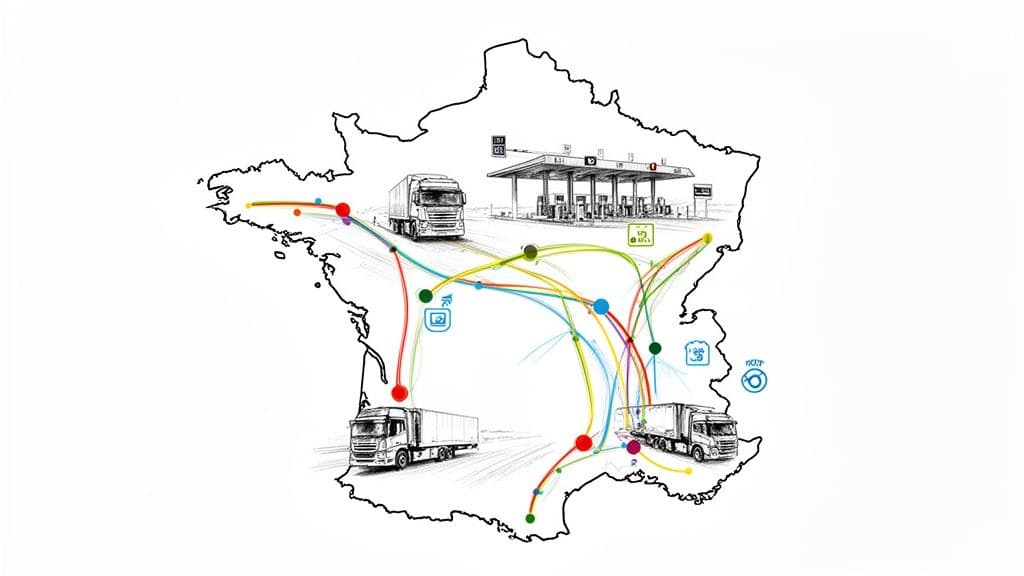
El mapa de abajo te da una idea de lo extensa y compleja que es realmente la red.
Cada línea azul de ese mapa representa un gasto potencial, otro recibo que procesar y un dato más que conciliar. Aquí es exactamente donde una solución más inteligente e integrada se vuelve esencial.
Al reunir todos tus gastos —desde peajes y combustible hasta aparcamiento y mantenimiento— en una sola plataforma respaldada por VISA, puedes reducir más de 10 horas de trabajo administrativo manual cada mes. Este enfoque unificado es el núcleo de una gestión de gastos de flota europea eficaz.
Entender el sistema francés de péage
Para controlar los gastos de tu flota al moverte por el mapa de peajes de Francia, primero debes entender el propio sistema. El péage francés no es un modelo único; es una estructura compleja donde los costes están ligados directamente al tipo concreto de vehículo que utilizas. Equivocarse con las reglas es un error habitual que puede provocar sorpresas muy desagradables en tus facturas mensuales.
En esencia, el sistema está diseñado para cobrar a los vehículos según su desgaste potencial de la vía. Esto significa que factores como la altura, la masa máxima autorizada y el número de ejes se usan para clasificar tu flota y calcular la factura final. Si calculas mal esto en la fase de planificación, tu previsión de costes se desviará mucho.
El diagrama de abajo muestra hasta qué punto los peajes franceses pueden ser centrales —y a menudo costosos— para el conjunto de tus operaciones de flota.
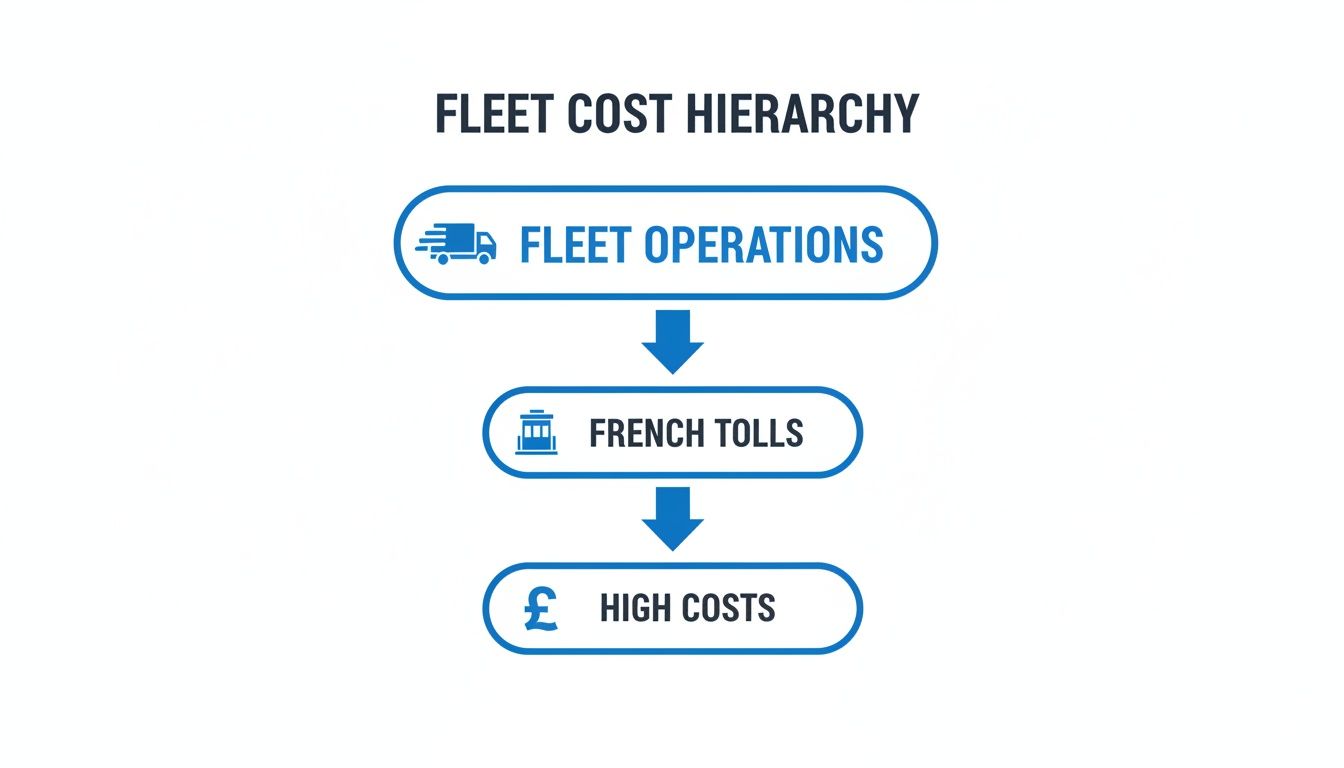
Sin una gestión rigurosa, estos gastos de peaje pueden dispararse rápidamente y afectar directamente a tu rentabilidad en cada trayecto transfronterizo.
Entender las clasificaciones de vehículos
El sistema oficial de clasificación es la base de los precios de peaje en Francia. Para cualquier flota comercial, las categorías que realmente importan son las Clases 2, 3 y 4. Una pequeña diferencia en la altura del vehículo o en el número de ejes puede hacerlo pasar a una clase más cara y disparar los costes en un trayecto largo.
La tabla de abajo desglosa las principales clases de vehículos para el transporte comercial. Es información esencial para cualquiera que quiera prever con precisión el gasto de su flota en las autoroutes francesas.
Clasificación de vehículos en peajes franceses
| Clase de vehículo | Descripción | Ejemplo típico de vehículo |
|---|---|---|
| Clase 2 | Vehículos con una altura total de entre 2 y 3 metros y una masa máxima autorizada de 3.5 toneladas o menos. | La mayoría de los vehículos comerciales ligeros (LCV), como una Ford Transit o una furgoneta Mercedes Sprinter. |
| Clase 3 | Vehículos más pesados con dos ejes, definidos como aquellos con una altura total de 3 metros o más o una masa máxima autorizada superior a 3.5 toneladas. | Un camión rígido HGV estándar o un camión caja de mayor tamaño. |
| Clase 4 | Los vehículos más grandes: HGV con tres o más ejes. Son los que afrontan los peajes más altos. | Un camión articulado, una combinación tractora-remolque o un autocar. |
Como ves, un HGV de Clase 4 va a pagar bastante más que una furgoneta de Clase 2 en exactamente la misma ruta. Por eso, clasificar bien tus vehículos desde el principio es el primer paso para controlar tus costes.
Sistemas de peaje cerrados vs. abiertos
No todo depende del vehículo. Las propias autoroutes usan dos sistemas de cobro completamente distintos. Saber cómo funciona cada uno es clave para evitar confusiones en el peaje y asegurarte de que tus conductores sepan qué hacer.
El sistema más común es el 'sistema cerrado' (système fermé). Aquí, el conductor coge un ticket al entrar en la autopista y paga al salir. El cargo final se calcula según la distancia recorrida, multiplicada por la tarifa de la clase del vehículo.
Encontrarás este sistema en la mayoría de las autopistas de larga distancia.
Pero también te encontrarás con el 'sistema abierto' (système ouvert). En estos tramos, a menudo cerca de grandes ciudades o en ciertas secciones de autopista, los conductores pagan una tarifa fija en una sola cabina de peaje. Sin ticket y sin complicaciones: simplemente pagas por pasar ese punto.
Entender estos dos sistemas es fundamental para cualquier gestor de flotas. Ayuda a prever costes y también prepara a tus conductores para saber qué esperar, reduciendo retrasos y errores de pago. Pero seamos sinceros: gestionar todos estos costes, clasificaciones y tipos de pago distintos en toda una flota genera un enorme problema administrativo. Una solución de pago unificada, como una sola tarjeta respaldada por VISA que funcione sin problemas en ambos sistemas, elimina la necesidad de que los conductores manejen varios métodos de pago o de que tu equipo financiero concilie un caos de formatos de transacción distintos. Simplifica todo el proceso y te da una visión clara y transparente del gasto, estés en la carretera que estés.
Hora de modernizarse: más allá de los peajes tradicionales
Para cualquier gestor de flotas que navegue por el complejo mapa de peajes de Francia, las formas antiguas de pagar se están convirtiendo en un serio lastre para el negocio. Gestionar efectivo, ordenar recibos individuales de tarjetas de crédito de conductores o manejar una desconcertante colección de dispositivos de peaje para distintas regiones solo genera fricción. Es una pesadilla administrativa.
Todo el sistema es desordenado y no fue diseñado para el ritmo rápido del transporte comercial moderno. Tienes conductores atrapados en largas colas en los peajes, el dolor constante de los recibos en papel perdidos y la tarea lenta y tediosa de conciliarlo todo a final de mes. Cada pequeño retraso se acumula, te hace perder tiempo valioso en carretera y hunde a tu equipo financiero en trabajo manual.
El problema de los pagos fragmentados
El verdadero problema se reduce a una sola cosa: una falta total de centralización. Cuando los conductores pagan con efectivo o con sus propias tarjetas, no tienes ninguna visibilidad en tiempo real de lo que se está gastando. Es un agujero negro de datos hasta que los recibos acaban llegando —a menudo semanas después—, lo que hace que cualquier control presupuestario inmediato sea una fantasía.
- Conciliación manual: Este es el gran problema. Alguien tiene que recoger físicamente, ordenar y teclear los datos de cientos de pequeños recibos en papel descoloridos cada mes.
- Sin control real: Sin un sistema único, es muy difícil aplicar reglas de gasto o incluso seguir costes vinculados a un camión o trabajo concreto.
- Caos transfronterizo: En cuanto tu flota cruza a otro país europeo, la complejidad se multiplica. Puede que necesites otro dispositivo de peaje, una cuenta aparte o gestionar transacciones en divisa extranjera. Es otra capa más de complicación.
Este enfoque anticuado no solo es ineficiente; es realmente caro. Las empresas de transporte ya afrontan algunos de los costes operativos más altos de Europa, especialmente en los corredores clave entre Reino Unido y Francia. Basta con mirar el Eurotúnel de Folkestone a Calais: es el peaje más caro de Europa y una arteria crítica para más de 1.5 million camiones al año.
Y luego está la propia Francia, a menudo llamada la “capital del peaje” de Europa. Un solo trayecto de París a Marsella puede costar casi €69, lo que muestra lo pesada que es la carga financiera. Está claro que seguir con el método antiguo sale muy caro a las flotas.
Una solución unificada para las flotas de hoy
Es hora de dar un paso adelante. Imagina cambiar todo ese caos de efectivo, tarjetas y dispositivos por una sola herramienta de pago inteligente. Una tarjeta moderna respaldada por VISA ofrece una alternativa mucho más limpia, diseñada desde cero para resolver exactamente los problemas a los que se enfrentan las flotas comerciales.
Con una tasa de aceptación del 99%, una sola tarjeta funciona sin problemas en peajes de Francia y del resto de Europa. Elimina por completo la necesidad de que los conductores lleven grandes cantidades de efectivo o de que los gestores manejen varias cuentas de Télépéage. Pero, lo más importante, reúne cada transacción en un sistema claro y gestionable.
La verdadera fuerza está en la consolidación. Cuando reúnes todos tus gastos en carretera —peajes, combustible, aparcamiento e incluso recarga EV— en una sola plataforma, conviertes un monstruo administrativo en un flujo de trabajo simple y automatizado.
Los beneficios son inmediatos. No necesitas depósitos para empezar, y las comisiones son totalmente transparentes, así que puedes olvidarte de cargos ocultos y desagradables sorpresas presupuestarias. Cada pago se sigue en tiempo real, dando a los gestores una visión instantánea del gasto de la flota desde el panel.
Mucho más que una tarjeta de pago
Este enfoque moderno va mucho más allá de pagar un peaje. Reúne varias herramientas en una sola, lo que lo convierte en una solución más barata y más eficaz para toda tu operación.
- Simplicidad transfronteriza: Una tarjeta funciona en cualquier país, eliminando los problemas de los viajes internacionales.
- Gestión total de gastos: No es solo para peajes. Úsala para cualquier gasto empresarial, desde material de oficina hasta mantenimiento urgente del vehículo.
- Flujos de trabajo ágiles: Ya no necesitas una herramienta aparte para gestionar gastos. Todo, desde el pago hasta la conciliación, ocurre en un solo lugar.
- Pensado para todos: El sistema está diseñado para ser intuitivo para todos, desde directivos hasta conductores.
- Se acabó perseguir facturas: Todos los recibos y datos de transacción se capturan y almacenan en un solo lugar, con integración contable directa.
- Captura de recibos por WhatsApp: Los conductores solo tienen que hacer una foto al recibo y enviarla por WhatsApp. No hace falta descargar ni aprender otra app.
En última instancia, este tipo de sistema integrado puede reducir más de 10 horas de trabajo manual al mes. Es un cambio estratégico que aleja a tu equipo del trabajo administrativo tedioso y lo acerca a decisiones más inteligentes basadas en datos. Y cuando combinas estos datos de pago con la información de tus servicios de tarjeta de combustible, obtienes una visión completa de los costes del trayecto, lo que permite una verdadera optimización de la salud financiera de tu flota.
Planificación de rutas más inteligente para reducir el coste total del viaje
Cualquiera que gestione una flota en el mapa de peajes de Francia sabe que no se trata solo de evitar los péages más caros. La clave real es acertar con el menor coste total del viaje. Una ruta sin peajes puede parecer ideal sobre el papel, pero si añade horas, consume más combustible en carreteras locales con paradas constantes y hace que tus conductores superen sus horas legales, es la típica falsa economía. El objetivo es encontrar el equilibrio perfecto entre velocidad, coste y eficiencia en cada trayecto.
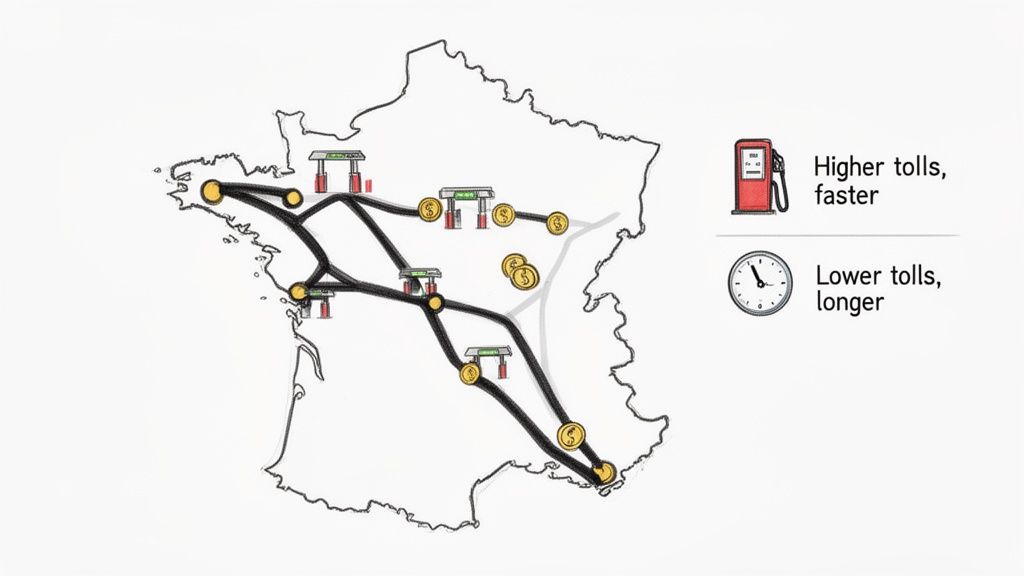
Esto significa hacer un análisis serio de coste-beneficio. Para entregas urgentes, un trayecto directo por autoroute con más peajes suele ser la opción más lógica. Pero para envíos menos urgentes, donde cada euro de combustible cuenta, un desvío por las carreteras nacionales (Routes Nationales) puede ser la jugada más inteligente.
El coste real de un trayecto
Para tomar la decisión correcta, los gestores de flotas tienen que sopesar varios factores en competencia. El problema para la mayoría de las empresas es que los datos necesarios para hacerlo están dispersos por todas partes: una cuenta de tarjeta de combustible por aquí, un sistema de peaje aparte por allá y un montón de recibos manuales en medio.
La ecuación del coste total combina:
- Tarifas de peaje: La más obvia, basada en la distancia y la clase del vehículo.
- Consumo de combustible: Conducción lenta y con paradas en carreteras secundarias puede gastar más combustible que circular a velocidad constante por autopista, anulando cualquier ahorro en peajes.
- Horas del conductor: Las rutas más largas implican mayores costes salariales y problemas con la normativa de tiempos de trabajo. Dos horas extra en carretera podrían obligar a un descanso obligatorio y causar retrasos importantes.
- Desgaste del vehículo: El asfalto liso de las autoroutes cuida mucho más tus vehículos que las carreteras secundarias mal mantenidas.
- Plazos de entrega: En cualquier operación logística, perder una ventana de entrega puede activar penalizaciones que hacen que cualquier ahorro en peajes parezca mínimo.
Este equilibrio es cada vez más difícil. Mientras los operadores de flotas recorren el mapa de peajes de Francia, ven cómo suben los precios. Se ha confirmado un aumento medio del 2.7% para 2024, continuando una tendencia de varios años. Como las autoroutes francesas son casi totalmente de peaje, estas subidas afectan especialmente a los HGV, haciendo esencial un control inteligente de costes. Puedes leer el estudio completo sobre las recientes subidas de peajes en Francia.
Un enfoque integrado para optimizar rutas
Aquí es donde contar con una plataforma unificada de gastos lo cambia todo. Convierte la planificación de rutas de una suposición en una estrategia basada en datos. Cuando todos los costes del trayecto —peajes, combustible, aparcamiento, mantenimiento— se capturan en una sola tarjeta respaldada por VISA y aparecen en un único panel, por fin puedes ver el panorama completo y hacer un análisis real de costes para cada ruta.
Al reunir todos tus gastos, puedes comparar con precisión el coste total de la Ruta A frente a la Ruta B. Puede que descubras que pagar un peaje de €60 en la autoroute es en realidad 15% más barato en total una vez que tienes en cuenta el menor consumo de combustible y el tiempo del conductor.
Esta visión integrada permite a los gestores tomar mejores decisiones, rápido. Con acceso a una red de gasolineras de bajo coste, incluso puedes dirigir a los conductores para repostar de forma estratégica y reducir aún más el coste total del trayecto. Una plataforma como Rally ofrece esta visión consolidada, convirtiendo un conjunto de variables complejas en una imagen financiera clara.
Beneficios prácticos para las flotas europeas
Una plataforma unificada ofrece más que datos ordenados; aporta ventajas reales que resuelven los principales problemas a los que se enfrentan las flotas cada día.
- Operaciones más baratas: Con acceso a los precios de combustible más bajos de Europa y comisiones transparentes, puedes reducir activamente tus dos mayores costes variables.
- Sin depósitos: A diferencia de muchos sistemas tradicionales de dispositivos de peaje, puedes empezar sin inmovilizar caja en grandes depósitos.
- Simplicidad transfronteriza: Una tarjeta funciona sin problemas en cualquier país, eliminando la molestia de gestionar varios sistemas de pago para trabajos internacionales.
- Potencia consolidada: Combina pagos, gestión de gastos e integración contable en una sola herramienta más barata, ahorrándote dinero en suscripciones de software.
En última instancia, dominar el mapa de peajes de Francia no consiste en evitar los peajes a toda costa. Se trata de tener los datos y las herramientas adecuadas para elegir siempre la ruta más rentable, asegurando que tu flota opere con la máxima eficiencia y rentabilidad posible.
Cómo automatizar la gestión de gastos de peaje y ahorrar horas de trabajo
Entender el mapa de peajes de Francia es una cosa, pero para cualquier flota que opere por Europa, el verdadero dolor de cabeza es la montaña de papeleo que viene después. Los equipos financieros conocen bien la situación: están enterrados bajo una avalancha de recibos en papel, lidiando con conversiones de divisa y perdiendo horas en la introducción manual de datos. Esto no solo es un lastre; afecta directamente a tu rentabilidad.
El flujo de trabajo típico está anclado en el pasado. Los conductores manejan decenas de frágiles recibos de peaje, que inevitablemente se pierden o se entregan con semanas de retraso. A partir de ahí, un responsable financiero tiene que descifrar, ordenar y cotejar manualmente cada uno con extractos bancarios o de tarjeta. Es lento, está lleno de errores y no te da absolutamente ninguna visibilidad en tiempo real de lo que realmente gasta tu flota. Es una pesadilla administrativa que cuesta una fortuna a las empresas.
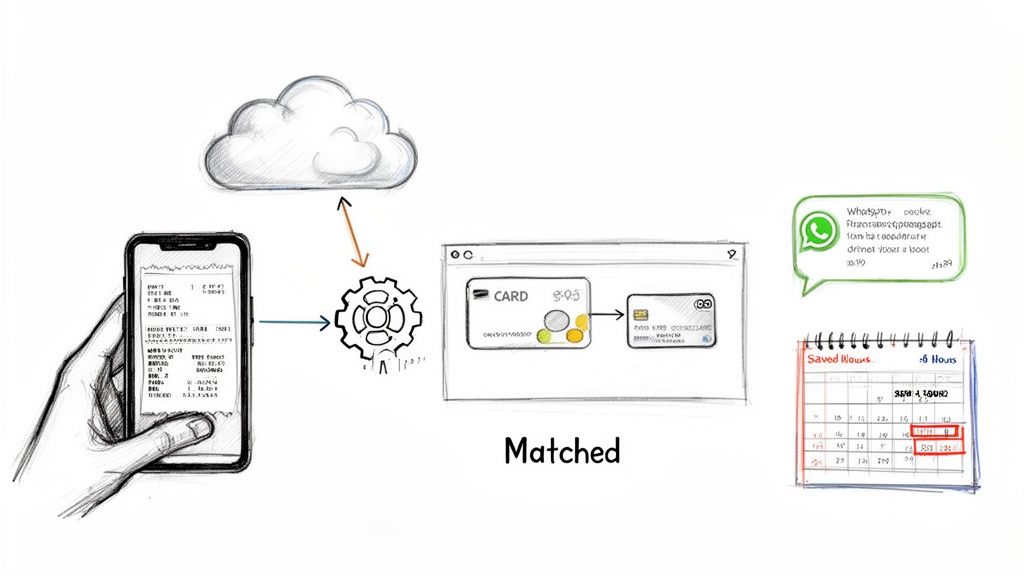
Este desgaste administrativo es un gran problema para las flotas que cruzan Europa de un lado a otro, donde distintas divisas e idiomas añaden aún más complejidad. La búsqueda constante de facturas perdidas y las horas desperdiciadas en trabajo manual agotador son problemas que las empresas modernas ya no pueden permitirse.
Del caos en papel a la claridad automatizada
Ahora imagina otra forma de hacerlo. Un conductor paga un peaje, hace una foto rápida del recibo y la envía por WhatsApp. En ese instante, una tecnología inteligente lee el recibo, lo vincula a la transacción correcta de la tarjeta y registra el gasto sin que nadie tenga que mover un dedo.
Así es como solucionas de una vez el problema de los gastos de peaje. Al sustituir el trabajo manual por un sistema automatizado, puedes reducir más de 10 horas de trabajo manual cada mes. Eso libera a tu equipo financiero para hacer lo que mejor sabe: analizar el gasto, no solo introducirlo.
La verdadera magia está en la consolidación. Cuando reúnes todos los gastos de flota —peajes, combustible, aparcamiento, recarga EV e incluso gastos diarios del negocio— en un solo panel, eliminas la necesidad de herramientas de gastos separadas. Por fin pones fin a la interminable persecución de facturas.
Este enfoque ágil te da una visión clara y en tiempo real del gasto, convirtiendo la gestión presupuestaria de una tarea reactiva en una estrategia proactiva. Simplifica la vida de todos, desde los directivos que necesitan una visión financiera hasta los conductores que están en carretera.
Una sola herramienta para el control total de la flota
Una plataforma moderna e integrada hace mucho más que procesar recibos. Se convierte en el motor financiero de toda tu operación de flota, ofreciendo ventajas potentes que afrontan de frente los grandes retos del mercado europeo. Y al consolidar varias herramientas en una, también acaba siendo una solución más barata y más eficiente.
Así es como un sistema unificado puede cambiar por completo la gestión de gastos de flota:
- Una tarjeta para todo: Una sola tarjeta respaldada por VISA que funciona para cualquier tipo de gasto. Hablamos de peajes, aparcamiento y combustible, pero también de material de oficina o cualquier otra necesidad de tu empresa. Con 99% de aceptación, funciona sin fallos en Francia y en cualquier otro país donde operes.
- Los precios más bajos de Europa: Un sistema integrado te da acceso a gasolineras de bajo coste, ayudándote activamente a reducir uno de tus mayores costes operativos.
- Sin depósitos: A diferencia de muchas soluciones antiguas de peaje, no necesitas grandes depósitos, y liberas caja para cosas más importantes.
- Tarifas claras: Olvídate de cargos ocultos y sorpresas desagradables. Una plataforma moderna te da tarifas claras y por adelantado, para que siempre sepas exactamente qué pagas.
- Integración contable fluida: Todos tus datos de gastos se sincronizan directamente con tu software contable, haciendo el cierre de fin de mes más rápido y preciso que nunca. Puedes saber más sobre cómo una sola tarjeta puede gestionar los gastos de flota en nuestra guía sobre por qué las tarjetas de flota modernas superan siempre a las tarjetas de combustible tradicionales.
Este nivel de automatización y control ya no es un lujo: es esencial para cualquier flota que quiera seguir siendo competitiva. Al eliminar la carga manual de la gestión de gastos, puedes lograr ahorros importantes y hacer que toda tu empresa funcione con más eficiencia.
¿Dudas sobre los peajes en Francia? Aquí tienes respuestas.
Gestionar una flota en Francia implica tratar con la red de autoroutes, y eso siempre genera dudas. Aquí tienes respuestas claras a las consultas más habituales que recibimos de gestores de flota y conductores, pensadas para aclarar la situación y ayudarte a operar con más control.
¿De verdad puedo usar un solo método de pago para todos los peajes en Francia?
Técnicamente, la mayoría de los dispositivos Télépéage franceses funcionan en todo el país, pero en cuanto tus camiones cruzan una frontera, la cosa se complica. De repente tienes que gestionar distintos dispositivos para distintos países, y eso es un verdadero quebradero de cabeza.
Una solución única e integrada como una tarjeta Rally respaldada por Visa cambia por completo las reglas. Ofrece un 99 % de aceptación en casi todas las plazas de peaje de Francia y funciona igual de bien en otros países europeos. Así eliminas la necesidad de varios dispositivos, contratos separados y de inmovilizar caja en depósitos para distintos sistemas. Una tarjeta, una solución.
¿Qué pasa si uno de nuestros vehículos pesados entra en el carril de peaje equivocado?
Es una situación clásica: un conductor de vehículo pesado entra por error en un carril solo para turismos, a menudo marcado como "VL" o con una restricción de altura de <2 m. Es un fallo simple que puede desbaratar un horario ya ajustado.
Normalmente, el conductor tiene que pulsar el botón de asistencia, lo que inicia un proceso de pago manual y suele provocar un atasco frustrante detrás. La forma más fácil de evitar estos retrasos costosos es usar una tarjeta de pago aceptada de forma general en los carriles designados para vehículos pesados o "toutes classes" (todos los vehículos).
¿Cómo puedo presupuestar con precisión los peajes de una ruta nueva?
Los calculadores de peaje online te dan una estimación, pero a menudo no tienen en cuenta variables en tiempo real y, lo más importante, no te muestran el coste total del viaje. Para un presupuesto realmente preciso hace falta una visión mucho más amplia.
Aquí es donde entra una plataforma integral como Rally. Te permite analizar tus propios datos históricos de gasto en rutas similares.
Al reunir peajes, opciones de combustible de bajo coste y otros gastos clave en un solo panel, puedes crear una previsión que refleje tus costes operativos reales, no solo las tarifas de peaje. Este tipo de planificación basada en datos es lo que separa las rutas rentables de las costosas.
Mejor aún: esta consolidación te permite recortar más de 10 horas de trabajo administrativo manual al mes, porque los datos ya están ahí, sin pelear más con hojas de cálculo.
¿Hay sanciones por no pagar un peaje en Francia?
Sí, y pueden salir caras. Si un pago falla y el vehículo pasa la barrera igualmente, las cámaras captarán la matrícula. Entonces el operador del peaje emite una multa, que suele ser el peaje máximo de esa ruta más una elevada tasa administrativa.
No asumas que puedes ignorarlo si tu flota está matriculada en otro país. Estas multas se reclaman a través de fronteras, así que no te librarás. Un sistema de pago fiable, con alta aceptación y una visión clara de tu saldo, es tu mejor defensa contra pagos rechazados y sanciones costosas.
¿Cómo puede nuestra flota reducir el gasto total en peajes y combustible?
Gastar mejor no consiste solo en evitar peajes; consiste en pagar menos por todo. La clave es una solución de pago consolidada. Si usas una plataforma que también te da acceso a una red de estaciones de combustible de bajo coste, puedes asegurar algunos de los precios más bajos de Europa.
Además, un sistema con tarifas transparentes y sin depósitos mantiene más liquidez en tu empresa. Cuando unes tus herramientas de pago, gestión de gastos y contabilidad, todo el sistema resulta mucho más barato que gestionar varios servicios. Da a todos, desde tus directivos hasta tus conductores, una única herramienta potente para reducir costes.
Gestionar los gastos de flota en Francia y Europa no tiene por qué ser un caos de papeleo y seguimiento manual. Rally ofrece una única tarjeta respaldada por Visa y una plataforma todo en uno para automatizar la gestión de peajes, combustible y gastos, ahorrándote tiempo y dinero en cada viaje.
Descubre cómo Rally puede transformar las operaciones de tu flota