Introduction: The Aral fuel card has long been a staple for fleets in Germany and beyond. As part of the BP family, Aral boasts a Germany-wide presence (over 2,400 Aral stations nationally) and access to BP’s broader European network (around 24,000 sites across 32 countries via the ROUTEX alliance). Fleet managers appreciate Aral’s integration with BP, its extensive acceptance for heavy vehicles at truck-friendly motorway stations, and the brand’s established fuel card programs. These strengths have made Aral a trusted choice – especially for Germany-centric operations and trucking companies requiring reliable Autobahn coverage.
However, fleet priorities are evolving in 2025. Many logistics and procurement teams are now researching alternatives to legacy fuel cards like Aral’s, driven by new demands for cost transparency, flexibility, electric vehicle support, and streamlined administration. Enter Rally, a modern, Visa-based fleet card aiming to address these exact needs. In this post, we’ll explore what today’s fleets prioritize, compare Aral’s fuel card to Rally feature by feature, and give an honest take on where Aral still shines versus when Rally makes more sense for your fleet.
2025 Fleet Priorities: Transparent Pricing, Flexible Station Choice, EV Support & Automation
Fleet operators in 2025 face heightened expectations around how their fuel cards perform. Below are the key priorities influencing card decisions – and the pain points pushing fleets to seek new solutions:
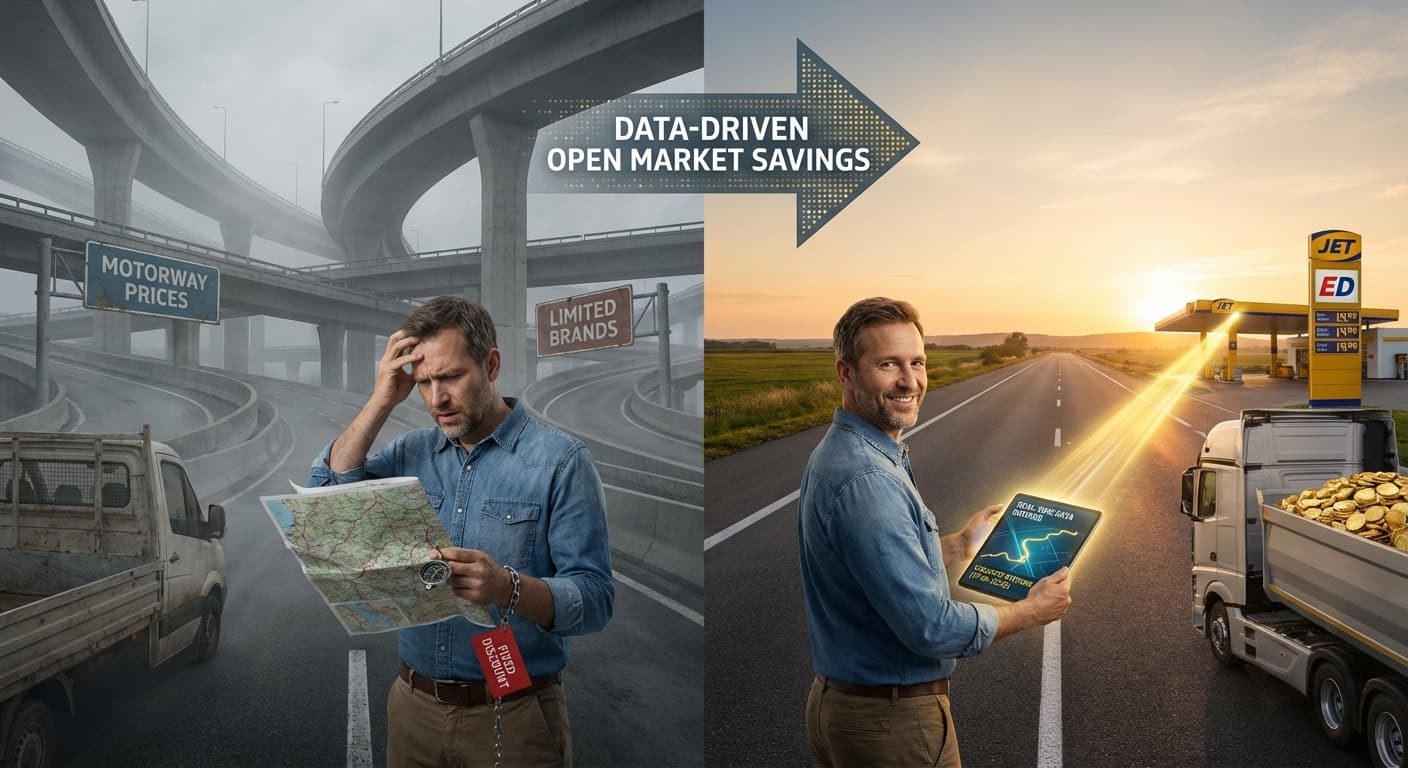
Transparent Pricing: Cost transparency has become paramount. Many traditional fuel cards bill fuel at negotiated "list prices" or fixed weekly rates that don't always match the pump price. For example, Aral and Shell publish a "Daily price" / Listenpreis model that can run €0.10–€0.30 per litre higher than the local pump price at premium stations - a difference DKV itself discloses on its product pages. The push now is for cards that bill the same price displayed at the pump.
Flexible Station Choice: Many traditional fuel cards run on closed networks - the Aral fuel card runs on the BP/ROUTEX alliance, which Aral publishes as around 24,000 stations across 32 countries. Routes outside that alliance footprint, including many low-cost supermarket forecourts and independents in Germany, France, and Spain, fall outside that acceptance network. In 2025, fleets want the freedom to fuel at the most convenient or cheapest station available - whether that's an Aral, a rival brand, or a low-cost independent station.
Real-Time Control & Automation: Modern fleets expect real-time data visibility and control over fuel spend. Traditional card systems often have slow reporting (transactions might not post for days) and limited controls. That makes it hard to catch misuse or optimize fuel purchasing in the moment. Today’s fleet managers prefer solutions with live dashboards and instant alerts. For example, Rally provides real-time spend tracking and instant alerts for suspicious transactions, plus the ability to set spend limits or lock cards on-the-fly via a mobile app. Such granular, real-time control helps prevent fraud and unauthorized purchases (important when industry studies show fuel fraud/leakage can eat ~7% of budgets). In short, data-driven and automated controls are a top priority now, versus the manual audits of the past.
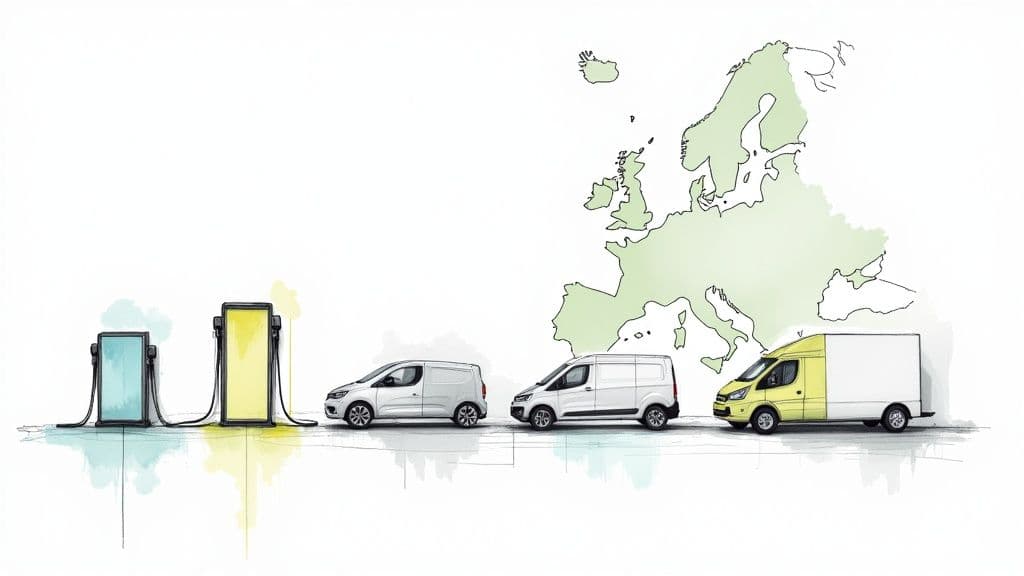
EV Charging Support: With electric vehicles gaining ground, fleet cards must handle more than just diesel and petrol. Companies increasingly mix EVs into their fleets, and they don’t want separate accounts or cards for charging versus fueling. Aral/BP has responded with offerings like the Fuel & Charge Card and Aral pulse network to cover both fuel and EV charging. In fact, the bp/Aral network now includes access to ~880,000 public charge points across 30 countries via the Aral/bp Pulse program. Similarly, UTA Edenred launched its UTA eCharge® platform for comprehensive EV charging services. Rally’s approach is to let fleets pay for fuel and electricity on one card as well – since it’s a Visa, drivers can simply tap it at charging stations or fuel pumps alike. In 2025, a “future-proof” fleet card should seamlessly support EV charging, so the card remains useful as your fleet transitions to hybrids or EVs.
Administrative Efficiency: Fleet admins used to accept manual paperwork and end-of-month reconciliation as the cost of doing business. Time is money, and 2025 fleet teams are looking to claw back the manual work that traditional fuel cards leave for finance. Modern platforms can auto-capture digital receipts, flag anomalies, and integrate with accounting or ERP software, eliminating spreadsheets and manual data entry. Rally's own customer data shows fleets save roughly 18 hours of admin work per month on average after switching, primarily through automated receipt capture and direct accounting integrations.
Market reality checks: These priorities aren’t just abstract wish-lists – they’re reinforced by real fuel market conditions across Europe. If your fuel card can’t adapt, your fleet’s budget will suffer. For example:
Germany: Autobahn fuel stations charge steep premiums – an ADAC analysis found motorway service stops average €0.42–€0.44 higher per liter than nearby off-highway stations. Without pricing transparency or flexibility in station choice, fleets literally pay the price in Germany’s highway network.
France: Major hypermarket chains (like E.Leclerc and Carrefour) sell fuel for €0.05–€0.10 per liter less on average than the big oil brands. These supermarket stations are some of the cheapest in France, yet not all legacy fuel cards are accepted at such low-cost outlets. A modern card needs to let you tap into these savings.
Spain: No-frills independent gas stations have exploded in number – they now make up roughly 50% of all stations in Spain, often undercutting national average fuel prices by €0.18–€0.20/L. Fleets relying only on old networks (while independents thrive) risk missing out on huge savings per liter in Spain.
UK: Regulators are cracking down on fuel price opacity. In 2023–24, the UK’s Competition and Markets Authority found drivers were paying about 6 pence per liter extra due to weakened competition and hidden pricing tactics. This spurred a new government “Fuel Finder” open-data scheme to mandate live, station-by-station price transparency nationwide. The direction is clear – the market expects transparency, and fleet cards must align with that trend.
All these factors underscore why fleet managers are re-evaluating providers like Aral and looking at open-market alternatives. A fuel card in 2025 must empower you to buy fuel at the best possible price with full visibility – not lock you into potentially higher rates or onerous processes. With that context in mind, let’s see how Aral’s fuel card vs. Rally’s card stack up on these critical features.
Aral vs. Rally: Feature-by-Feature Comparison
Both Aral and Rally enable cashless fueling for business fleets, but their approaches differ significantly. Aral’s card is a more traditional, network-bound fleet card tied to Aral/BP stations, while Rally offers a more flexible, fintech-driven solution. Below is a feature-by-feature comparison.
1. Station Network & Coverage
Aral - Station-Linked Network: ~2,400 Aral stations across Germany. Through BP & ROUTEX partnerships, it’s accepted at ~24,000 sites in 32 countries (mostly BP, Aral, Circle K, OMV, Eni stations). Strong coverage on German Autobahns and major European routes. Includes many truck-friendly sites (HGV-accessible fuel stops on highways).
Rally - Open Network: Accepted at any fuel station that takes Visa, giving effectively universal coverage. Fleet drivers can refuel at over 1 million locations globally (virtually all gas stations accept Visa). No dependence on specific brands – whether it’s a big-name station, supermarket fuel stop, or independent truck stop, Rally works. This maximizes route flexibility.
2. Fuel Pricing Model
Aral - List Prices & Fixed Discounts: Fuel is often billed at Aral/BP’s daily list price rather than the pump price, which can run €0.10–€0.30+ per liter above the local pump rate. Aral/BP may offer fixed per-liter rebates for large clients, but those discounts (if any) are typically small and only apply at network stations. Pricing transparency is moderate – invoices show liter totals and prices, but the use of internal pricing means fleets must trust Aral’s rates. No routine monthly card fees for basic use, though an admin fee may apply in some programs (e.g. €10/quarter in one Aral scheme).
Rally - Pump-Price Transparency: Always pays the actual pump price on the receipt – there are no hidden markups or complicated “fuel scale” prices. Rally does not add surcharges or use averaged pricing. You get the same price posted at the station, every time, with all taxes included. There are no monthly fees or transaction fees either, simplifying the cost structure. This transparent model often yields significant savings – fleets avoid the €0.10–€0.30/L list price premiums and have seen ~10% average fuel cost reduction by paying open-market prices.
3. Controls & Security
Aral - Standard Controls: Card settings are managed via a BP/Aral online portal. Fleet admins can set some purchase controls (e.g. restrict fuel types or set spending limits) and receive alerts for unusual transactions. Security features include PIN code verification and CCTV monitoring at most Aral sites for fraud prevention. These are solid, but changes may not take effect instantly and data visibility is not real-time (transactions post on a delay).
Rally - Real-Time, Dynamic Controls: Rally provides a live software dashboard to control every card. You can customize granular rules per driver or vehicle – e.g. limit to fuel only, cap € per day, allow weekday usage only – and these controls update instantly. The system sends instant alerts for any out-of-policy purchase or suspicious activity, helping catch fraud or misuse on the spot. Cards can be remotely locked/unlocked in seconds via the mobile app. AI-driven fraud detection adds another layer, flagging anomalies in real time. In short, Rally’s security and control toolkit is more advanced and responsive.
4. EV Charging & Future Fuels
Aral - Fuel & Charge Card Option: Aral (with BP) now offers a combined Fuel & Charge card, granting access to a vast EV charging network in addition to fuel. This gives cardholders entry to hundreds of thousands of charge points (bp/Aral claims ~880,000 public chargers across Europe via partners). However, this may come as a separate card or account tier. Aral’s focus is still primarily on liquid fuels (diesel, petrol), with EV support as an add-on service. Other alternative fuels: Aral stations do offer AdBlue, and some provide CNG/LNG, but these are location-specific.
Rally - Unified Card for All Energy: Rally’s Visa-based card inherently works for EV charging as easily as fueling – there’s no separate “electric” card needed. Any public charging station that accepts a credit card or mobile payment can be used with Rally. This means as your fleet adds EVs or plug-in hybrids, drivers continue using the same Rally card to pay for electricity. The billing is combined with fuel expenses for one consolidated invoice. Additionally, Rally’s platform can track carbon emissions data from fuel purchases, helping fleets monitor sustainability metrics. The card is equally ready for buying petrol, diesel, charging sessions, or even hydrogen in the future – a truly fuel-agnostic solution.
5. Administration & Reporting
Aral - Conventional Admin: Aral’s system provides online account management for invoices and fuel reports, but much of the process remains manual or semi-digital. Companies often download periodic statements and still reconcile against vehicle logs. Integration with external fleet software or accounting systems is limited. Ancillary services like VAT reclaim or toll payments are not inherently included with Aral (some large clients might use additional BP services for tolls, but it’s not a core feature of the Aral fuel card). Overall, admin effort can be significant – any pricing discrepancies (e.g. list vs pump price questions) have to be manually checked, and adding or removing cards/users is a traditional process via forms or the portal.
Rally - Automated Admin: Rally is built to minimize paperwork and admin time. Every transaction is recorded in a real-time dashboard, with digital receipts captured (no chasing drivers for slips). The platform can export or sync data directly into fleet management and accounting systems, eliminating manual data entry. Many routine tasks – like monthly expense reports, per-vehicle fuel spend summaries, and VAT calculations – are generated automatically. The result is substantial time saved: fleets using Rally report saving on the order of 15–20 hours of admin per month thanks to automation. Invoices are straightforward (actual prices, no complex rebate schemes), making reconciliation simple. For a busy fleet manager or accountant, this level of efficiency is a game changer.
When Rally Makes More Sense for Your Fleet
While Aral is a strong incumbent, Rally’s modern approach can be a smarter choice for fleets focused on cost efficiency, flexibility, and tech-savvy management. You should seriously consider Rally as the “fuel card” (or rather, fleet card) for 2025 if any of the following resonate with your needs:
You Demand True Cost Transparency: If your fleet is tired of murky invoices or suspect you’re paying more per liter than you should, Rally brings a breath of fresh air. With Rally, you pay exactly the pump price and nothing more – eliminating the “list price” markups and complex rebate calculations that can cost fleets thousands annually. Many companies only discover later that their legacy card was charging, say, €0.15 or €0.20 above pump at certain stations – an expensive lesson that Rally’s model would have avoided. In one real example, a German business found their old fuel card was billing €0.19 per liter over the pump price, which added up to a huge unnecessary expense. By switching to a transparent pricing card like Rally, fleets often save on the order of 5–10% on fuel costs in aggregate without changing any driving behavior. For tight transport budgets, that kind of direct savings is extremely compelling. In short, if you value clear, predictable fuel costs and no surprises, Rally is built for you.
You Want Freedom to Fuel Anywhere for Less: Rally is an open-loop Visa card, meaning your drivers aren’t locked into specific fuel brands or networks. This is ideal if you have a cost-conscious fueling strategy – for example, encouraging drivers to choose the cheapest nearby station. With Rally, they can fill up at the truly lowest-cost option, whether that’s a supermarket pump in the UK or an independent mom-and-pop station in rural France. Traditional fuel cards sometimes exclude discount stations or even add surcharges to use “out-of-network” sites, which negates the savings. Rally imposes no such restrictions or penalties, empowering your team to take advantage of big price differences between stations. In markets like the UK, where supermarkets sell ~44% of fuel and tend to price 5–10 pence per liter cheaper than oil-company sites, this makes a major difference. Similarly in Spain or France, if your drivers can stop at a hypermarket or low-cost outlet, Rally lets them do it and your company reaps the savings. For fleets that prioritize flexibility and lowest-price fueling over brand loyalty, Rally is the clear winner.
You Operate with Lean Admin (or Just Hate Paperwork): Not every company has a large back-office staff to reconcile fuel bills and chase receipts. If you have a lean team - or simply want your fleet manager and accountants to spend time on more strategic work - Rally's automation can make a meaningful difference. All transaction data flows into a dashboard in real time, and integrations can push this data into your accounting system or ERP with minimal effort. Reports that used to take hours to compile (fuel spend per vehicle, VAT reclaims, driver MPG performance, etc.) are available on-demand. Rally's own customer data shows around 18 hours of admin work cut per month for a typical fleet after switching, primarily through automated receipt capture and direct accounting integrations.
You’re Preparing for an EV/Hybrid Future: Rally is future-focused by design. As your fleet begins to incorporate electric vans or cars, Rally seamlessly adapts – the same card and account handles your charging expenses. There’s no need to juggle a separate EV charging card or deal with different billing systems for fuel vs. electricity. This can simplify life for both drivers and finance teams. Additionally, Rally’s platform is continuously evolving with modern needs (for example, providing CO₂ emissions reporting based on fuel purchases, which can aid in sustainability tracking). As regulatory trends push for greener fleets and more transparency (like the UK’s open data initiative), Rally’s model aligns well with where the industry is heading. In contrast, if you stick with a legacy fuel card not built for EV integration, you might need to add an entirely new system when the EV portion of your fleet grows. Rally offers a one-card solution for multi-fuel fleets, which is a big strategic advantage looking at the next 5–10 years.
You Feel “Held Back” by Older Fuel Card Friction: Perhaps the most telling reason to choose Rally is if you simply sense that your current fuel card is outdated. Many fleets using traditional cards report a lot of small frictions – from cumbersome login portals and slow support to confusing invoices and annoying fees (like charges for using a non-partner station or not meeting a monthly volume quota). Rally was designed to eliminate those pain points. There are no volume commitments, no regional restrictions, and no surprise add-on fees. The web and mobile apps have a modern UX (unlike some legacy systems that feel straight out of the 2000s), and new features roll out regularly. If you suspect that sticking with a decades-old fuel card program is causing your fleet to miss out on savings or efficiencies, it probably is. Many growing fleets, last-mile delivery companies, and tech-savvy businesses have already switched to Rally for a more agile solution. The consensus is that the cost savings and productivity gains are tangible and well worth the change.
Conclusion & Next Steps
Choosing the best fuel card (or fleet card) for your needs in 2025 ultimately comes down to your fleet’s profile and priorities. Aral’s fuel card remains a robust, proven solution with a strong network in Germany and a broad European footprint through BP. It’s a safe bet for fleets that value the established coverage, heavy-vehicle infrastructure, and one-stop services of an oil-major-backed program. In certain scenarios – long-haul trucking across Europe’s main corridors, or companies deeply integrated with Aral/BP’s systems – Aral can still be the right fit as a fuel partner.
On the other hand, Rally represents a new generation of fleet card built for transparency, flexibility, and automation. It excels for fleets that demand real-time control over spending, want to minimize fuel costs without complex contracts, and are ready to embrace digital tools to save time. If your team is prioritizing cost savings, efficiency, and future-proofing (EV integration, data insights), Rally is likely the better alternative.
For fleet managers and procurement teams in Germany, France, Spain, the UK and beyond, the key is to evaluate which solution addresses your pain points. Are you frustrated by unclear fuel pricing or limited station options? Do you spend too many hours on admin? Are you adding EVs or operating in multiple countries with diverse fuel providers? By answering these questions, the choice often becomes clear.
If you’re exploring alternatives to the Aral fuel card, it’s worth taking a closer look at Rally’s offering. Talk to fleets who’ve made the switch and saved, or reach out for a demo of Rally’s platform to see the difference in transparency and control firsthand. The fuel card landscape is changing – and with the right solution, you can turn fuel buying from a necessary hassle into a competitive advantage for your fleet. Learn more about Rally and how it can modernize your fleet’s fuel management, so you drive into 2025 with greater savings and less stress on the road.