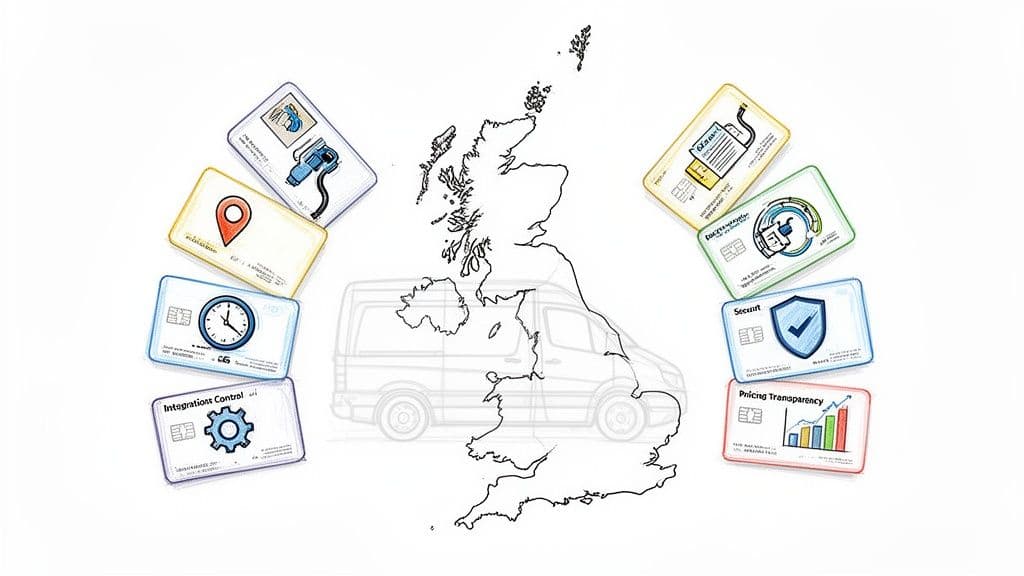
The best small business fuel card in 2026 is not the one with the loudest pence-per-litre headline. It is the one your drivers can use without detours, that bills you cleanly, and that does not bury your finance team in receipts. For no-fee supermarket fuelling that is fuelGenie; for the widest UK network it is Allstar; and for one card that covers fuel, EV charging, tolls, parking and expenses across the UK and Europe it is Rally.
This guide compares seven options the way a small business actually buys: by where drivers refuel, what the card really costs once fees and deposits are counted, whether it handles EV and non-fuel spend, and how much admin it leaves behind. If you only want a UK-provider shootout, read our companion guide to the best fuel card companies in the UK for 2026.
Best small business fuel cards in 2026, at a glance
| If you want… | Best pick | Why |
|---|
| The lowest cost on supermarket fuel | fuelGenie | No account, transaction or card fee; supermarket pump prices (Tesco, Morrisons) |
| The widest UK network | Allstar | Around 7,600 sites — roughly 90% of UK forecourts, supermarkets included |
| Fixed, predictable weekly pricing | Esso National / BP Plus | A set diesel price each week across thousands of sites |
| Strong motorway and A-road coverage | BP Plus | Built around bp and partner sites on major routes |
| Multi-brand route flexibility | UK Fuels (Radius) | Supermarket and independent access with fixed-weekly options |
| Someone to shortlist cards for you | Right Fuel Card | A broker that matches you to a provider |
| One card for fuel + EV + tolls + expenses (UK & EU) | Rally | Visa-backed 99% acceptance, app-free receipts, no deposit or credit check |
How we compared
We weighted the five things that decide whether a small fleet actually saves money:
- Acceptance where drivers stop. A lower quoted rate is worthless if it forces a five-mile detour.
- Total cost, not the headline rate. Account fees, deposits, low-usage penalties and admin hours all count.
- Fuel and everything around it. EV charging, tolls, parking and ad-hoc spend now matter as much as diesel.
- Admin and accounting. VAT-ready invoices, automatic receipt capture and a clean export to your accounts.
- Cash flow. Deposits and credit checks tie up money a small business would rather keep.
We build Rally, so we have a stake in this — which is exactly why the table above hands the cost crown to fuelGenie and the network crown to Allstar. Rally wins where it genuinely wins: one card across fuel, EV and expenses, especially once you cross a border. Here is the case for each, and who should skip it.
Rally — best all-in-one card
Rally replaces the old fuel-card trade-off of "network access versus admin pain." It is a Visa-backed card that works at roughly 99% of fuel stations, plus EV chargers, tolls, parking and approved day-to-day spend — across the UK and more than 20 European countries. Drivers send receipts over WhatsApp with no app to install; finance gets one invoice, one dashboard and a direct sync to Xero, QuickBooks or Sage. Most teams claw back 10+ hours of admin a month.
It is built for small businesses that cross borders, run mixed petrol/diesel/EV fleets, or are tired of stitching together receipts from four providers. There is no deposit and no credit check, so a growing company can start without parking cash with a fuel network.
Best for: SMEs that want one card for fuel, EV charging, tolls, parking and expenses — especially across the UK and EU.
Skip it if: You only ever buy supermarket petrol in one town and want a single pence-per-litre discount; a free supermarket card like fuelGenie will be cheaper for that narrow case.
Website: Rally · Book a demo
fuelGenie — cheapest for supermarket fuelling
fuelGenie is the card to beat on cost. It charges no account fee, no transaction fee and no card fee, and it is accepted at roughly 1,370 supermarket forecourts (chains like Tesco and Morrisons) where pump prices typically run a few pence per litre below the national average. For a sole trader or small team that fills up at supermarkets anyway, that combination is hard to argue with.
The catch is the network. fuelGenie is supermarket-only, so it is weak on motorways, rural A-roads and EV charging, and it does not handle tolls, parking or wider spend. If your drivers stray from supermarket sites, the free card can quietly cost more in detours than a paid card with broader acceptance.
Best for: Sole traders and small teams that fuel at supermarkets and want zero fees.
Skip it if: Drivers cover motorways or long distances, or you need EV, tolls or one card for everything.
Website: fuelGenie
Allstar — widest UK network
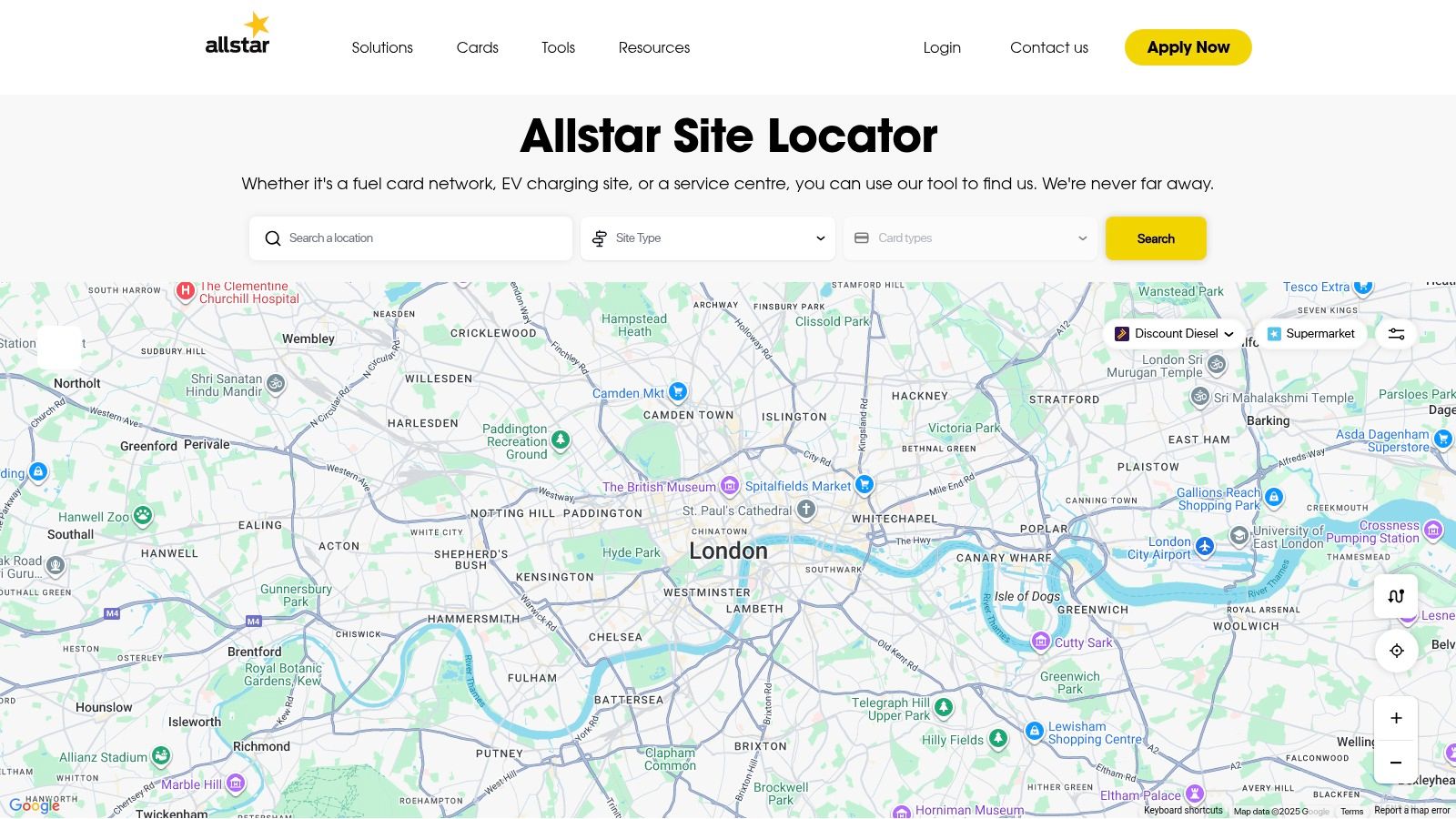
Allstar is the default when coverage matters most. It is accepted at around 7,600 sites — roughly 90% of UK forecourts, including supermarkets — and the Allstar One Electric card adds public EV charging for mixed fleets in transition. For field teams and service businesses with unpredictable routes, that breadth removes the "card not accepted here" problem.
Breadth is not the same as clarity, though. Pricing is bespoke and quoted per fleet, account fees apply, and you will need to read the card-type differences carefully to see where the savings actually come from. The back office still feels like a traditional fleet card rather than a unified spend system.
Best for: UK fleets that prize maximum acceptance and route flexibility.
Skip it if: You want transparent flat pricing or one card that also covers tolls, parking and expenses.
Website: Allstar Business Solutions
BP Plus — best for motorway-heavy routes
If your drivers live on motorways and A-roads, bp Plus is built for them: around 3,400 UK sites across bp and partners such as Esso, Texaco and Gulf, with HMRC-compliant invoicing and real-time spend controls in the portal. It is a clean, conventional fuel card for fleets whose routes already match the bp network.
EV is the weak spot — charging usually means a separate bp pulse arrangement rather than one integrated card — and, like other brand cards, the value depends on how well your routes fit the network.
Best for: UK SMEs with motorway-heavy routes that want a familiar brand and clear controls.
Skip it if: You want fuel and EV on one card, or broad cross-border acceptance.
Website: bp Plus
Esso National — best for fixed weekly pricing
The Esso National card is the pick for budget predictability. You get a fixed price for the week rather than a moving pump price, accepted at all Esso sites plus many BP and Shell forecourts, with an online portal for limits, card blocking and HMRC-ready invoices. Periodic fee holidays make it an easy card to trial.
It is still a fuel-first product, so EV support varies by plan and broader spend (parking, tolls, expenses) lives in other tools. If a stable weekly diesel number is what keeps your cash flow sane, that is its real strength.
Best for: Diesel-heavy SMEs that want a predictable fixed weekly price.
Skip it if: You want EV, tolls and expenses consolidated, or pan-European acceptance.
Website: Esso Card
UK Fuels (Radius) — best for multi-brand route flexibility
UK Fuels, part of Radius, spreads acceptance across supermarket and independent sites with cards such as Fuelplus and Fleetone, and some cards offer fixed weekly diesel pricing. The newer Radius One card widens this further, pairing thousands of fuel sites with tens of thousands of EV charge points for fleets going electric. The Velocity portal and e-route planner give small fleets real control over where drivers fill up.
The trade-off is homework: coverage and surcharges vary by card type, so you have to match the right card to your routes rather than assume one size fits all.
Best for: UK-centric fleets that want multi-brand choice and route-planning tools.
Skip it if: You want one simple card and pricing you can compare at a glance.
Website: UK Fuels
Right Fuel Card — best if you want a broker to choose for you
Right Fuel Card is not one card; it is a broker that shortlists cards from several networks (including Edenred-backed options) based on your routes and vehicles. For an owner who does not want to research every fee model, it can shorten the decision. Useful early in the process.
The complexity does not disappear, though — it moves to whichever provider you end up on, so you still need to read the final fee and coverage terms before signing.
Best for: Owners who want help narrowing the field quickly.
Skip it if: You already know your routes and would rather choose a card directly.
Website: Right Fuel Card
Also worth a look: the Shell Fleet App Card suits Shell-loyal SMEs (up to 30 vehicles) that want same-day setup and a familiar brand, provided your routes already fit Shell and partner sites.
The cheapest fuel card for a small business — and when "cheap" costs more
On paper, the cheapest fuel card is the one with no fees and a per-litre discount, which is why fuelGenie wins the headline. But the real cost is fees plus detours plus admin:
- A free supermarket card saves a few pence per litre — but if a driver detours 10 minutes to reach a supermarket twice a week, the lost time and extra mileage can erase the discount.
- A card with near-universal acceptance (like Rally's 99% Visa coverage) costs more per card but keeps drivers on-route and cuts the reconciliation work that quietly eats finance hours.
Rule of thumb: if your drivers genuinely live near supermarket forecourts, take the free card. If they range across motorways, regions or borders, optimise for acceptance and admin, not the sticker discount.
Sole traders and very small fleets
New and very small businesses get tripped up by deposits and credit checks. The friendliest starting points:
- fuelGenie and Right Fuel Card cater to sole traders and one-van operations.
- Rally issues Visa-backed cards with no deposit and no credit check, so you are not handing a fuel network a cash bond just to begin — and you still get per-driver limits and automated receipts from day one.
How to choose in five minutes
- Map where drivers actually refuel. Supermarket-only? fuelGenie. Everywhere? Allstar or Rally.
- Add up the real cost. Fees, deposits and admin hours, not just pence per litre.
- Check the spend you have beyond fuel. EV, tolls, parking and expenses point to an all-in-one like Rally.
- Look at the accounting. You want VAT-ready invoices and a clean sync, not a shoebox of receipts.
- Protect cash flow. Prefer no deposit and no credit check while you grow.
The bottom line
For pure supermarket cost, take fuelGenie. For the widest UK net, take Allstar. For a predictable weekly price, take Esso National or bp Plus. And if you want to stop juggling fuel, EV charging, tolls, parking and expenses across four providers — especially across the UK and Europe — Rally is the all-in-one to benchmark the rest against, with no deposit, no credit check and receipts handled over WhatsApp.
See how it works for your fleet at Rally or book a 15-minute demo.