The best fleet card in Portugal depends on whether your drivers stay local, cross into Spain, run HGV routes, or are starting to electrify. Most buyers start by asking which card is best. That question has no useful answer until you know which costs you are actually trying to control: litres at the pump, tolls, electric charging, or the hours finance spends chasing receipts.
This guide sets out the criteria that decide the outcome for Portuguese companies in 2026, with a focus on acceptance, tolls, EV charging, IVA-ready invoicing and total admin work. Score any shortlist against them and the answer usually becomes obvious.
We build Rally, so we are not pretending to be a neutral publisher. The goal is to give you the criteria that matter, then show where an all-in-one card is a better fit than a single-network one.
What to compare, at a glance
| Criterion | What to check | Why it matters |
|---|
| Station coverage | Acceptance on your real routes, not the national map | Detours cost more than most discounts save |
| Discount structure | Per-litre discount net of every fee | A headline cent per litre can net out at zero |
| IVA and invoicing | Invoices the Autoridade Tributária will accept | Unrecoverable VAT is a direct margin loss |
| Tolls | Electronic tolling on the card or a separate transponder | Tolls are a major Portuguese fleet cost |
| EV charging | MOBI.E coverage, roaming fees, same invoice as fuel | Mixed fleets otherwise run two systems |
| Cross-border | Spain and beyond on the same card and invoice | Iberian routes split admin in two |
| Controls | Limits per driver, vehicle, fuel type and merchant | This is where leakage is stopped |
| Deposits and terms | Security deposits, credit checks, minimum spend | Working capital and approval time |
| Accounting | Export into your finance workflow | Month-end effort, not a feature list |
1. Station density on your actual routes
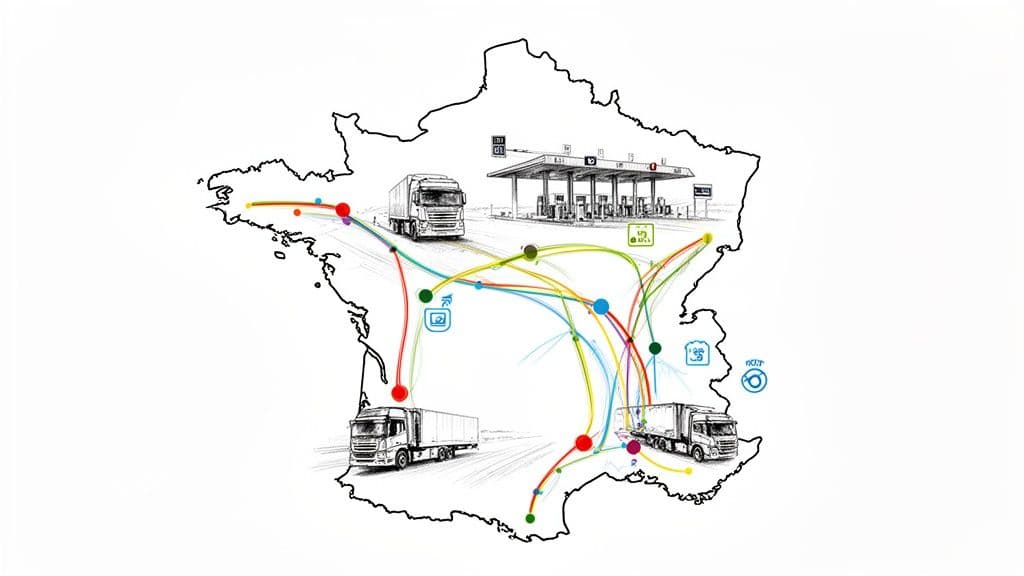
Coverage claims are usually national. Your fleet is not. Plot the stations your drivers already use, then check acceptance in three separate places: the motorway corridors between Lisbon, Porto and the Algarve, the regional roads where vans spend most of their day, and the urban stations near depots and customer sites.
A card with dense motorway coverage and thin regional coverage looks strong on paper and forces detours in practice. A ten-minute detour twice a day costs more in wages and fuel than most per-litre discounts return.
Ask: how many accepted stations sit within normal reach of each route, not each region?
2. Discount structures and what a discount is really worth
A per-litre discount is only the first number. Work out the net position before comparing anything:
- the monthly card or account fee, per card;
- transaction or service charges;
- minimum monthly spend, and what happens if you miss it;
- whether the discount applies to list price or an already-adjusted price;
- whether it applies at every accepted station or only a subset.
Multiply the discount by your realistic monthly litres, subtract every fee, and compare that figure across options. Small fleets are the ones most often caught out here: fixed per-card fees do not scale down with volume, so a strong headline rate can net out at nothing.
3. IVA recovery and invoicing
Portuguese IVA recovery depends on documentation, not intent. The supplier's invoice for each purchase, showing the supplier, VAT amount, country and transaction detail, is the evidence IVA recovery normally relies on, so keep it with every payment. A VAT summary helps finance organise that evidence; it does not replace it.
Check what arrives at month-end: which supplier documents have been collected, whether foreign transactions are broken out by country, and whether the data reaches your ledger without re-keying. See our accounting workflow for how this fits into the month-end close.
4. Tolls and electronic tolling
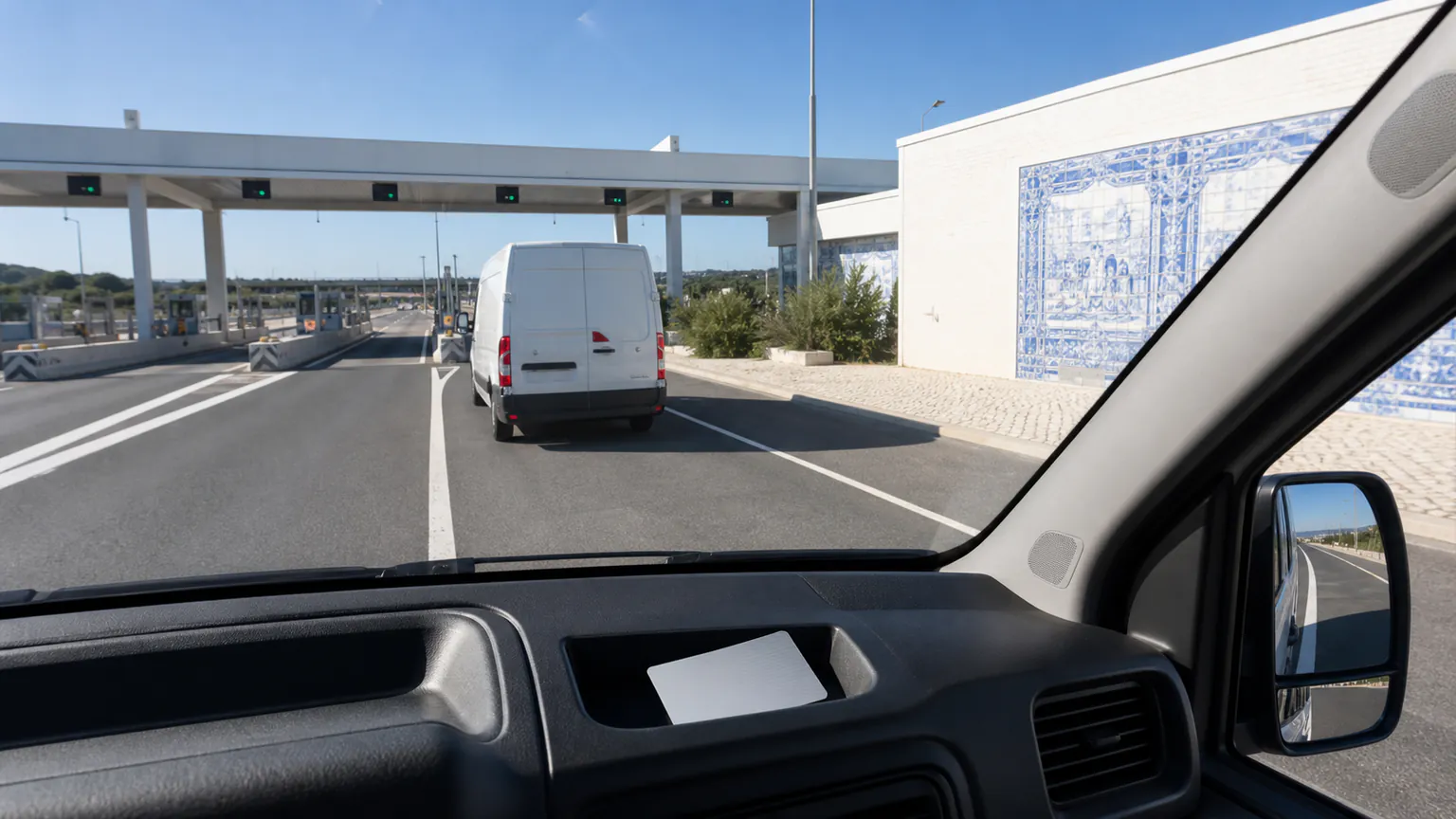
Tolls are a major fleet cost in Portugal, and they are where all-in-one claims usually break down. Some cards cover fuel and leave tolling entirely to a separate Via Verde transponder and a separate invoice. That is a second supplier, a second reconciliation, and a second set of disputes.
Ask: does the card cover electronic tolling directly, or do you still need a transponder per vehicle? If it is the latter, add that admin to the comparison rather than treating it as free.
5. EV charging: do not ignore MOBI.E
Electric charging in Portugal runs through the national MOBI.E ecosystem, which acts as the interoperability layer between charging operators. When comparing cards, ask:
- whether the card works across MOBI.E-compatible charging points;
- whether the price per kWh is visible before charging;
- whether there are roaming or session fees;
- whether charging appears on the same invoice as fuel;
- whether drivers need another app.
Roaming fees are the detail most often missed. A card can technically work across the network while adding a session charge that changes the economics of every stop.
6. Cross-border operation into Spain
If your vehicles cross into Spain, decide whether that is an occasional trip or a routine part of the work. Occasional crossings are served well enough by a card with broad general acceptance. Routine Iberian corridors need station density on the Spanish side, and HGV operations need to confirm truck-suitable sites, not just any station.
Either way, check that cross-border transactions land on the same invoice, in the right currency and with the country recorded, so VAT treatment does not become a manual exercise.
7. Spend controls and driver identification
Controls are where fleets actually save money. Look for limits you can set per driver and per vehicle, caps by fuel type and merchant category, and a way to tie each transaction to a person and a vehicle rather than to a card that lives in a glovebox.
Weak identification is what makes fuel leakage hard to prove. Strong identification makes the conversation with a driver a factual one.
8. Deposits and credit terms
Ask early, because it changes both your working capital and how long onboarding takes. Some products require a refundable security deposit, a personal credit check, or a bank guarantee before a single litre is bought. Others are prepaid and skip that, at the cost of funding the balance up front.
Neither is better in the abstract. A young company without trading history will often get moving faster on prepaid; an established fleet with predictable volumes may prefer credit terms.
9. Accounting integration
The last criterion is the one that gets ignored in procurement and felt every month afterwards. Check how transactions reach your books, whether receipts are captured at the moment of spend rather than chased later, and how much manual matching is left for finance.
If a card saves two cents a litre and adds four hours of month-end work, it is not saving you anything.
Where Rally fits
Rally gives Portuguese and European fleets a Visa-backed card for fuel, EV charging, tolls, parking and approved business spend. The card works wherever Visa is accepted, so drivers are not limited to one brand network. Receipts can be sent through WhatsApp, controls are set per driver or vehicle, and finance sees transactions in one dashboard. Rally is prepaid, with no refundable deposit or personal credit check.
Rally Charge is built for the mixed-fleet reality: fuel today, EV charging tomorrow, and one finance workflow for both.
Best for: mixed fleets that want fuel, EV charging, tolls and expenses on one card across Portugal, Spain and the rest of Europe.
Watch out: HGV fleets that need dedicated toll boxes may still need specialist toll devices for some routes.
More: Fuel cards · Compare fuel cards · Book a demo
The bottom line
Score any card on the nine criteria above and weight them by where your money actually goes. If most of your cost is litres on a fixed route, coverage and net discount decide it. If tolls, charging and receipts are eating your finance team's month, the invoice and the controls matter more than the pump price.
Choose Rally if your fleet needs fuel, EV charging, tolls, parking and business expenses on one Visa-backed card across Portugal and Europe, with receipts handled through WhatsApp. It is prepaid, with no refundable deposit or personal credit check.