Nick Telecki is Rally's CEO and writes about fleet payments, fuel cards, EV charging, tolls and European fleet spend.
Frequently Asked Questions
A driver uses the card at a fuel station, enters any required PIN or vehicle details, and the transaction is checked against company rules. The business then receives transaction data, invoices, and receipts in one dashboard or accounting workflow.
Company fuel cards can restrict spend by driver, vehicle, fuel type, amount, time, country, or merchant category. Modern cards such as Rally also send real-time alerts and match receipts automatically.
Traditional fuel-card providers usually send a consolidated invoice. Rally also captures receipts through WhatsApp, matches them to transactions, and prepares accounting-ready data for exports or integrations.
A fuel card is a specialised payment card that lets drivers buy fuel and vehicle-related services on the company's account. Instead of paying out of pocket or using a generic credit card, drivers use the fuel card and the business receives itemised records, controls, and invoices in one place.
For fleets operating across Europe, the best fuel cards now do more than pay at the pump. They can enforce spend rules, capture receipts, support EV charging, simplify VAT records, and give finance teams a cleaner view of every driver and vehicle expense. If you are ready to compare providers, see the Rally business fuel card or the best UK fuel card companies.
What a Fuel Card Is and How It Solves Fleet Problems
For fleet managers in Europe, fuel is a large cost that moves fast across countries and seasons — and it usually arrives with chased-down receipts, manual spreadsheet entry, and no clear view of where the budget actually goes. That admin problem is what a fuel card is built to solve.
A fuel card is less a payment tool than a control layer for vehicle spend. A corporate credit card buys almost anything; a fuel card can be locked to specific purchases like fuel, oil, or a car wash, which cuts unauthorised spending from day one.
The Core Function of a Fuel Card
At its heart, a fuel card addresses three recurring headaches for European fleets:
Lack of Control: Without a dedicated system, it's incredibly difficult to stop drivers from making personal or unapproved purchases on the company's dime.
Administrative Overload: Manually processing hundreds of individual fuel receipts is a massive time-sink for any finance team, and it's a process plagued by errors and delays.
Poor Visibility: A shoebox stuffed with receipts tells you nothing useful. Fleet managers can't easily track fuel consumption per vehicle, spot potential fraud, or find opportunities to save money.
In mature markets such as the Netherlands, this solution is already mainstream; many commercial vehicle fleets use some form of fuel card to manage their fuel. These cards give them access to thousands of petrol stations, creating one consolidated system for what is often their biggest variable cost. You can learn more about the adoption of fuel cards in the Dutch market.
A fuel card transforms a chaotic pile of paper receipts into a streamlined, digital process. It gives you the data and control to turn fuel expenses from an unpredictable drain into a manageable, optimisable part of your operation. It’s the difference between guessing where your money went and knowing exactly.
The Journey of a Fuel Card Transaction
When a driver uses a fuel card at a service station, it triggers a more structured sequence than a normal credit-card payment. The value is not only the payment; it is the transaction data that flows back to finance.
That data replaces the paper trail behind traditional expense management. Drivers no longer collect and submit receipts that are easy to lose, which removes hours of monthly admin for the finance team.
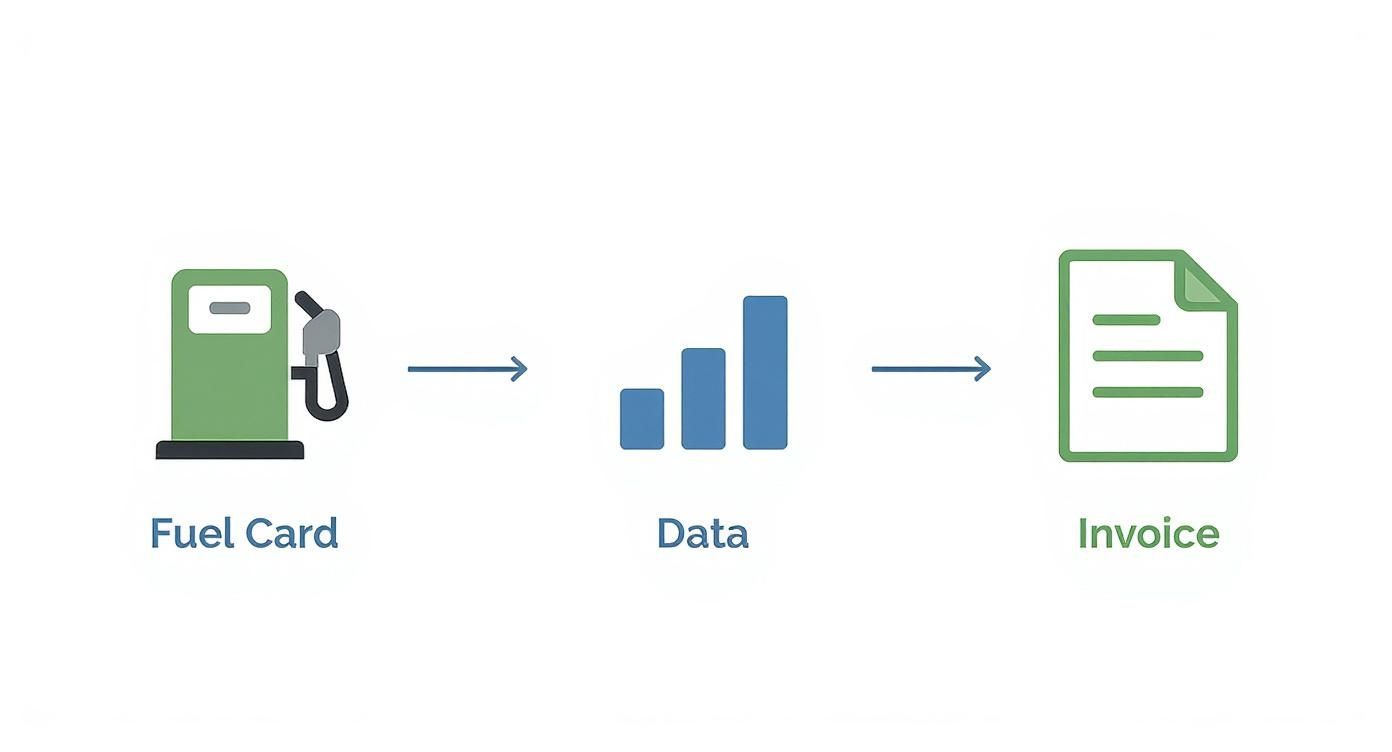
The diagram below shows the flow from a fuel-card transaction to data capture and a consolidated invoice.
In short, fuelling a vehicle becomes a structured digital record with no manual entry.
From Pump to Platform in Four Steps
To see how a fuel card works, follow the transaction step by step. Each stage verifies the purchase and captures the details fleets need for control and cross-border VAT records.
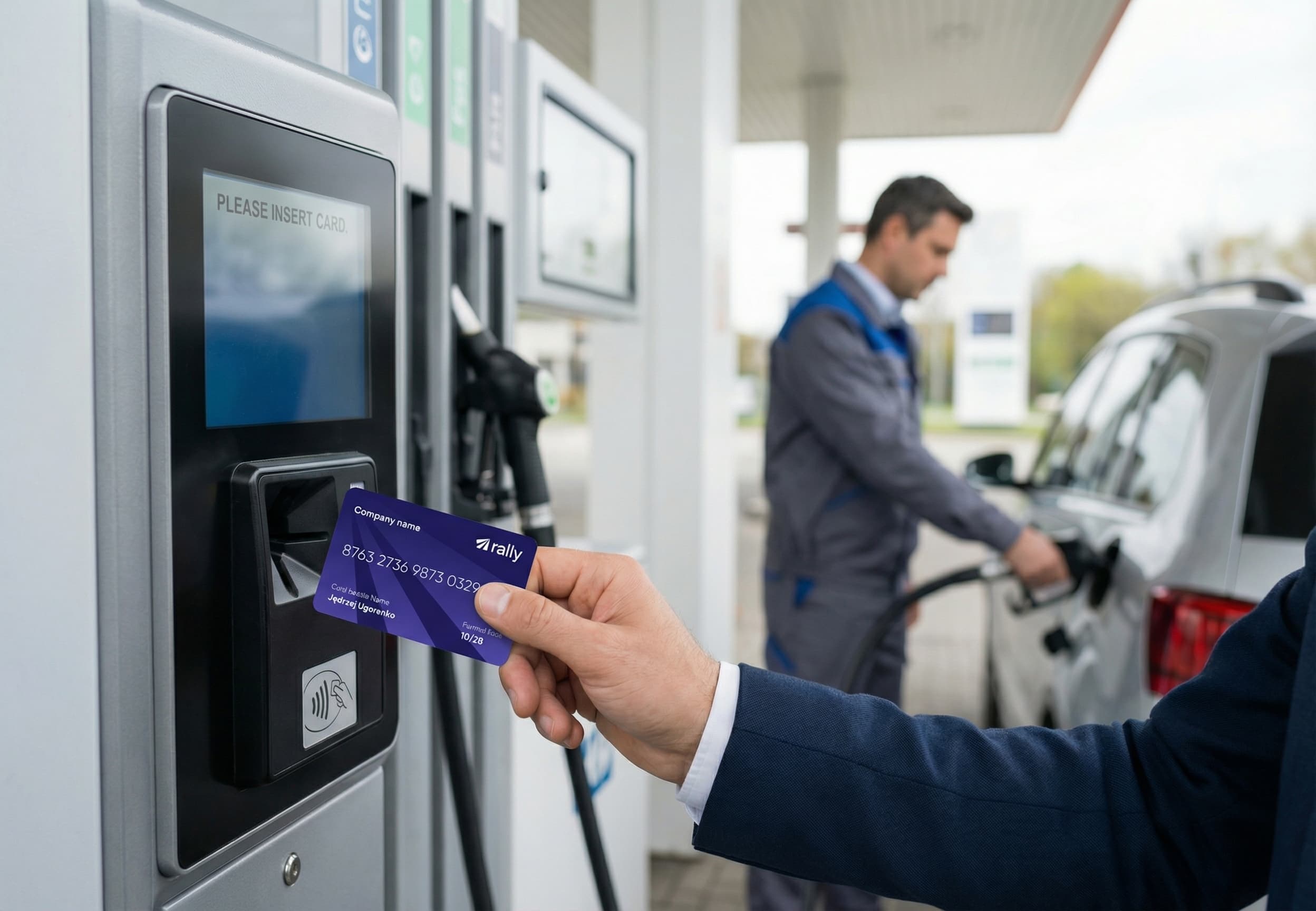
Card Swipe and Initial Authorisation: The driver swipes, taps, or inserts the fuel card at the pump or payment terminal. At this point, they're usually prompted to enter a unique PIN. Often, they’ll also be asked for the vehicle’s current odometer reading for pinpoint-accurate tracking.
Instantaneous Policy Checks: Before a single drop of fuel is dispensed, the system performs a real-time check. It verifies the purchase against the rules you've set—things like fuel type (diesel only), transaction limits (€100 maximum), and location restrictions (Netherlands only). If a driver tries to buy something outside these rules, the transaction is instantly declined.
Rich Data Capture: As the transaction is approved, the system automatically records what’s known as Level 3 data. This goes miles beyond the simple merchant name and amount that a credit card captures. It includes the specific type of fuel, volume in litres, price per litre, time, date, and the exact service station location.
Consolidated Invoicing and Integration: The data feeds into a central platform. Instead of dozens of separate receipts, you get one consolidated invoice for the fleet, and the data exports to accounting software or fleet systems like Rally so reconciliation no longer needs manual entry.
This workflow is the direct answer to fuel-admin overload. By capturing every transaction detail digitally, the fuel card gives finance the visibility to manage one of a transport business's largest and most volatile costs, with less paperwork and fewer errors.
Turning Fuel Data Into Serious Cost Savings
A fuel card captures more than an expense receipt. That data lets European fleet managers move from reacting to fuel costs to managing them.
Driver-behaviour and vehicle reports turn transaction data into patterns you cannot see in a pile of paper receipts — and those patterns are where the savings sit.
A Fuel Insights Dashboard can uncover savings that you won't get by reading a fuel card bill
From Raw Data to Actionable Insights
The value shows up once you ask the right questions. Are some drivers burning more fuel than others on similar routes? Are certain vehicles idling too long? Are drivers defaulting to the most expensive station because it is convenient?
Answering them is where the savings are. The fleet data a fuel card provides lets companies cut waste by reducing idling, optimising routes, and steering drivers toward better-priced stations.
By transforming transaction records into performance metrics, you gain the ability to identify inefficient routes, find cheaper fueling stations, and coach drivers on more economical driving habits. This level of analysis is simply impossible with standard credit cards.
Simplifying Cross-Border VAT Reclaims
For fleets operating across Europe, reclaiming Value Added Tax (VAT) is one of the heaviest admin jobs. Fuel VAT ranges from 17% in Luxembourg to over 25% in Sweden, so the money at stake is real — but every country has its own rates and reclaim procedures.
A fuel card is built for this. Providers issue compliant invoices that separate VAT per transaction and per country, so finance submits one consolidated, ready-to-file report instead of chasing faded receipts from France, Germany, and Belgium.
That recovers eligible tax that often goes unclaimed and saves hundreds of admin hours. For more, see our guide on how to use data analysis to cut fuel costs.
Preventing Fuel Fraud and Misuse With Smart Controls
Unauthorised purchases are a real budget risk once drivers are spread across a country or across Europe and you lose line of sight. The security controls on a modern fuel card are the first line of defence.
A standard credit card has no purchase rules. A fuel card enforces them automatically at the pump, stopping out-of-policy spend before it happens.
Setting Granular Purchase Restrictions
A fuel card's controls let you define what approved spending looks like instead of hoping drivers stay in policy, so company money goes only to legitimate business costs.
Here are a few common controls you can put in place:
Product Type Limits: You can lock purchases down to specific categories, like diesel fuel only. This instantly stops a driver from filling their personal car with premium unleaded or loading up on snacks and energy drinks in the shop on the company's dime.
Spending Caps: Set hard limits on how much can be spent per transaction, per day, or per week. For instance, capping fuel-ups at €150 per transaction aligns with a typical vehicle's tank size. This makes it impossible for someone to use the card to fill up multiple vehicles or, worse, a few jerry cans on the side.
Geographic Boundaries: You can restrict card use to specific countries or even a hand-picked list of preferred, low-cost service stations. For fleets operating across Europe, this is a lifesaver. It prevents cards from being used in unauthorised territories or at those notoriously expensive motorway service stations.
These simple rules are incredibly effective at shutting down the most common ways people misuse company funds.
Fuel fraud is not only outright theft; out-of-policy spend quietly erodes margins. These controls make the card enforce your spending policy automatically, without manual oversight.
Advanced Security and Real-Time Alerts
Beyond the basic rules, modern fuel cards add extra layers of security to fight off more sophisticated fraud. Unique driver PINs are standard, making sure only the assigned person can use the card. Some systems go a step further, requiring vehicle identification at the pump to link every single litre of fuel to a specific asset in your fleet.
The most useful control is the real-time alert. You get an instant notification on your phone or dashboard for unusual activity: a transaction outside working hours, a purchase hundreds of kilometres from the vehicle's last location, or several fill-up attempts in a row.
Choosing the Right Fuel Card for Your European Fleet
Fuel cards differ most once vehicles cross borders. The provider you pick affects your budget, your admin workload, and whether drivers ever get stranded without a valid payment option or finance ends up with non-compliant invoices from several countries.
The classic trap is patchy coverage. A provider might have 98% coverage in the Netherlands but leave gaps on key transit routes in Germany or France, forcing drivers to detour for fuel — which burns the time and diesel the card was meant to save.
Evaluate Coverage and Pricing Structures
Before signing, lay your fleet's most common routes over a provider's network coverage to check that their stations match where you actually drive. A card with broad European acceptance — one that works at over 700,000 charge points and fuel stations — gives mixed and cross-border fleets the flexibility they need.
Scrutinise the pricing model just as hard. Headline rates can hide costs in the fee structure:
Network Fees: Some will charge you extra for using "partner" networks outside their main brand.
Transaction Surcharges: You might get hit with a small fee every single time a card is swiped, which adds up fast with a large fleet.
Monthly Card Fees: A per-card fee can quickly become a major line item on your expense report if you're running dozens of vehicles.
Always scrutinise the terms and conditions for any hidden charges. A transparent pricing structure with clear, consolidated invoicing is non-negotiable for predictable budgeting. The right fuel card should simplify your financial life, not make it more complicated.
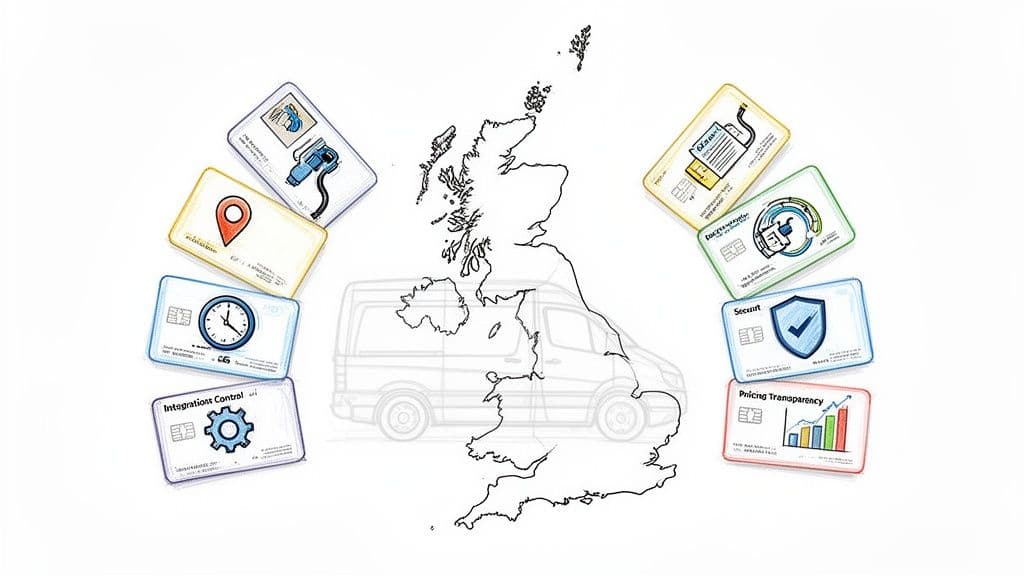
To help you compare your options, here’s a quick checklist to guide your evaluation process. Use it to stack up different providers against your fleet's specific needs.
Fuel Card Provider Evaluation Checklist
Evaluation criteria
What to look for
Network coverage
Key routes in DE, FR, NL, and other operating markets
Pricing transparency
No hidden network fees or unclear surcharges
EV charging support
Fit for current and planned EV share
Software integration
Accounting, ERP, telematics, or fleet tools
Reporting and analytics
Spend by driver, vehicle, country, and category
Fraud controls
Real-time alerts, limits, and fast card blocking
Admin automation
Digital receipt capture and invoice matching
Customer support
Local-language support for drivers and finance
Scoring providers this way shows which one fits your operations on the criteria that affect cost, not which one markets hardest.
Prioritise Integration and Reporting
A fuel card should plug into the systems you already use. Before committing, check whether the provider's platform syncs with your telematics or fleet-management software, so fuel purchases link automatically to specific vehicles and trips instead of sitting in a separate report.
Reporting matters just as much. The platform should give you dashboards and analytics to track spending, monitor fuel efficiency, and flag anything out of place. Good fleet document management supports the same goal and helps reduce fraud.
For businesses looking to get ahead, solutions that combine physical and virtual cards with intelligent software offer a huge advantage. You can see how Rally is helping fleets with smarter fuel card management for European fleets to gain much deeper control. This becomes especially important as fleets diversify into electric and alternative-fuel vehicles, creating a need for a single, unified solution to handle it all.
The Future of Fleet Payments and Mobility Cards
The traditional fuel card — once useful only for diesel or petrol — is turning into an all-in-one mobility card, mainly because European fleets are getting more complex.
The biggest driver is electrification. As fleets add EVs, the card has to follow: a modern mobility card covers EV charging, tolls, parking, and maintenance on top of fuel, in one account.
Adapting to Electrification
The shift is accelerating. By 2040, the number of traditional fuel stations in the Netherlands could fall by a third, from 4,100 to roughly 2,750, largely due to EV adoption. That is why fuel-card providers are becoming multi-energy platforms.
This unified approach solves a massive headache for managers running mixed fleets with petrol, diesel, and electric vehicles. Instead of juggling a wallet full of different cards and payment systems, a single mobility card gives you one consolidated invoice and a complete picture of all your vehicle-related spending.
The point is no longer paying for fuel but managing total mobility. Telematics and AI add predictive maintenance and route efficiency on top, which is why these cards are becoming core fleet infrastructure rather than a payment method.
Common Questions About How Fuel Cards Work
The questions fleet managers ask most often, answered directly.
Can a Fuel Card Be Used for Personal Purchases?
In a word, no. This is one of the core strengths of a dedicated fuel card system. Unlike a standard credit card, you can set rock-solid rules that lock purchases down to specific categories like diesel, AdBlue, or a car wash. This control is fundamental to how they work and practically eliminates unauthorised spending—a massive headache for fleets managing drivers across Europe.
What Happens If a Fuel Card Is Lost or Stolen?
If a card goes missing, you freeze it from the online portal in seconds, which shuts down fraudulent use. The required driver PIN adds a second layer, so a lost card is hard to use even if someone finds it.
Are Fuel Cards Only for Petrol and Diesel?
They started that way, but modern fuel cards now work as mobility cards. Many include access to electric-vehicle charging across Europe, with some networks covering over 700,000 charge points, so you manage fuel and EV spend on one invoice — which matters for any fleet adding electric vehicles.
Can Self-Employed Professionals Use a Fuel Card?
Absolutely, but it's crucial to get the tax side right. If you use your private vehicle for business and claim the fixed kilometre allowance (like the €0.23 per kilometre in the Netherlands), you can't also deduct the fuel costs from the card. That allowance is designed to cover all your vehicle expenses, fuel included.
Ready to get a complete grip on your fleet's spending and ditch the administrative headaches for good? Rally brings fuel, EV charging, and all other vehicle-related expenses across Europe into a single, powerful solution. Discover how Rally can simplify your fleet management today.


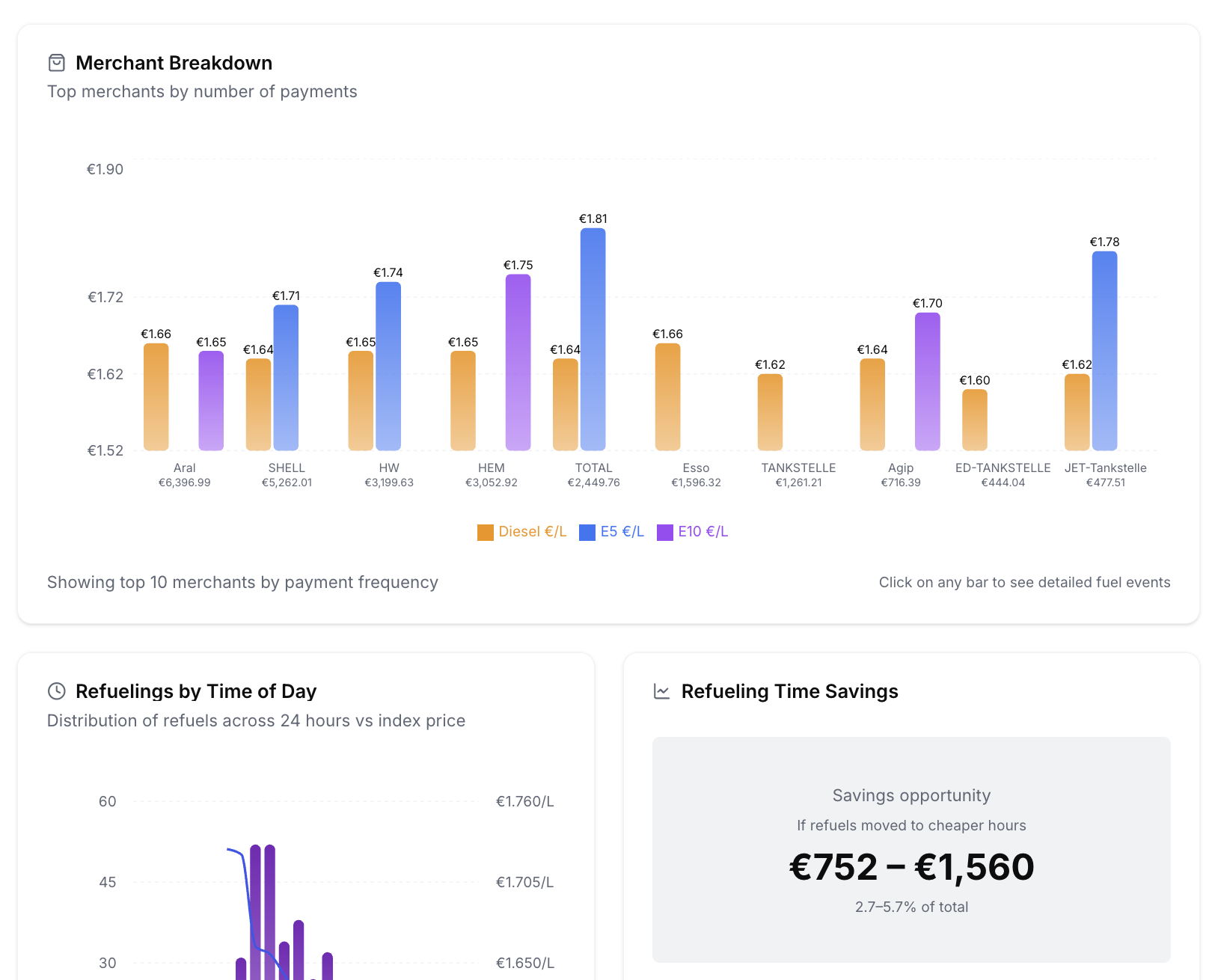 A Fuel Insights Dashboard can uncover savings that you won't get by reading a fuel card bill