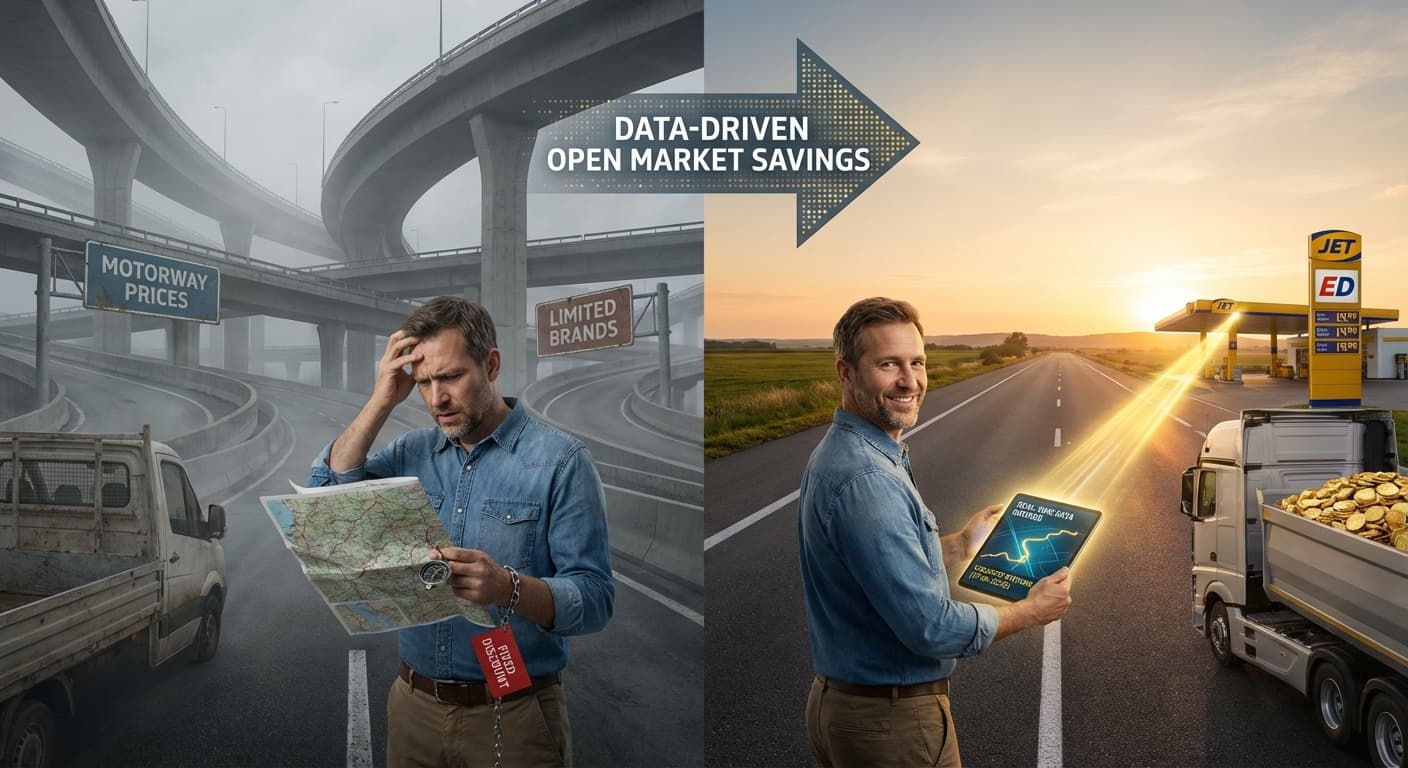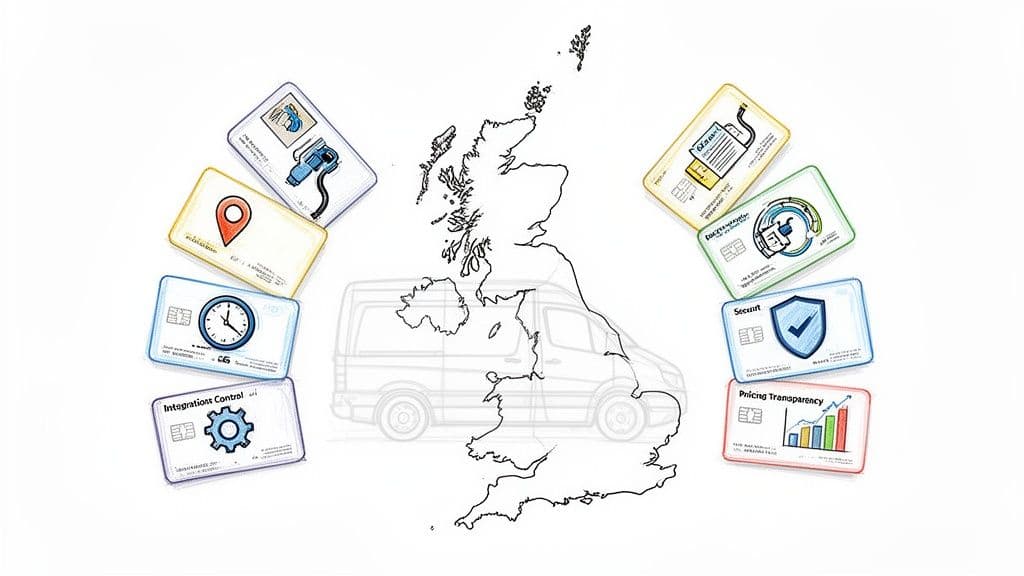
A fuel card with no deposit is a business fuel card that doesn't demand an upfront security deposit. For small businesses, startups, and self-employed professionals, this simple change makes a world of difference, immediately freeing up cash that would otherwise be locked away.
Understanding the No-Deposit Fuel Card
Think about a traditional fuel card. It’s essentially a small line of credit, and to protect themselves, providers have historically required a security deposit. Depending on your fleet size and how much fuel you expect to use, this deposit could be anywhere from hundreds to thousands of euros. It's like a financial anchor; your money is held captive, unable to be used for actually growing your business.
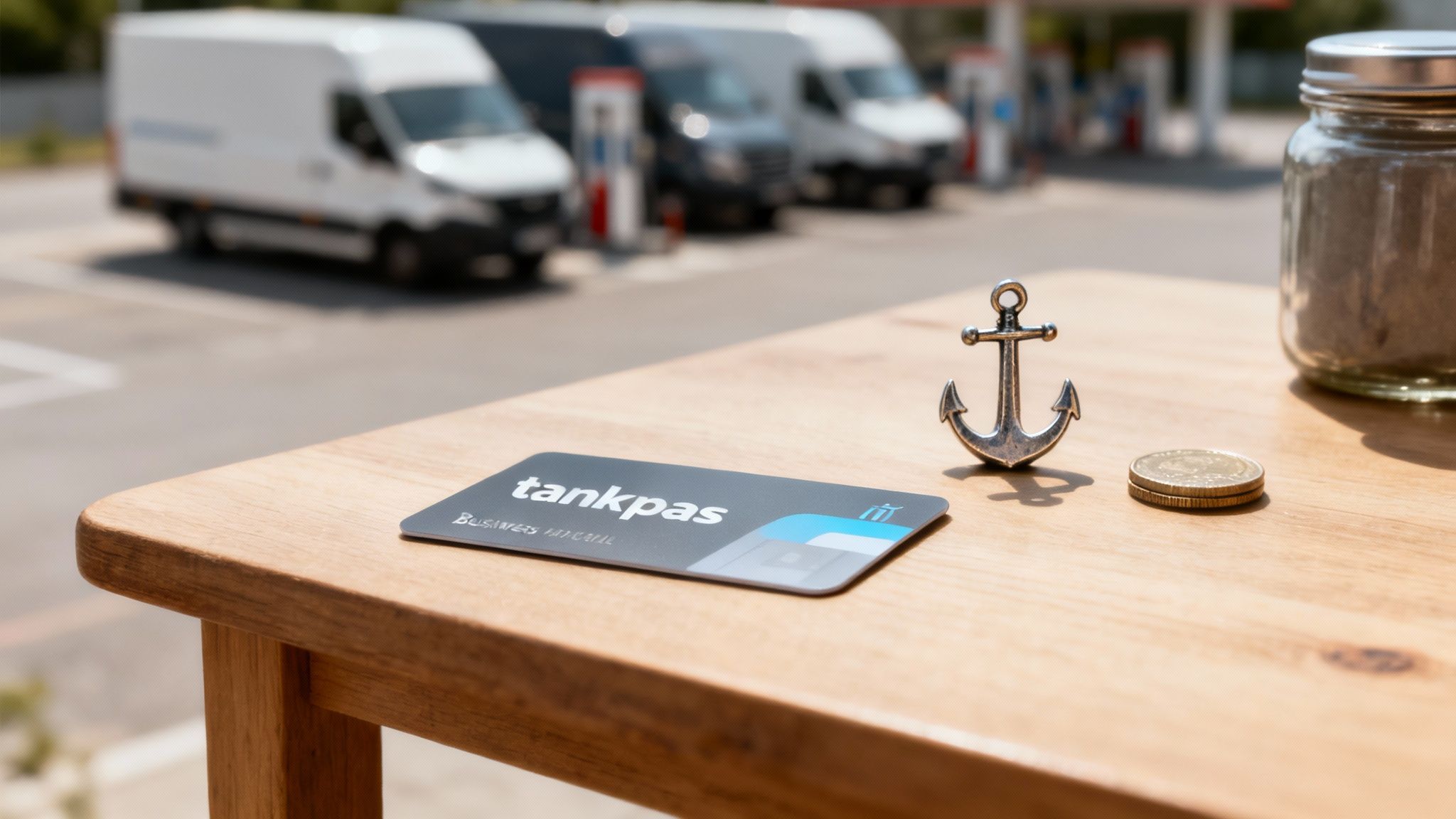
A fuel card with no deposit cuts that anchor loose. Instead of tying up your capital, providers use modern credit checks and business history analysis to figure out the risk. This smarter approach lets them offer fuel cards without demanding a deposit, giving you instant access to their network while keeping your cash flow exactly where it should be: in your hands.
The Financial Anchor of a Deposit
For small and medium-sized businesses across Europe, cash is king. Every single euro counts, and having funds tied up in a deposit account means missing out on opportunities. That money could be better spent on:
- Vehicle maintenance to keep your fleet on the road and avoid costly downtime.
- Marketing campaigns to bring in new customers.
- Investing in new equipment to work more efficiently.
- Hiring another driver to expand your service area.
A deposit essentially penalises new or small businesses by restricting access to their own working capital. The no-deposit model levels the playing field, enabling financial agility from day one.
A Market Shift Towards Accessibility
The move away from mandatory deposits isn't happening in a vacuum. It reflects a much bigger trend in the European market where providers finally recognise that for a solo driver or a small fleet, financial flexibility is far more valuable than a tiny discount per litre. Key problems like fragmented payment systems across countries, managing mixed fleets of petrol and EV vehicles, and the administrative burden of expense reporting have created a demand for more modern solutions.
The Dutch fuel card market is a perfect example, with a major shift towards no-collateral options, especially for the self-employed. As of 2025, major players like Radius and LUKOIL have completely dropped deposit requirements for their services. That’s a huge change from the old way of doing things. You can find more insights on this move toward more accessible fuel cards on verkeersonderneming.nl.
At the end of the day, a fuel card without deposit is more than just a way to pay for fuel; it's a strategic financial tool. It understands the real-world challenges modern fleets face and offers a solution that supports growth instead of holding it back. By removing that upfront financial hurdle, it empowers businesses to invest in what truly matters—moving forward.
How No-Deposit Cards Unlock Your Business Cash Flow
A fuel card without deposit does more than just make paying for fuel easier; it completely changes the financial rhythm of your company. By getting rid of the upfront deposit, it frees up cash that would otherwise be stuck in limbo, giving your business a direct shot of liquidity.
For a small fleet or a self-employed driver, this isn’t just a nice-to-have feature—it’s a real strategic edge. Think about a standard deposit of, say, €500 per vehicle. For a fleet with just five vans, that’s €2,500 of your own money just sitting in a provider’s bank account. With a no-deposit card, that cash stays right where it belongs: in your business.
The Real Cost of a Locked Deposit
That tied-up capital is more than just a number; it represents a huge opportunity cost. Instead of being an unproductive security blanket for the card provider, that €2,500 could be actively working to grow your operations. Just imagine what a small Amsterdam-based consultancy or a delivery service in Brussels could get done with those funds.
Here are a few ways that cash could be put to work immediately:
- Urgent Vehicle Maintenance: Cover an unexpected repair without having to dip into emergency funds. This prevents the kind of costly downtime that can put client contracts at risk.
- Targeted Marketing: Launch a local ad campaign to bring in new customers during a slow period, generating a direct return on that investment.
- Fuel Buffer: Easily absorb a sudden spike in European fuel prices without blowing up your operational budget, making sure your deliveries stay on schedule and profitable.
- Software Upgrades: Invest in route optimisation or accounting software that shaves hours of admin work off your plate each month, boosting your overall efficiency.
When you opt for a fuel card without deposit, you're essentially giving your business instant access to its own growth fund. The money is there for you when an opportunity—or a problem—arises, providing a critical buffer against the unpredictable nature of transport and logistics.
Surviving and Thriving in a Volatile Market
The European market is known for its ups and downs. Shifting seasonal demand, surprise road tolls, and volatile energy prices can put serious pressure on a small business's cash reserves. A healthy cash flow is your single best defence against these challenges.
Preserving your working capital with a no-deposit card is like keeping a full tank of fuel for your business itself. It ensures you have the resources to navigate economic headwinds and seize opportunities without being held back by tied-up funds.
This kind of financial agility lets you be proactive instead of constantly reactive. Rather than scrambling to cover unexpected costs, you can make strategic decisions that strengthen your position in the market. This is especially vital for businesses navigating the complex operational landscape across countries like Belgium, Germany, and the Netherlands.
Slashing Administrative Overhead for a Leaner Operation
The advantages go well beyond just keeping your deposit. Modern platforms offering no-deposit cards also clean up the entire expense management process. Traditional fuel cards often create a mountain of paperwork—endless separate invoices, lost receipts, and hours spent at the end of the month trying to manually piece it all together.
This administrative burden is a hidden cost that quietly drains time and money. Modern solutions completely transform this chaotic process. With features like automated receipt capture and a single, consolidated invoice for all your fleet's expenses, you can drastically cut down the hours spent on bookkeeping. This efficiency has a direct impact on your bottom line, freeing up your team to focus on growing the business instead of chasing paper.
Of course, optimising fuel consumption is another fantastic strategy for improving cash flow and getting even more value from your no-deposit card. For fleet managers looking to make every litre count, there are many practical ways to boost semi-truck fuel economy that pair perfectly with the financial savings from a smarter payment solution.
Qualifying for a No-Deposit Fuel Card
Getting your hands on a fuel card without deposit is a huge win for any business, but it’s important to realise that ‘no deposit’ doesn’t mean ‘no checks’. Providers have simply swapped the old-fashioned security blanket of a cash deposit for a smarter, data-driven way to look at risk. Figuring out what they’re looking for is the key to getting approved.
This isn’t about having a perfect financial record. It's more about painting a complete and honest picture of your business's reliability. Providers just need to feel confident you can handle the credit they’re offering. Think of it less like a final exam and more like an open-book test where showing your work really counts.
This diagram shows exactly how skipping the deposit can directly fuel your company's growth.
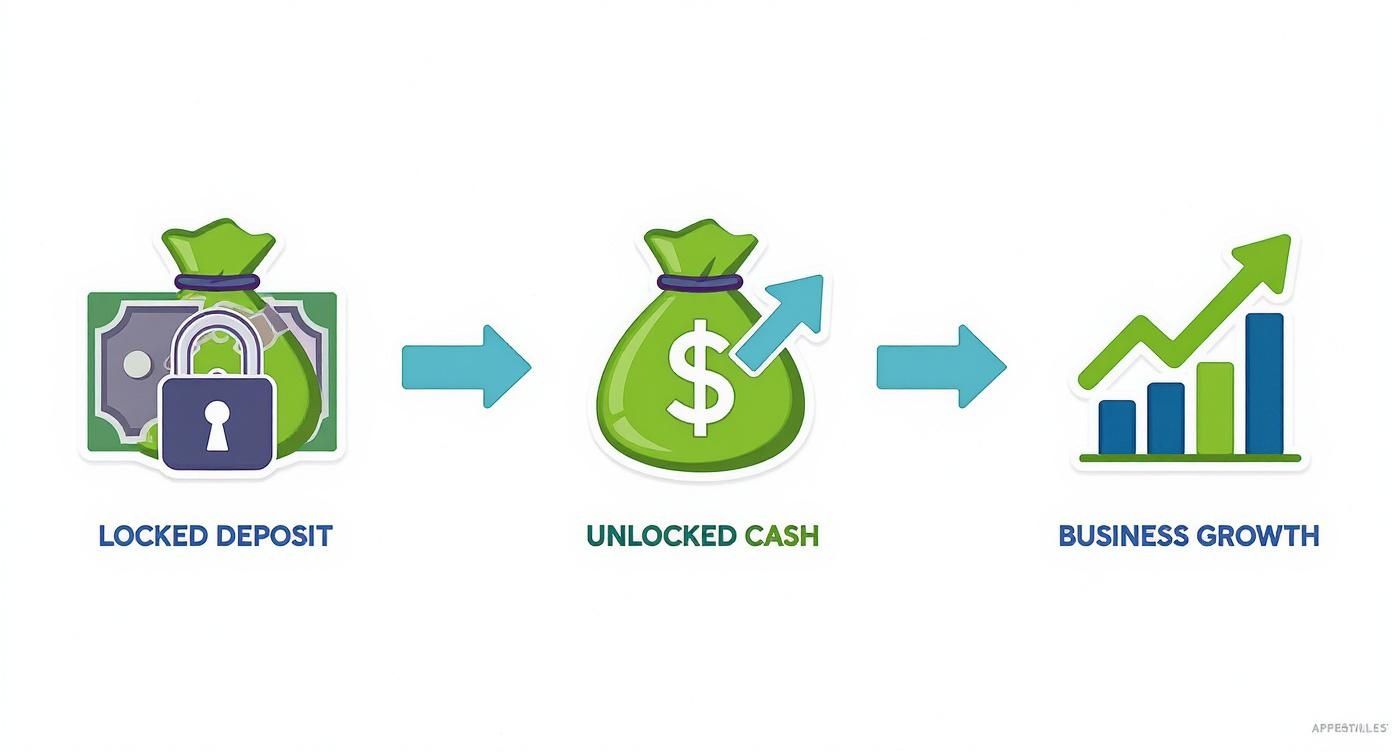
By keeping that cash in your account instead of locking it away, you free up capital that can be put straight back into growing the business.
Core Underwriting Factors
Fuel card providers look at a few key areas to get a feel for your business's health and stability. While every provider has its own secret sauce, their checks usually boil down to these common ingredients.
- Business Registration and History: A longer track record gives them more data to work with and shows you’re stable. They’ll check your registration with the Kamer van Koophandel (KvK) to confirm you’re a legitimate operation. Startups can definitely get approved, but a business that’s been running for over six months to a year usually has an easier time.
- Creditworthiness Check: In the Netherlands, this usually means a check with the Bureau Krediet Registratie (BKR). They’re looking for a history of sensible credit management, not a spotless record. A couple of old, minor blips are far less worrying than a recent pattern of missed payments.
- Projected Spending: Providers will ask you to estimate your monthly fuel spend and other fleet costs. This helps them set a reasonable credit limit and see if your expected usage makes sense for a business of your size and financial standing.
Strengthening Your Application
If you’re a newer business or have a few bumps in your credit history, don't sweat it. There are plenty of things you can do to put your best foot forward and boost your chances of getting approved for a fuel card without deposit.
A strong application isn't just about passing a credit check; it's about telling a clear and convincing story of your business's viability and responsible financial management.
The goal is to look professional and stable. For instance, make sure all your business details match up perfectly across every document and always apply using a dedicated business bank account, not your personal one.
Actionable Tips for a Stronger Profile
To really improve your odds, try these strategies before you hit ‘submit’:
- Start with a Realistic Credit Limit: Asking for a modest initial limit that matches your actual needs makes you look like less of a risk. You can always ask for an increase down the road once you’ve built up a solid payment history.
- Prepare Your Financials: Have recent bank statements or a simple business plan handy. It shows you’re organised and take your finances seriously, which can be a game-changer for a startup with a short trading history.
- Ensure All Information is Accurate: Double-check your KvK number, VAT details, and contact info. Simple typos or mismatched details can cause delays or even get you rejected. Accuracy is everything.
Moving Beyond Fuel to a Unified Fleet Wallet
A fuel card without deposit is a great first step for getting your fleet’s finances in order, but let's be honest—modern businesses need more than just a way to pay for fuel. The reality for any European fleet is a complicated web of expenses that stretch far beyond the petrol station. Think about it: French péage tolls, German parking meters, finding a compatible EV charging station in a new city... the list goes on.
This is exactly where the traditional fuel card starts to show its age. It’s a single-purpose tool trying to solve a multi-problem reality. Your drivers end up juggling a stack of different cards, paying out-of-pocket for anything that isn't fuel, and creating a nightmare of receipts for you to sort through. That administrative chaos eats up valuable time, invites errors, and makes genuine budget oversight practically impossible.
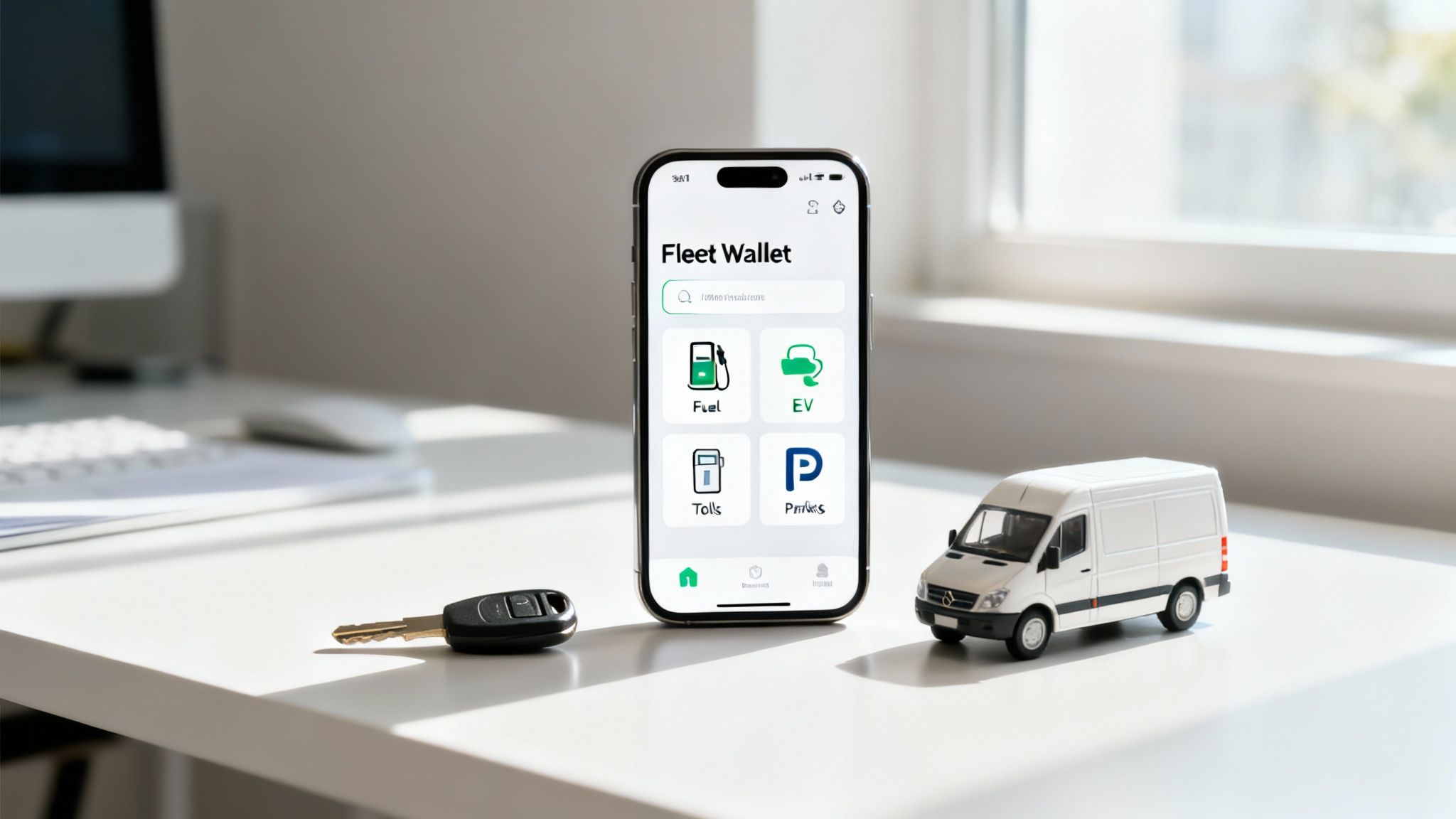
Rally is more than a fuel card — it’s a simple, all-in-one fleet wallet and admin platform built for solo drivers and small fleets. Pay for fuel, EV charging and every other fleet expense, capture receipts automatically, and reconcile everything from a single dashboard and a single invoice. Less paperwork, fewer admin hours, and one place to manage payments, drivers and expenses — so small teams can move fast and keep costs under control.
The All-in-One Advantage
Imagine one card and one admin platform that handles every common payment your drivers make. This isn't just about making life easier; it's a fundamental shift in how you run your fleet operations. A fleet wallet is designed to simplify everything.
It brings payments for all these things under one roof:
- Covers everything, not just fuel: Pay for fuel, EV charging, tolls, servicing, parking and other fleet expenses with one card and one platform for all common payments.
- Built for EVs: First-class EV charging support means small EV fleets and solo EV drivers don’t need separate tools or messy spreadsheets.
- Expense automation: Automatic receipt capture, transaction tagging and categorisation mean you stop chasing paper and spend less time on bookkeeping.
- One admin view: A single dashboard, consolidated invoices and simple reconciliation replace multiple suppliers and manual admin tasks.
By bringing all these expenses together, you get a level of control and visibility that a basic fuel-only card could never offer. Every single transaction is captured, categorised, and reconciled in one place.
A modern fleet wallet turns expense management from a reactive, paper-chasing chore into a proactive, data-driven strategy. It gives you a single source of truth for all your fleet's spending.
Traditional Card Versus Modern Wallet
The difference between a standard fuel card and a complete fleet wallet is night and day. One solves a single problem, while the other tackles the entire ecosystem of fleet expenses and administration. Getting your head around these differences is key to picking a solution that actually helps your business grow.
For a deeper dive, our guide on why modern fleet cards beat traditional fuel cards has more detail on consolidating fuel, tolls, parking, and EV charging in one workflow.
Feature Comparison Traditional Fuel Card vs All-in-One Fleet Wallet
Here's a quick breakdown of what separates an old-school fuel card from a modern, comprehensive platform like Rally.
CapabilityTraditional Fuel CardModern Fleet Wallet (e.g., Rally)Expense CoverageFuel only; some may include car washes at specific locations.Covers fuel, EV charging, tolls, servicing, parking, and more.EV SupportOften non-existent or requires a separate, dedicated charging card.Built for EVs with first-class charging support and network access.Admin ToolsBasic transaction list, often requiring manual reconciliation.Automated receipt capture, transaction tagging, and a unified dashboard.InvoicingOne invoice for fuel, leaving other expenses to be handled separately.A single, consolidated invoice for all fleet expenses.Spending ControlsLimited to fuel volume or total spend.Granular, per-driver limits and controls for different expense categories.ScalabilityCan become administratively heavy as the fleet grows.Designed to scale from a solo driver to a 20+ vehicle fleet seamlessly.
The table makes it clear: while a fuel card handles one part of the job, a fleet wallet is designed to manage the entire financial picture of your fleet.
Built for Small Teams and Solo Drivers
What makes a solution like Rally so effective is that it’s built for the person actually using it. For solo drivers and small fleets, the setup is incredibly simple and fast—no heavy IT lift required. Managing cards and drivers is intuitive, letting you get a new team member up and running in minutes. This approach saves time, cuts down on errors, and makes VAT reclaim painless and accurate, freeing up your team to focus on moving the business forward. The system starts small and grows with you—everything that helps a solo driver works the same for a 5–20 vehicle fleet.
This gives small businesses the kind of powerful expense management tools that were once only available to massive corporations. By automating the manual steps, you don't just speed up your month-end accounting; you also make VAT reclaim painless and accurate, freeing up your team to focus on moving the business forward.
Navigating Europe's Fuel and Charging Networks
For any business on wheels in Europe, from a solo zzp'er to a large fleet, operating without borders is everything. The real value of a fuel card without deposit isn’t just about avoiding a deposit; it's about its acceptance network. If your card works perfectly in the Netherlands but gets declined in Germany, you've got a serious problem.
This kind of fragmented coverage creates logistical nightmares. It forces drivers to pay out-of-pocket and save receipts, completely defeating the purpose of having a streamlined system in the first place. A driver shouldn't have to second-guess if their card will work for tolls in Italy or at an EV charging station near Berlin. The goal is seamless, predictable access, no matter where the job leads. Juggling different cards for different countries is a fast track to administrative chaos.
The Power of a Unified European Network
This is where modern fleet solutions really shine. They solve the cross-border headache by offering massive coverage on a single card. The best providers give your drivers access to a vast web of locations, so they’re never left scrambling for a payment method. This is what turns a simple fuel card into a true operational tool for any European business.
With a powerful network, your team can handle all sorts of on-the-road expenses without skipping a beat:
- Refuelling at tens of thousands of petrol stations across the continent.
- EV Charging at a huge number of public charging points—a must-have for hybrid and electric fleets.
- Paying Tolls on major European motorways without needing a separate device.
- Covering Parking costs in city centres and transport hubs in different countries.
This unified approach takes the guesswork out of the equation. It lets drivers focus on the road ahead and gives managers a clear, single view of every expense. You can learn more about how a consolidated system works in our article on smarter fuel card management for European fleets.
Unmatched Coverage for Petrol and Electric Fleets
The scale of these networks today is genuinely impressive. The Netherlands, for example, has long been a trailblazer in building out one of Europe's most dense fuel and charging infrastructures. Top-tier providers now offer access to more than 900,000 acceptance points globally.
And for the growing number of fleets going electric, it’s now possible to access over 875,000 charging points across Europe with a combined fuel and charge card. You can find more details about this expansive network coverage on tankpas.nl.
This kind of network density is what allows your fleet to operate at peak efficiency. Your drivers can pick the most convenient or cost-effective spot—whether it’s a big-name station on the motorway or a low-cost unmanned pump—without ever worrying if their card will be accepted.
At the end of the day, a fuel card without deposit is only as good as the network behind it. Choosing a provider with deep and reliable European coverage ensures your fleet can move smoothly across borders, which is critical for competing and growing in today’s market. It eliminates payment friction, simplifies expense tracking, and gives you the operational freedom you need to get the job done.
How Modern Platforms Eliminate Fleet Admin Headaches
Opting for a fuel card without deposit is a great first step for your cash flow, but the real magic happens when you pair it with a modern expense platform. Let's be honest, the endless cycle of chasing down paper receipts, punching numbers into spreadsheets, and trying to make sense of dozens of separate transactions is one of the biggest administrative pains for any fleet, big or small.
This manual grind isn't just a time sink. It’s a breeding ground for costly mistakes and makes it nearly impossible to get a clear, real-time picture of where your money is actually going. Modern platforms are built to kill these problems at the source. They don't just give your drivers a way to pay; they create an automated workflow that handles everything from the moment of purchase right through to your accounting software. It’s a total shift from reactive paperwork to proactive, clean financial management.
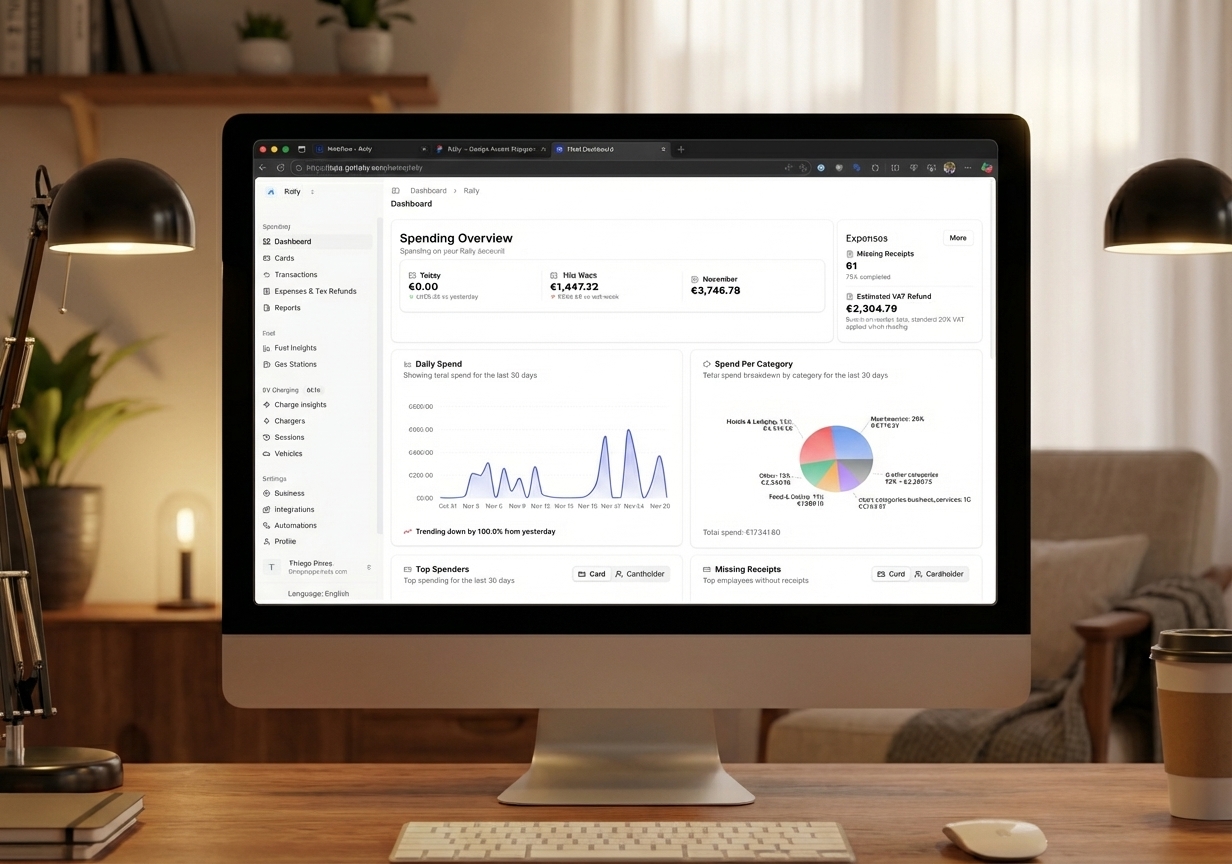 Rally gives you a modern platform for all fleet payments, with no deposit
This change is driven by smart, simple features designed to solve the exact headaches that solo drivers and small businesses face every day across Europe.
From Paper Chaos to Automated Clarity
At its core, a modern platform automates the entire expense process using a combination of powerful, yet incredibly simple, tools.
- Automatic Receipt Capture: Drivers just snap a photo of a receipt. That's it. The system instantly pulls the key data, tags the transaction, and categorises it for you. This one feature completely ends the problem of lost receipts and manual data entry.
- A Single Dashboard: Forget logging into different supplier portals. You get one central hub showing you every expense—fuel, EV charging, tolls, parking—as it happens. This gives you total visibility and control in real-time.
- Consolidated Invoices: The nightmare of juggling separate invoices from fuel companies, toll operators, and repair shops is over. You get one simple, consolidated invoice for all fleet expenses, which makes reconciliation and VAT reclaim a breeze.
By automating these small, repetitive tasks, these platforms free up countless hours. That means less time buried in bookkeeping and more time focused on growing your business.
Granular Control Without the Complexity
Managing a budget properly requires control, but traditional systems often mean complicated policies that are a pain to enforce. Modern solutions build control right into the platform.
With just a few clicks, you can set per-driver spending limits or block certain types of spending. For instance, you could allow a driver to pay for fuel and tolls but automatically decline purchases at shops or restaurants. This kind of granular control protects your budget without creating a bunch of administrative hoops for your team to jump through.
It’s a huge step up from what traditional providers offer. If you want to dive deeper into these differences, check out our guide on why modern fleet cards beat traditional fuel cards every time.
Built to Scale with Your Business
Maybe the most important benefit is how these systems scale. The simple setup that works perfectly for one driver shouldn't fall apart when you add your fifth, tenth, or twentieth vehicle. Modern platforms like Rally are designed for growth from day one.
The same easy driver management and automated workflows that keep a solo operator organised work just as well for a rapidly growing fleet. There’s no heavy IT overhead or painful onboarding process. As your business gets bigger, the platform simply scales with you, keeping your expense management efficient and predictable.
This makes a modern fleet wallet a smart, future-proof investment, helping small teams move fast while keeping a firm grip on their costs.
Still Have Questions? Let's Clear a Few Things Up
Diving into the world of fleet payments, especially when moving away from traditional models, naturally brings up a few questions. Below, I’ve tackled some of the most common queries we hear from businesses considering a fuel card without deposit.
Can I Get a Fuel Card WIthout Deposit as a New Business or Solo Operator?
Yes, absolutely. This is one of the biggest shifts we've seen in the industry. Modern providers have moved past the old, rigid requirements and now actively cater to new businesses and self-employed professionals (zzp'ers).
While a credit check is still part of the process, it's not the only factor. Providers now look at the bigger picture. Simply having a registered company and a dedicated business bank account goes a long way in showing you're a serious operation, often making a deposit unnecessary.
Are There Hidden Costs with No-Deposit Fuel Cards?
With any reputable provider, what you see should be what you get. While you skip the hefty upfront deposit, there might be a small monthly fee for each card. It’s a trade-off: a predictable operational cost versus a large chunk of cash tied up.
The best fleet wallets, like Rally, bundle everything into a clear, straightforward subscription. This way, you know exactly what your bill will be each month, with no nasty surprises. Just be sure to read the terms so you understand the complete cost structure before you sign up.
The whole point of a modern, no-deposit card is simplicity. It's designed to replace the unpredictable billing of old-school fuel cards with a fee structure that’s easy to understand and budget for.
How Does One Card Handle Both Petrol and EV Charging?
This is where today's fleet wallets really shine, especially for businesses running a mix of vehicles. They are built from the ground up for hybrid fleets.
A single card and one unified account are all you need to pay for traditional fuel and electricity at public charging stations all across Europe. Afterwards, every single one of those transactions—whether diesel or kilowatt-hours—lands on one consolidated, easy-to-read invoice.
It completely gets rid of the administrative nightmare of juggling different cards and payment methods for your different vehicles. Your drivers get a smooth experience at the pump or the plug, and you get a much simpler back-office process. This integrated system is really what separates a true fleet wallet from a basic fuel-only card.
Ready to move past a simple fuel card? Rally offers an all-in-one fleet wallet that covers fuel, EV charging, tolls, and every other on-road expense. Ditch the paperwork, eliminate the deposit, and gain complete control over your fleet's spending. Learn more about Rally and get started today.