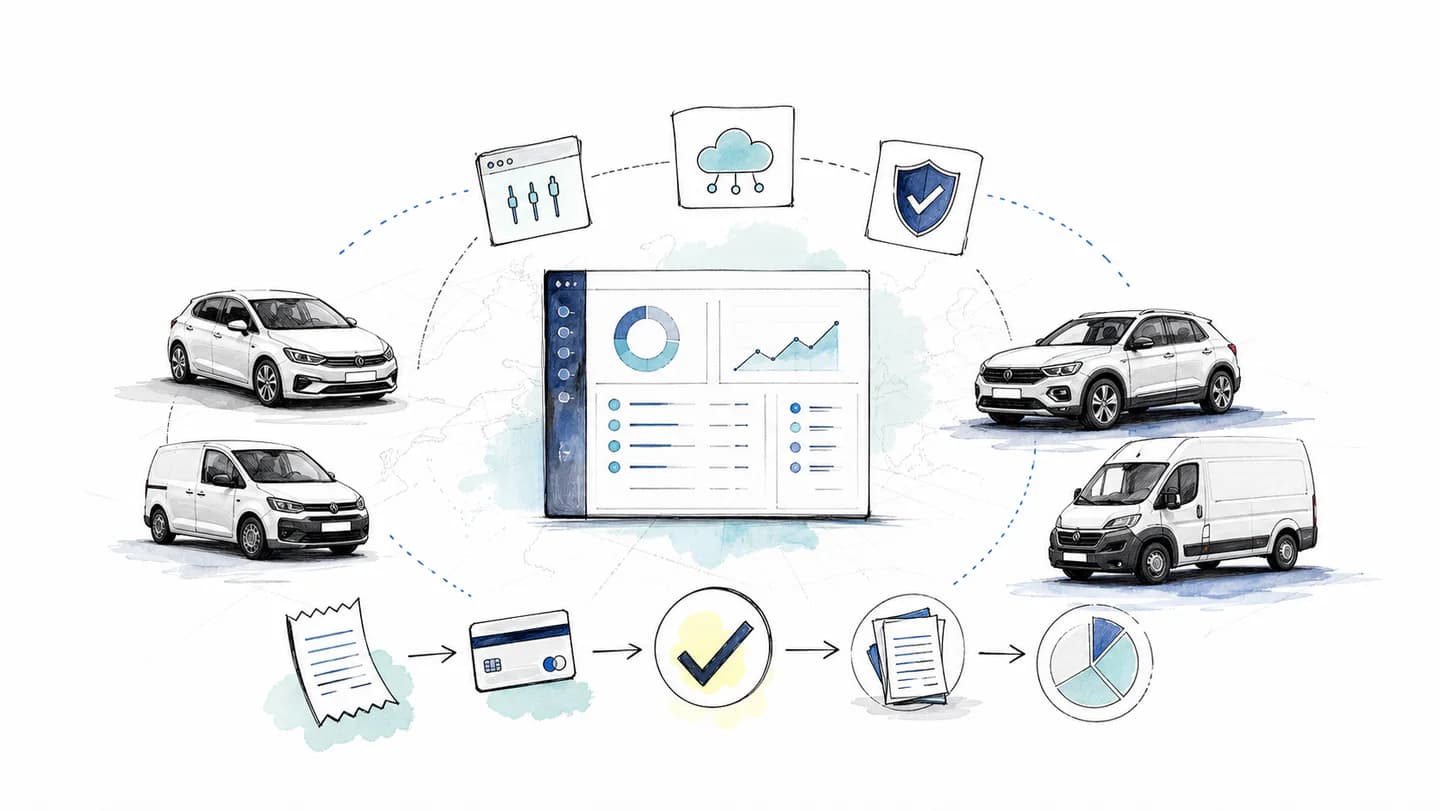
A business with poor credit may still be able to use a prepaid fuel card, because it spends money the business has already funded instead of borrowing. With Rally, the prepaid route requires no personal credit check and no refundable security deposit. Business and representative verification still applies, and approval is not guaranteed.
The first decision is whether you need a way to control spending you can already fund or a way to borrow until customers pay. A prepaid card can help with the first. It does not solve a cash shortfall.
Which Fuel-Card Route Fits Your Situation?
| Your situation | A practical starting point | What to confirm |
|---|
| Your company has cash, but a director has a thin or poor personal credit history | A prepaid business fuel card with no personal credit check | Eligible business type, country and verification requirements |
| You need fuel now and can only pay after customers settle invoices | A separately assessed credit facility or postpaid offer | Credit decision, payment dates, fees and any security or guarantee |
| You can fund purchases but want to avoid cash held as collateral | A prepaid offer without a refundable security deposit | How much to fund, transfer timing and any card-payment holds |
| Drivers use personal cards and claim the money back | Company-funded cards with limits and a receipt workflow | Acceptance on actual routes and the process for missing receipts |
These are different funding choices. Neither the card network nor an expense dashboard tells you whether a product extends credit. Read the funding terms first. For a wider category comparison, use the fuel-card comparison guide.
Personal Credit Checks and Business Verification
Ask whose credit is checked and for which product. A statement about a director's personal credit score does not mean that an account opens without any checks.
For Rally's public prepaid offer:
- The business funds a shared balance before cards spend.
- There is no personal credit check on a director and no refundable security deposit.
- Rally verifies the registered business and its representative.
- Card use depends on sufficient available funds, the card's controls and merchant acceptance.
In Germany, a search for Tankkarte ohne Bonitätsprüfung can mix personal credit checks, business checks and borrowing in one phrase. Confirm exactly what is assessed. For employee and office spending, the German no-SCHUFA company-card guide explains the separate company-card decision.
In France, distinguish a fuel card sans caution from one with deferred payment. No refundable security deposit says nothing by itself about when you must fund purchases. The deposit and cash-flow guide works through that difference.
Prepare These Details Before Applying
Use this as an application-preparation checklist, not a promise that the documents guarantee approval. The exact requests depend on the business and verification process.
- Registered business details. Have the legal name, registration number, address and country ready. Use the same details consistently across the application and supporting records.
- Representative details. Confirm who may act for the business and prepare the identification or authorisation information requested during verification.
- Business ownership information. Be ready to explain the ownership structure and supply supporting information if requested.
- A funding plan. Identify the account used for transfers, who is responsible for top-ups and how much spending the business can fund.
- Actual card requirements. Count drivers or employees who need cards, list their routes and choose allowed spending categories.
Registered UK and EU businesses can apply to Rally, including self-employed operators and teams starting with one card. For a newly formed company, confirm that your legal form and current registration status are supported before arranging a rollout. A new business or a negative credit entry is not an automatic approval or rejection decision stated by this guide.
Budget for the Card and for the Money It Spends
A monthly plan fee is an expense. A prepaid top-up is money allocated to future purchases. A refundable security deposit is collateral held under the provider's terms. Comparing those amounts as though they were the same kind of cost gives a misleading result.
Rally charges a flat monthly plan fee based on card count, excluding VAT. Fuel purchases are separate: you pay the displayed pump price, with no Rally markup on the litre. Check the current plans, included cards and terms against the number of cards you need.
For a funding example, assume your team expects to spend €250 per working day, needs funds to cover four working days, and chooses an additional €200 operating buffer:
Planned available balance = (€250 × 4) + €200 = €1,200.
These are illustrative inputs, not Rally funding requirements. Allow separately for any temporary merchant authorisation holds and confirm transfer timing. After the team spends €1,000, the €200 remainder is a buffer, not money available to cover another full four days. Assign someone to replenish the balance before the next spending cycle.
If finding €1,200 upfront is the problem, removing a personal credit check does not fix it. Revisit the funding arrangement before issuing cards.
Verify Acceptance Before Replacing Existing Cards
Rally cards can pay at eligible fuel stations and merchants that accept Visa. Acceptance still depends on the merchant, terminal, country and card settings. A Visa logo does not guarantee that every automated fuel pump or charging point will accept a particular card.
Run a small route check before moving the whole team:
- Test a normal purchase at the stations drivers actually use, including any unattended pumps.
- Check whether the terminal places a temporary authorisation hold and how much available balance it needs.
- Confirm toll, parking and public charging payment methods individually. For charging, also check the session price and supported access method.
- Confirm the card's spending categories and limits permit each intended purchase.
- Keep an agreed backup payment process while testing.
The Rally fuel-card page describes the payment and control workflow. Evaluate your routes against that workflow instead of relying on a headline acceptance percentage.
Test the Expense Workflow with Real Purchases
Eligibility gets the card open; a pilot shows whether it helps the business. Make a fuel purchase, send the supplier receipt through WhatsApp, review the match to the payment and test the downloadable accounting export available for your setup.
Keep the supplier receipt or invoice. A card transaction confirms payment; it does not replace the purchase document needed for accounting or a VAT claim. Rally does not issue a VAT invoice for your fuel purchases.
Before rolling out, check three practical measures: successful payments on your routes, expenses with a usable receipt, and time spent resolving unmatched items. Those observations are stronger evidence of fit than an untested promise of savings.
Frequently Asked Questions
Can I Get a Fuel Card with a Poor Personal Credit Score?
You may be able to apply for a prepaid business card that does not require a personal credit check. Rally's prepaid route verifies the business and its representative, and it does not guarantee approval based on the credit score alone.
Does Using a Prepaid Card Rebuild My Credit?
Do not assume it does. Funding your own spending is different from repaying a credit facility. If credit reporting matters to you, ask the issuer what, if anything, it reports before applying.
Can I Start with One Card?
Rally's prepaid plans start with one card. Registered self-employed businesses can apply, subject to business and representative verification. See the self-employed fuel-card option for that use case.
What If the Balance Cannot Cover a Purchase?
The payment can be declined. Plan top-ups around expected spending, transfer timing and any authorisation holds, and set a clear process for drivers who cannot complete a payment.
Explore Rally's prepaid fuel card to check the funding model, application requirements and expense workflow before choosing a plan.
Allow for authorisation holds as well as purchases when funding the card. The pending transaction guide shows how a hold affects available funds.