If your fleet runs trucks on the German Autobahn or any of the federal trunk roads (Bundesstraßen), the LKW-Maut is one of the largest line items on your monthly cost-of-haul. Expanded coverage and the CO₂ surcharge have made German truck tolls both more expensive and more nuanced — and a much bigger refund and reconciliation opportunity than most fleets realise.
This is an operational reference for German and cross-border fleet operators: how the toll is structured in 2026, where partial refunds are available, how the BALM application process actually works, and how Visa-backed fleet cards now let you bring fuel and the rest of your road payments onto one card and one platform. For UK-based readers comparing markets, the best UK fuel card providers operate on a very different (toll-free) acceptance model.
Authoritative rates and forms come from the Bundesamt für Logistik und Mobilität (BALM) and from Toll Collect. Because rates are revised regularly, this page describes the structure and the workflow rather than pinning specific cent-per-kilometre figures that go stale within a quarter.
German LKW-Maut at a Glance
The LKW-Maut (Lastkraftwagen-Maut) is the federal distance-based toll that applies to commercial goods vehicles on every federal motorway (Bundesautobahn) and every federal trunk road (Bundesstraße) in Germany. Commercial goods vehicles covered by the technically permissible total-mass rules are in scope. The expanded rules brought tens of thousands of light-tonnage carriers, parcel and last-mile fleets into the system for the first time. Collection runs through three parallel channels — an automatic on-board unit (Toll Collect OBU or an interoperable EETS box) that meters distance and bills the operator monthly, manual booking via the Toll Collect web portal or app for occasional users, and post-trip enforcement by BALM for vehicles caught driving without a valid booking. The OBU is by far the dominant channel and is what the rest of this guide assumes.
The 2026 Maut Rate Structure
The per-kilometre toll for any given trip is the product of four variables, applied in this order:
- Distance travelled on tolled roads (federal motorways and federal trunk roads).
- Axle class of the vehicle (one to three axles, four axles, or at least five axles).
- Emissions class (Euro 0 through Euro VI), where Euro VI vehicles pay the lowest rate and pre-Euro V vehicles pay a steep premium.
- CO₂ class (1 through 5), introduced on 1 December 2023, which adds a surcharge per tonne of CO₂ emitted. CO₂ class 1 is the default for most diesel trucks; classes 2–4 reduce the surcharge for low-emission combustion vehicles; class 5 is reserved for zero-emission trucks (battery-electric and hydrogen) and currently attracts no CO₂ component at all (with separate infrastructure and noise components reduced as well).
For a typical Euro VI five-axle articulated truck in CO₂ class 1, a representative combined rate is about €0.35 per kilometre in 2026, while lighter Euro VI rigid vehicles sit much lower. Older Euro III–IV combinations and any vehicle stuck in a higher CO₂ class on paper can pay materially more. Check current cent-per-km figures on the BALM "Mauttarife" page or with the Toll Collect calculator before signing a tender. Rates can change, and the gap between CO₂ classes will continue to widen as the CO₂ component is dialled up.
The single most common cost mistake is leaving a vehicle in the default CO₂ class 1 when it actually qualifies for class 2 or 3 — see the "Common Mistakes" section below.
Who Qualifies for an LKW-Maut Refund
Three refund pathways exist, and the differences matter:
Combined-transport refund (kombinierter Verkehr). Goods that travel partly by rail or inland waterway and partly by road in the same logistics chain qualify for a partial refund of the road leg's toll. This is the largest underclaimed category in Germany. To qualify, the road leg must connect a loading point to the nearest suitable rail/waterway terminal, or vice versa — typically inside a defined catchment radius — and the operator must hold the rail/waterway documentation (Frachtbrief, CIM/UTI consignment note, terminal handover slip) proving the intermodal transfer. Refunds are processed via BALM, paid annually, and capped per vehicle per year.
Wrongly charged toll (Erstattung wegen unrichtiger Mauterhebung). This applies when the OBU charged you for a road that is not subject to the Maut, when the system used the wrong axle, emissions or CO₂ class, when an OBU malfunction triggered a duplicate charge, or when an enforcement notice was issued in error. Documentation is the trip log from the OBU, the Toll Collect monthly statement (Einzelfahrtennachweis), and proof of the correct vehicle classification.
CO₂-class re-classification refund. When a vehicle is re-classified into a more favourable CO₂ class retrospectively (for example because the manufacturer's CO₂ data was updated, or because the operator only registered the correct class months after delivery), the operator can claim the difference back from the date of eligibility.
Required documentation across all three pathways typically includes Frachtbriefe or CMR notes, Lieferscheine (delivery notes), the relevant Toll Collect Abrechnungsdaten, vehicle registration documents (Zulassungsbescheinigung Teil I) showing axles, emissions class and CO₂ class, and — for combined transport — the intermodal terminal documentation. BALM normally acknowledges receipt within a few working days; substantive decisions on combined-transport claims often take two to four months, longer at year-end when claim volumes spike. Refunds are paid as a credit note against the operator's BALM account or by bank transfer.
How to Apply for a Refund — Step by Step
The BALM portal (formerly BAG) is the single front door for all three refund types. The process is the same shape for each:
- Register an operator account on the BALM portal. Use the company's Steuernummer / USt-IdNr., authorised representative, and a valid business email. Multi-vehicle operators should set up sub-users so dispatchers and finance can each access the relevant case files. First-time registration is acknowledged by post and can take up to two weeks — do this before you actually need it.
- Gather the supporting evidence. For combined-transport refunds, that means the rail/waterway Frachtbrief, the terminal handover slip, the road-leg invoice and the matching Toll Collect Einzelfahrtennachweis for each trip. For wrongly-charged-toll refunds, that means the OBU log, the monthly Mautaufstellung and the corrected vehicle classification. Scan everything to PDF; BALM rejects low-resolution mobile photos.
- Submit the application electronically through the BALM portal, attaching the evidence per vehicle, per claim period. Combined-transport claims are submitted retrospectively for completed quarters or for the full calendar year. Wrongly-charged-toll claims should be submitted as soon as the discrepancy is identified — there is a statutory time limit.
- Wait for BALM's acknowledgment. You will receive a case number (Vorgangsnummer); use it for every follow-up. Acknowledgments arrive within a few business days.
- Respond to clarification requests promptly. BALM will frequently ask for additional Frachtbrief evidence on combined-transport claims, or for a corrected CO₂-class registration on classification claims. Replies are also submitted through the portal. Most rejections we have seen are operators failing to respond inside the BALM-stated window.
- Receive the credit note (Gutschrift) or bank transfer. Combined-transport credits typically appear as a reduction against the next month's Toll Collect invoice; wrongly-charged-toll refunds are paid out separately. Keep the credit note in your accounting system — it is a tax-relevant document.
For high-volume operators, BALM also accepts machine-readable batch submissions via its API; talk to your TMS vendor about whether they already support this.
Toll Collect, EETS, and the Multi-Provider Landscape
Toll Collect is the German federal concessionaire. Its OBU is free of charge (you pay a deposit that is refunded when the device is returned), it is installed by a Toll Collect service partner, and it bills you monthly via direct debit or invoice. For a fleet that only operates inside Germany, Toll Collect is the default and is hard to beat on cost.
The European Electronic Toll Service (EETS) lets a single on-board unit handle tolls across multiple European countries — Germany, France, Italy, Spain, Austria, Belgium, Hungary, Poland, the Eurovignette network and more. A number of commercial EETS providers are registered for the German market, each with its own on-board unit. Expect a monthly box fee plus a per-country service surcharge, and a single consolidated toll invoice per provider that you can reconcile centrally. For French routes specifically, the same boxes also work on the French réseau autoroutier — see our French toll roads guide for the regional context.
The trade-off is straightforward:
| Dimension | Toll Collect (OBU) | Commercial EETS provider |
|---|
| Coverage | Germany only | Multi-country (typically DE + FR + IT + ES + AT + more) |
| Box cost | Free OBU; refundable deposit | Provider-specific monthly fee per box |
| Per-trip surcharge | None — pure toll | Toll + per-country service charge |
| Invoice | Single Toll Collect invoice (DE only) | Single EETS invoice across all covered countries |
| Refund handling | Claim submitted through Toll Collect to BALM | BALM submission; credit passed through by the EETS provider |
| Best for | Domestic-only fleets | Cross-border operators, especially DE-FR-IT-ES |
Rally typically pairs with — rather than replaces — the toll OBU itself: the EETS or Toll Collect box stays in the truck and handles the road-charge, and the Rally Visa card handles the rest of the spend stack.
Consolidating Maut and Fuel in One Platform
The operational pain in a German fleet's monthly close is not the toll itself — it is the number of separate invoices that have to be reconciled to the same vehicle, the same driver and the same trip:
- A Toll Collect or EETS Mautrechnung.
- Fuel-card invoices from one or more fuel-card providers.
- An EV-charging invoice for any battery-electric tractors or vans.
- Parking, ferry, and washing tickets — usually paid as cash or on a personal card and reimbursed.
- A long tail of paper Belege that drivers hand in at month-end.
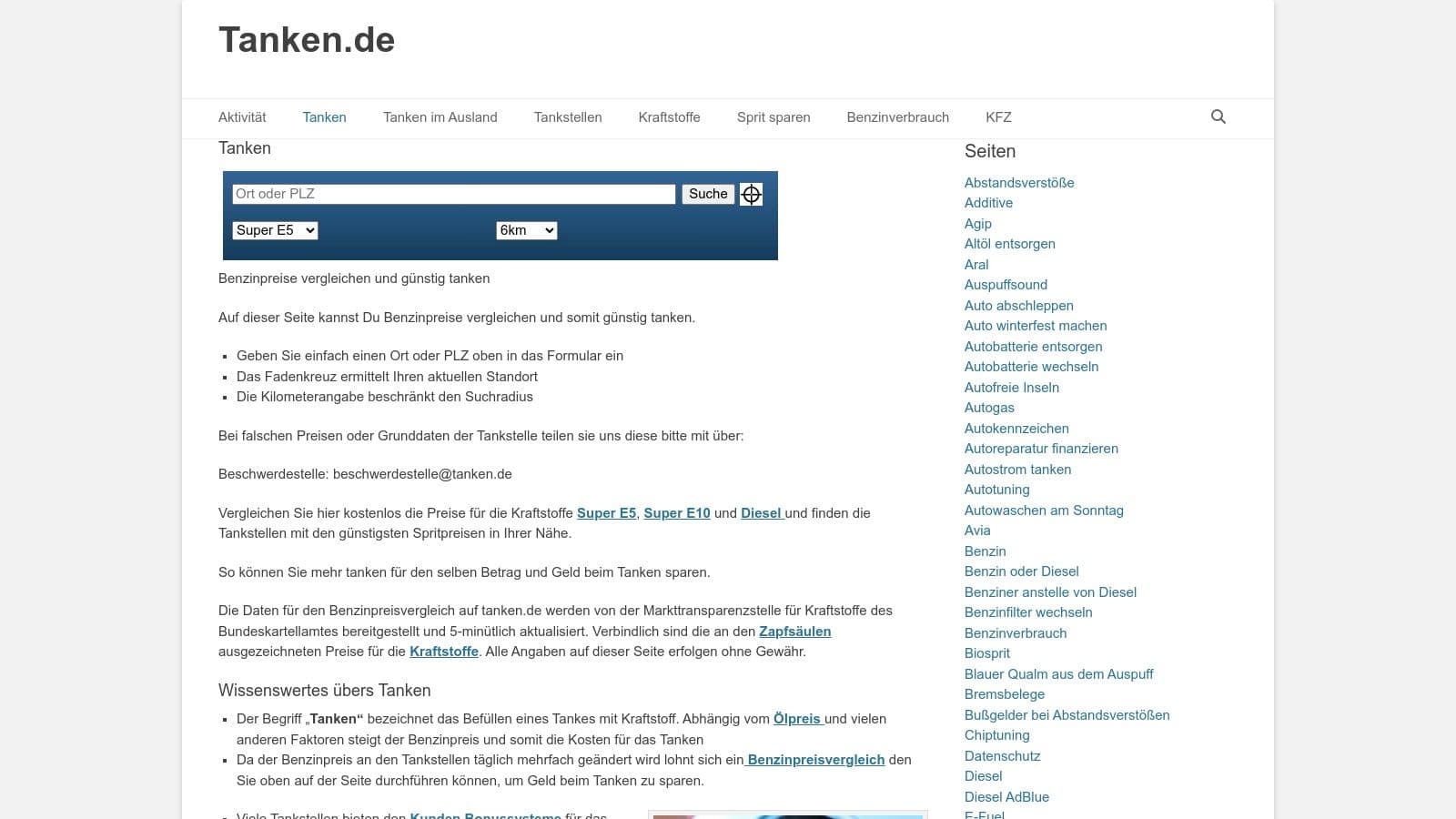
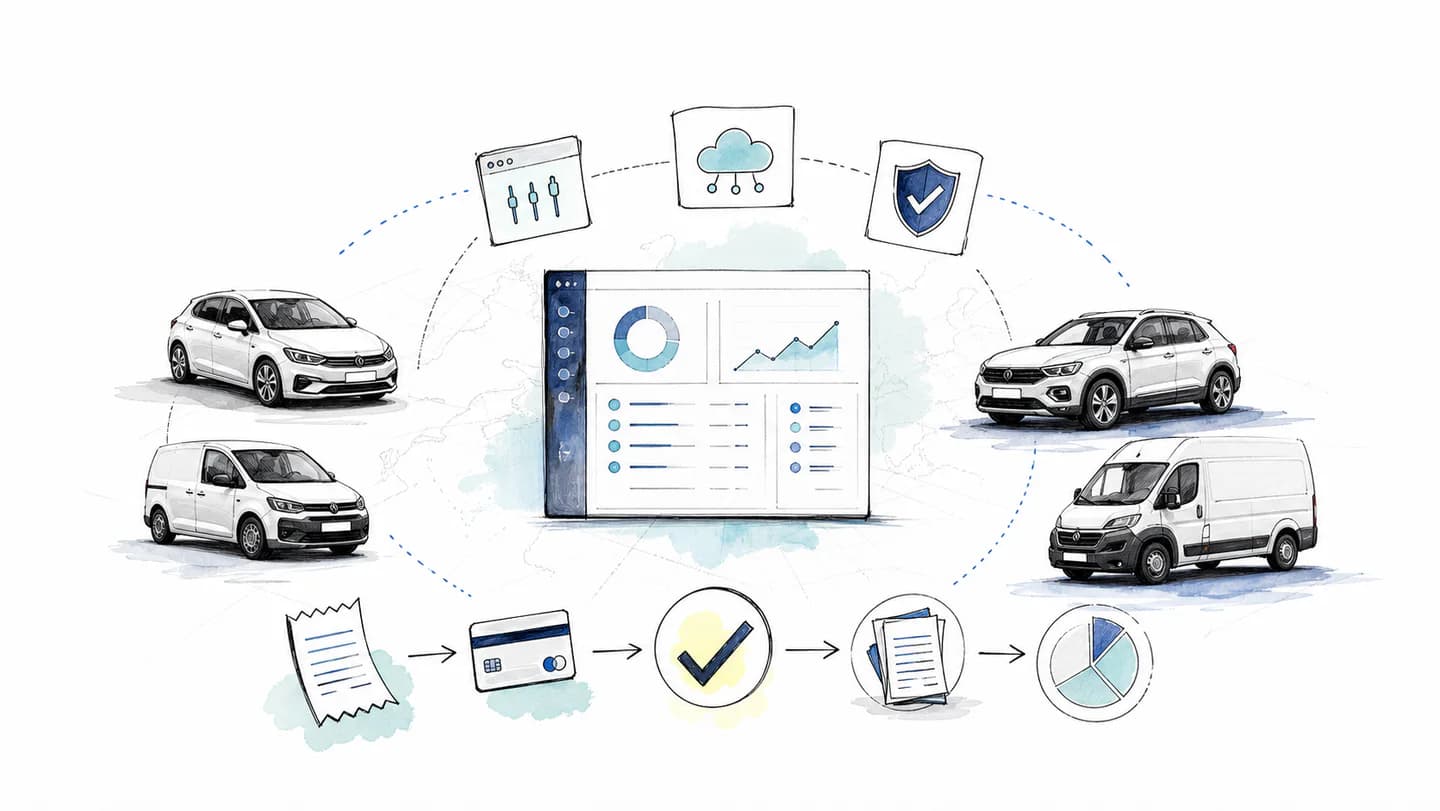
A modern Visa-backed fleet card brings fuel, parking and miscellaneous expenses onto one card. The Maut OBU stays separate (the toll is a regulated federal charge collected through Toll Collect or an EETS provider, not via Visa), but the rest of the spend lands in one platform, with each supplier receipt matched to its payment, one VAT summary and one reconciliation cycle. The Rally fleet card for fuel and tolls is built around exactly this consolidation.
For finance teams, the practical effect is fewer separate statements and receipt piles to ingest, fewer manual matching exercises in DATEV or SAP, and a much shorter close. Fleets running ten or more trucks typically manage this consolidation through an expense management platform that assigns cards to vehicles, enforces per-driver limits and reports cost per vehicle across Maut, fuel and charging. If you are still choosing the card side of that stack, our fuel card comparison for companies puts the main options side by side.
Common Mistakes That Cost Fleets Money
Four recurring failure modes account for most of the avoidable cost we see in German fleets:
Untested OBUs. A Toll Collect or EETS box that fails to transmit silently leaves the vehicle in manual-liability mode. The driver is supposed to switch to manual booking before each trip, which almost never happens in practice, and the operator is then exposed to enforcement penalties of up to €20,000 per incident plus the back-Maut. Build a weekly OBU-health check into the dispatcher's routine: red light, no GPS lock, or a "manual mode" warning means the vehicle does not leave the yard until a service partner has confirmed the device.
Missing combined-transport refund eligibility. The rail-leg evidence rule is widely misunderstood. Operators assume that if the truck goes from a customer to a railhead and a container is then loaded onto a train, that automatically qualifies — it does not, unless the road leg sits inside the regulated catchment radius and the operator can produce the rail Frachtbrief on their own letterhead or that of a contracted partner. Audit your last twelve months of intermodal trips against the BALM combined-transport rules; most operators find at least a five-figure unclaimed refund.
Skipping CO₂-tier classification. A modern Euro VI tractor may qualify for CO₂ class 2 or 3, but only after the operator submits the manufacturer's CO₂ data to Toll Collect via the operator portal. Vehicles default to class 1 until reclassified, which means months of overpayment that can only be recovered through a CO₂-class refund. Make CO₂-class registration part of the vehicle on-boarding checklist, not a year-end clean-up task.
Reconciling Maut invoices line-by-line manually. A larger fleet generates thousands of toll lines a month. Spot-checking will not catch CO₂-class drift, mis-axled charges, or duplicate transmissions; line-level reconciliation against the TMS is the only reliable control. Either invest in a reconciliation tool that ingests the Toll Collect / EETS API, or keep the data next to matched fuel and EV-charging transactions in Rally's accounting exports.
2026 Compliance Checklist for German Fleet Operators
Use this as a quarterly review against your fleet of record:
- Every vehicle subject to the 3.5 t threshold is registered with Toll Collect or an EETS provider, with a working OBU and a current direct-debit or invoice mandate on file.
- Every vehicle has its CO₂ class (1–5) confirmed in the Toll Collect operator portal, with the manufacturer's CO₂ data uploaded and the resulting class shown on the most recent Mautaufstellung.
- Every vehicle has its emissions class (Euro 0–VI) and axle count verified against the Zulassungsbescheinigung Teil I and the corresponding entry in Toll Collect.
- The OBU health check (red/amber/green status, GPS lock, no manual-mode warning) is run weekly per vehicle, with exceptions logged and resolved before the next dispatch.
- Frachtbriefe, CMR notes and intermodal terminal handover slips are retained electronically for at least the statutory period, indexed by trip ID so they can be pulled into a BALM combined-transport claim without manual searching.
- A rolling combined-transport refund application is submitted at least once a year for every vehicle that handles intermodal road-rail or road-waterway legs, with the supporting evidence pre-bundled per vehicle and per quarter.
- Wrongly-charged-toll discrepancies are flagged from the monthly Einzelfahrtennachweis (axle, class, route, duplicate) and submitted to BALM inside the statutory window, not batched at year-end.
- Toll Collect or EETS invoice data is ingested into the TMS or accounting system at line level (preferably via API), reconciled against the trip log, and posted to the correct cost centre — not aggregated to a single monthly journal.
- Where mixed diesel and battery-electric tractors are running, CO₂ class 5 is registered for every eligible BEV/FCEV from the date of first registration.
- The Maut process (refunds, OBU exceptions, CO₂-class updates, BALM correspondence) has a single named owner inside the fleet team, with a documented backup, so cases do not stall when someone is on leave.
For a deeper conversation about how to wire Maut reconciliation into your Rally Visa fleet card workflow alongside fuel, parking and the rest, book a demo and bring last month's Toll Collect Einzelfahrtennachweis with you — we will walk through it line by line.