


01
Use real-world efficiency
Dashboard or telematics efficiency is more useful than a brochure figure because temperature, payload, speed and route type all change consumption.
Turn vehicle mileage, real-world efficiency and your home, depot and public charging mix into an annual fleet budget. Built for practical planning, from the first EV to multi-country fleets.
[01]
Your Charging Model
Fleet Inputs
Start with the pre-filled 25-vehicle example, then replace each assumption with your own fleet data.
Fleet and energy use
Where vehicles charge
Enter home and depot shares. Public charging is calculated as the remainder, so the mix always totals 100%.
Electricity rates and fees
[02]
Transparent Methodology
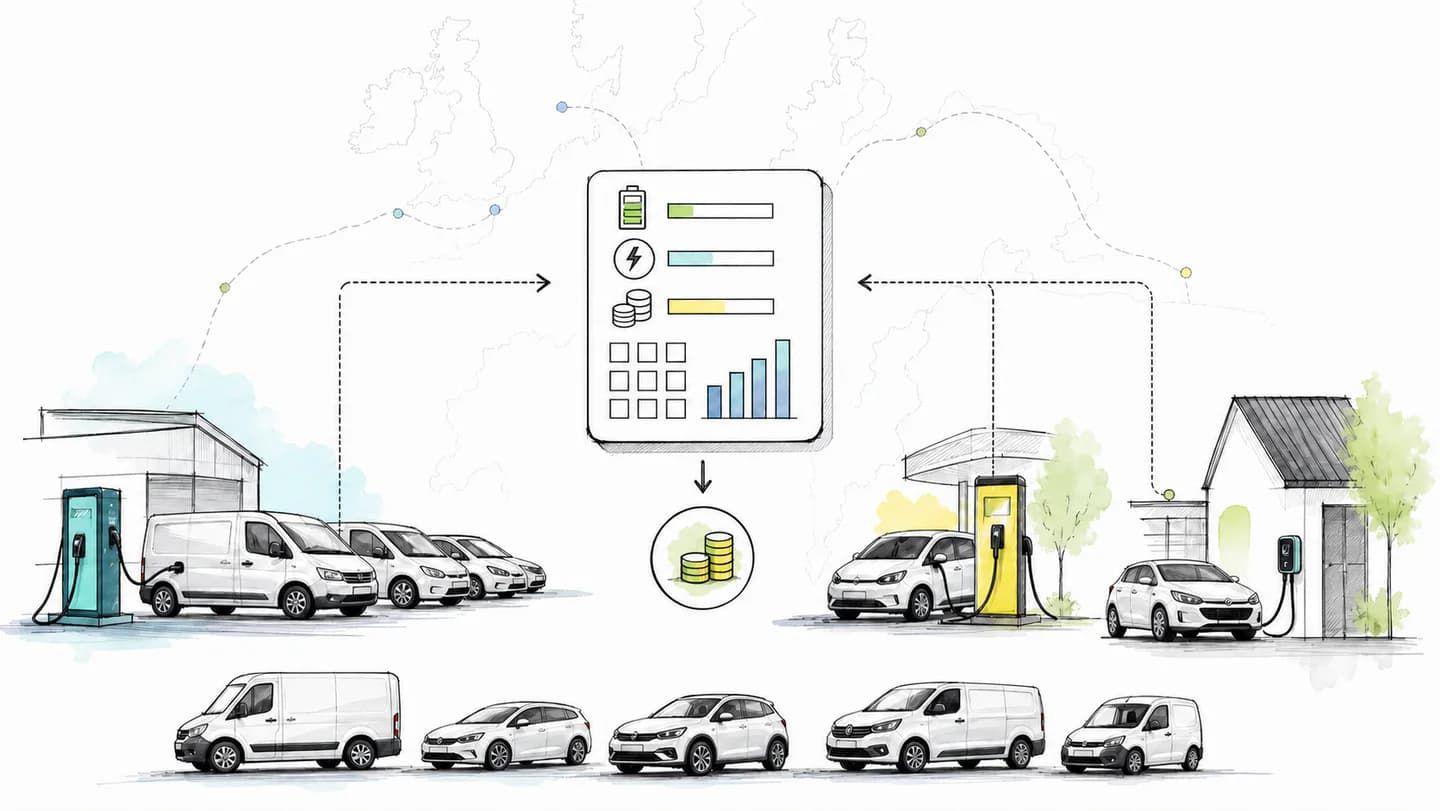
The model separates energy the vehicles use from energy bought at the meter, then prices each charging location independently. It does not hide the charging mix inside one optimistic tariff.
Annual charging cost formula
Miles-based units: battery energy = annual fleet miles ÷ miles per kWh.
Metric units: battery energy = annual fleet kilometres ÷ 100 × kWh per 100 kilometres.
Meter energy = battery energy ÷ (1 − charging-loss rate). Annual cost then adds home, depot and public energy at their respective rates, plus any other fees entered.
01
Dashboard or telematics efficiency is more useful than a brochure figure because temperature, payload, speed and route type all change consumption.
02
A cheap depot tariff cannot describe a fleet that relies heavily on rapid public charging. The calculator prices every location separately before producing a weighted rate.
03
Vehicles receive less energy than the charger draws. The model treats the loss percentage as energy that leaves the meter but does not reach the battery.
04
Subscriptions, idle fees, parking charges and platform fees sit outside the per-kWh tariff. Add them as one fleet-wide monthly figure instead of burying them in the energy rate.
Methodology reviewed July 2026.
[03]
From Estimate to Budget
A useful charging budget starts with operational data, not a national average. Four steps make the estimate defensible for finance and practical for fleet operations.
Use route plans, odometer history or telematics to estimate annual mileage for the EVs that will actually be in service.
Take a representative winter and summer average where possible. Vans with payloads usually consume more than passenger cars on the same route.
Estimate what share can happen at home or the depot and what must happen on public networks during working routes.
Use the rate your business really pays or reimburses. Add subscriptions, idle fees and parking charges separately so they remain auditable.
[04]
Questions
Estimate annual energy use from fleet distance and real-world EV efficiency, adjust for charging losses, then multiply the energy charged at home, the depot and public networks by each location's tariff. Add subscriptions, idle fees and other non-energy charges to get the full annual budget.
The answer depends on the vehicle's efficiency and your business electricity tariff. In metric units, divide annual kilometres by 100 and multiply by kWh per 100 kilometres. Adjust for charging losses, then multiply the meter energy by the depot tariff.
Loss varies with the vehicle, charger, temperature, battery conditioning and charging power. Ten percent is a practical planning assumption, but use measured meter-to-vehicle data where available. The calculator lets you change the percentage.
Use one consistent basis across every rate. If your finance team budgets net of recoverable VAT, enter net rates and net fees. If you are modelling cash paid including VAT, enter gross figures throughout. VAT recovery rules vary by market and use case.
The prices can differ substantially. A fleet with a low depot tariff but frequent rapid public charging will have a much higher weighted cost than the depot rate alone suggests. Separate inputs make that exposure visible.
Yes. The pre-filled example uses 25 EVs, but every input is editable. The same formula works from a few company cars to regional van operations and large mixed fleets; use averages that reflect the electric vehicles in scope.
Yes. Add the Rally card to the charging app of your choice and pay with it.