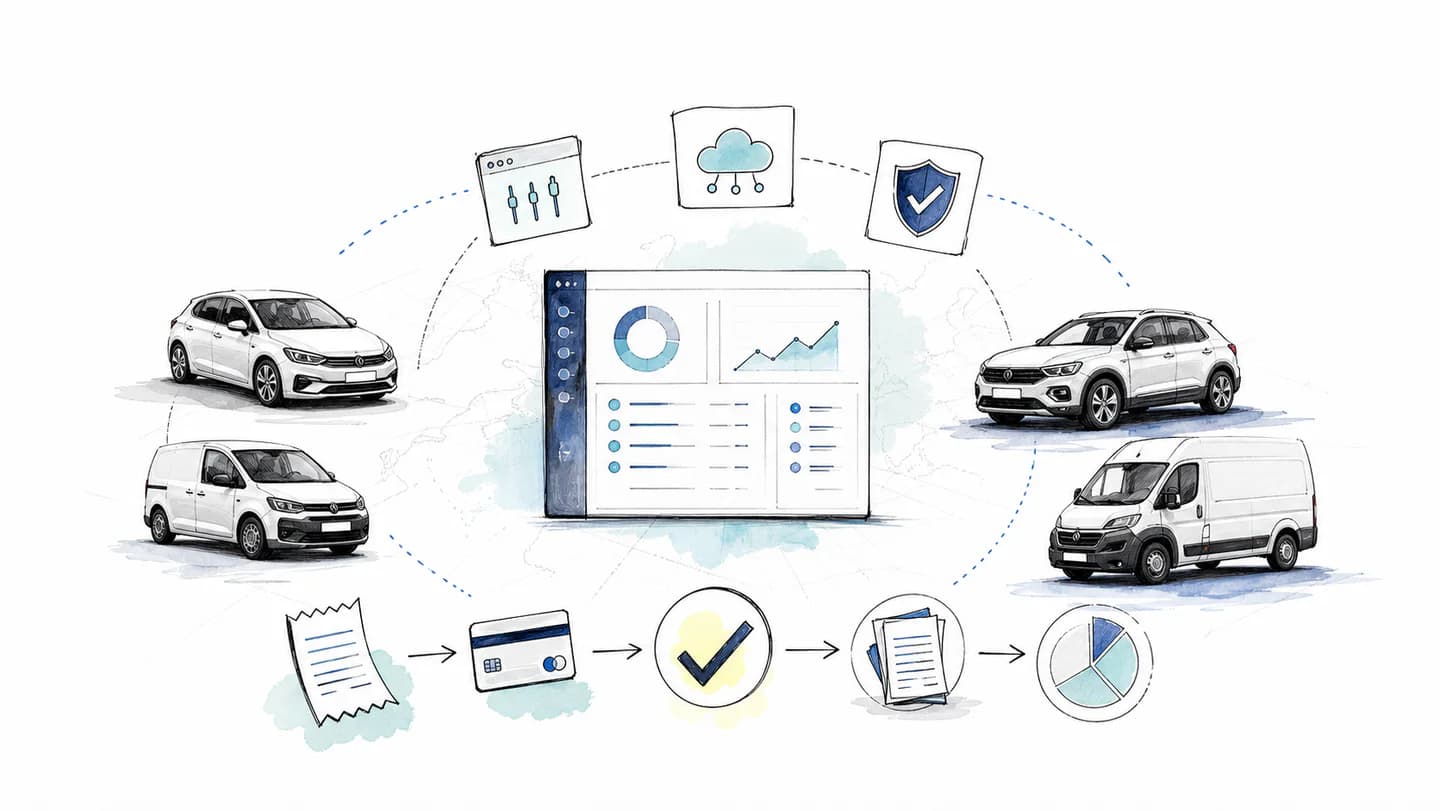
A fleet card policy tells drivers what they can buy, who can authorise an exception and what finance needs afterwards. It also tells the business who owns the card controls and funding. Put those decisions in writing before issuing cards so a declined payment or missing receipt has a clear next step.
Use this outline as the fleet-specific section of your business expense policy. Adapt the examples to your operation and the card issuer's rules; they are suggested operating choices, not legal or tax requirements.
1. Record who is responsible for each card
Keep the cardholder, vehicle and legal entity as separate fields. A driver may change vehicles, and a shared vehicle may have several authorised drivers. Record changes when they happen rather than relying on last month's spreadsheet.
The register should contain a safe card reference or last four digits. Do not store full card numbers, security codes or PINs in it. Do not permit card sharing unless the issuer's rules and your controls support that arrangement.
| Register field | What to record |
|---|
| Card reference | Internal reference or last four digits |
| Responsible person | Authorised cardholder and manager |
| Vehicle or assignment | Vehicle reference, team or job where relevant |
| Legal entity | Business responsible for the spending |
| Permitted use | Approved purchase categories and any geographic restrictions |
| Limits | Per-purchase limit and separate daily, weekly or monthly budget |
| Administration | Who can change limits, freeze the card and maintain funding |
| Lifecycle | Issue date, acknowledgement, changes and closure date |
2. State exactly what drivers can buy
List fuel, public charging, parking, tolls and any other approved purchases individually. If repairs require separate approval, say so. Define how the policy treats personal items, purchases for another vehicle and private fuel.
Example wording to adapt:
Use the assigned card only for approved business purchases. Fuel and charging must relate to the authorised vehicle or job. Obtain manager approval before an unplanned repair. Record the business purpose and submit the supplier's itemised receipt. Contact the named duty manager when the normal approval route is unavailable.
Merchant restrictions and spending limits can support this policy, but a permitted transaction is not proof that every item in the basket was allowed. Review the document and context where necessary. For UK company vehicles, consider the separate fuel benefit and VAT rules.
3. Set limits and assign a funding owner
Distinguish the maximum for one purchase from the budget over a period. A £150 transaction limit does not create a £150 weekly budget, and a weekly budget does not guarantee every individual purchase will be accepted.
For prepaid cards, name a person who checks available funds before travel and arranges top-ups. Include authorisation holds in that review: an automated terminal can reserve more than the final bill. The pending transaction example shows how that affects available funds.
Choose limits using representative purchases and routes. Record who may approve a temporary increase, its reason and when it expires. Avoid raising every driver's limit to solve one exceptional journey.
4. Give receipts a deadline and an exception route
Choose a realistic submission deadline, such as the end of the next working day, and identify the reviewer. Explain where drivers submit documents and which details they must add: business purpose, vehicle or project, and any personal element.
Keep the supplier receipt or invoice. A card statement shows a payment but may not provide the item and tax evidence finance needs. Use the receipt capture checklist for unreadable or incomplete images.
If a document is lost, request a duplicate and record the attempt. Use the company's missing-document process if recovery fails. A missing receipt should become a visible exception with an owner, rather than a guessed tax amount or a second expense record.
5. Plan for declined payments and emergencies
Give drivers one contact route they can use during their actual working hours. The person responding should check available funds, limits, restrictions and transaction status before proposing another payment method.
If the business authorises an employee to pay personally, record the approval and reimbursement process. Keep that claim linked to the incident and verify that the company card did not also complete the purchase. Check local employment rules before introducing any deduction or recovery arrangement; a policy should not assume an automatic right to deduct wages.
6. Close cards and review exceptions
Report a lost card promptly through the issuer's process and freeze it where appropriate. For a leaver or changed role, remove access and suspend or close the card, update the register and arrange return or secure disposal as required. Review pending payments, refunds and outstanding receipts after closure.
Each month, review repeated declines, missing documents, unexpected purchase categories and temporary limit increases. Distinguish a training problem from a funding problem or suspected misuse. Keep the facts and the review decision with the relevant records.
Apply the policy to a real pilot
Test a normal fuel stop, a public charging purchase if relevant, a missing receipt, a declined payment and a driver change. Record who acts at each step and whether finance receives usable evidence.
Rally fuel cards combine prepaid Visa spending with limits and an expense workflow through WhatsApp and the platform. Drivers submit receipts, AutoMatch connects documents to payments and finance reviews the records. Confirm the available controls and acceptance on your routes before rollout. The prepaid fuel-card guide explains funding and eligibility; your policy determines how the team uses those capabilities.